


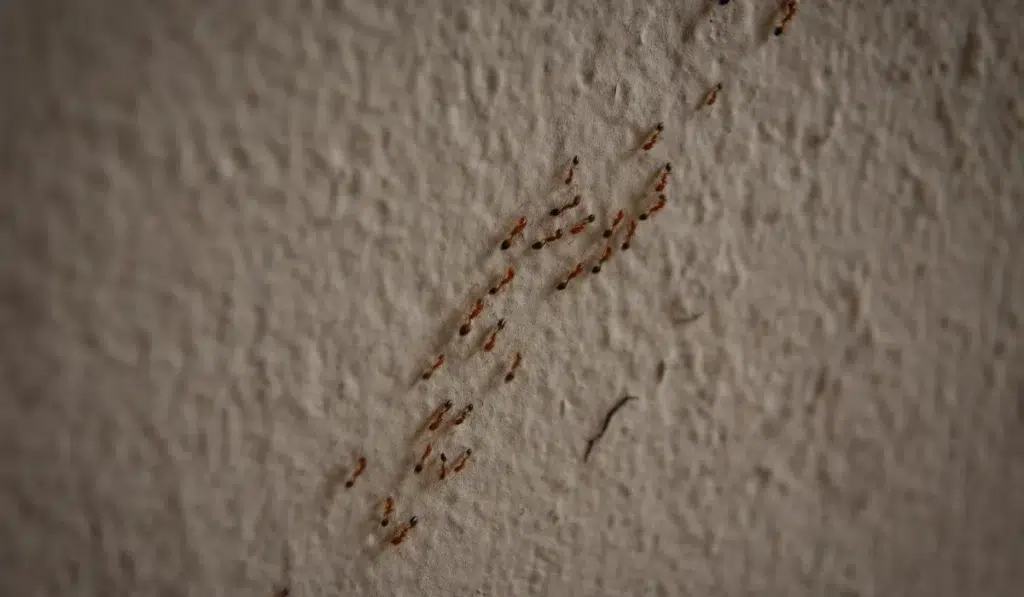
A line of ants moving across a countertop, baseboard, windowsill, or bathroom floor is more than a collection of random insects. In many cases, the ants are following a scent trail between a food or water source and a nesting area.
The visible trail does not always tell you where the colony is located. Some ants nest outdoors and enter through a small gap near a door, window, utility line, or foundation edge. Others may use a protected indoor space such as a wall void, cabinet gap, or moisture-damaged area.
For Huntsville homeowners, the most useful response starts with observation. Follow the trail, remove the resource attracting the ants, clean the path, and note where the workers enter or disappear. This guide explains what indoor ant trails can mean, which signs deserve closer attention, and when recurring activity may justify professional ant control.
Key Takeaways
- A steady line of ants usually means workers have found food, water, or another resource and are following a chemical trail.
- Clean the trail with soapy water, remove food residue, and check for moisture before reaching for a spray.
- Follow the ants in both directions to identify the attractant and the entry point.
- Inspect baseboards, countertops, cabinet edges, windowsills, door frames, plumbing gaps, utility openings, and potted plants.
- Do not spray ant trails when you plan to use bait. Sprays may kill visible workers without addressing the colony and can interfere with a baiting strategy.
- Request professional support when trails return after cleanup, several rooms show activity, or the ants may be nesting inside wood or wall voids.
Why Ant Trails Form Inside a Home
Ants forage for food and water. When a worker finds a useful resource, many species create a pheromone trail that helps other workers follow the same route. That is why a few ants can become a visible line moving back and forth along the same edge.
The UC IPM guide to ants explains that soapy water can remove an ant scent trail, especially when entry points are cleaned thoroughly. The same guidance emphasizes removing food sources and using exclusion as part of a broader plan.
A trail usually connects a resource and a nesting area
Watch the direction of movement. Workers heading toward crumbs, grease, pet food, water, or a trash container may be arriving from the colony. Workers leaving that resource may help you trace the route back toward the entry point.
The nesting area may be close to the trail, but it may also sit outside the home or inside a concealed space.
Ants often follow structural edges
Ants may travel along baseboards, countertop seams, cabinet edges, windowsills, door frames, plumbing lines, and wall joints. These protected routes make it easier for the colony to maintain a consistent path.
Use a flashlight when a trail disappears into a corner or a narrow gap.
Trails can shift when the resource changes
Cleaning a countertop may interrupt one route, but the ants may return if a food source remains nearby or another access point is available. You may also notice a new trail in a different part of the room.
That does not mean cleaning failed. It means the broader source still needs attention.
How to Tell a Trail From Random Ant Activity
A few scattered ants may be scouts. A true trail usually shows repeated movement along a consistent path.
Look for two-way traffic
Watch the ants for several minutes. A trail often includes workers moving toward a resource and workers moving back in the opposite direction.
Check whether the path stays consistent
Ants may bend around corners or follow the edge of a cabinet, but the overall route tends to remain recognizable. A cluster of ants repeatedly using the same gap deserves closer attention.
Follow the trail before cleaning it
Take a photo or note the path before wiping the surface. This can help you identify the entry point and describe the problem if professional support becomes necessary.
Inspect after dark when activity is hard to trace
Some ants are easier to observe after sunset. The University of Minnesota Extension carpenter-ant guide notes that carpenter ants search for food between sunset and midnight during spring and summer and may travel considerable distances from the nest.
If you notice large ants near wood, observe the route with a flashlight and avoid disturbing the suspected nesting area.
Where Ant Trails Commonly Appear in Huntsville Homes
Indoor trails are most noticeable where food, water, and access points overlap.
Kitchen counters and cabinet edges
Check for crumbs, grease, sugary residue, spills, open food packaging, and dirty dishes. Look beneath small appliances and along the seams where counters meet walls.
Store food in sealed containers and wipe surfaces after meal preparation.
Pantries and food-storage areas
Inspect shelves, floor edges, pet-food bags, baking ingredients, snacks, and trash containers. A small spill can keep a trail active.
Bathrooms and laundry areas
Ants may follow moisture. Check beneath sinks, around plumbing lines, near water heaters, beside washing machines, and along baseboards where leaks or condensation remain.
Windowsills and door frames
Ants may enter through small gaps around doors, windows, weather stripping, and sliding-door tracks. Note where workers cross the threshold before sealing appropriate openings.
Potted plants
Indoor and patio plants can support ant activity when ants nest in the potting mix or visit honeydew-producing insects on the plant. Inspect the saucer, soil surface, drainage holes, leaves, and nearby wall.
Utility and plumbing penetrations
Check the spaces where pipes, cables, and utility lines pass through walls or cabinets. Small gaps can create protected routes into kitchens, bathrooms, and laundry rooms.
What the Trail Can Tell You About the Nest
The trail offers clues, but it does not always identify the colony location immediately.
The colony may be outdoors
Many ants nest outside and forage indoors. Follow the route toward the exterior wall, foundation edge, patio, mulch bed, or landscaping border.
Look for workers moving beneath plants, along the foundation, or into a soil crack.
The colony may be inside a wall void
A trail that disappears into a baseboard gap, cabinet seam, or plumbing opening may point toward an inaccessible void. Avoid drilling into the wall or applying products into the opening without professional guidance.
The colony may use several nesting sites
Some species maintain multiple connected nesting locations. One visible entry point may not represent the entire colony.
This can explain why trails reappear after you clean one surface or seal one small gap.
Large ants near wood need a closer look
Carpenter ants excavate wood for nesting rather than eating it. The UC IPM carpenter-ant guide recommends observing activity at night, following trails, and looking for sawdust accumulations with pieces of dead ants. Main nests are often outside in old tree stumps, fence posts, or firewood piles, while satellite colonies may occur indoors in moist wood.
If a trail includes larger ants and leads toward wood, a crawl space, an attic line, or a moisture-damaged area, request an inspection.
Why Ant Trails Keep Returning
Wiping away visible ants can reduce activity temporarily, but the colony may continue sending foragers if the resource and entry route remain available.
Food residue remains accessible
Crumbs, grease, pet food, spills, trash residue, and open containers can keep attracting ants. Move appliances and pet bowls during cleanup so you can reach hidden edges.
Water remains available
Check for plumbing leaks, condensation, damp cabinets, wet bath mats, and water around pet bowls or potted-plant saucers. Fix recurring moisture rather than wiping the visible puddle alone.
The scent trail was not removed
The UC IPM quick guide for ants in the home recommends cleaning invading ants with a sponge and soapy water to remove the scent trail they leave behind.
A thorough wipe along the full route and near the entry point can temporarily interrupt activity while you address the colony.
The entry point remains open
Once you understand the route, seal appropriate gaps with caulk or another suitable material. Avoid blocking vents, drains, or openings that require professional repair.
The visible ants are only part of the colony
Surface sprays may kill workers without reaching the nesting area. That can leave the underlying problem in place.
What to Do When You See an Ant Trail
A practical response starts with inspection and sanitation. Use the visible trail as information before you interrupt it.
Step 1: Trace the route
Watch the workers for several minutes and follow the line in both directions. Note the food or water source and the point where ants enter or disappear.
Step 2: Remove the attractant
Clean crumbs, grease, spills, pet food, and trash residue. Store food in sealed containers and empty indoor trash regularly.
Step 3: Clean the trail with soapy water
Wipe the route thoroughly with soap and water. Clean the surrounding edge and the suspected entry point as well.
The University of Minnesota Extension ant guide also recommends a mild vinegar-and-water solution as a temporary way to disrupt ant activity.
Step 4: Address moisture
Fix leaks, wipe damp surfaces, empty standing water when appropriate, and improve ventilation in humid areas.
Step 5: Seal appropriate entry points
Seal cracks around doors, windows, baseboards, and utility openings after you understand the activity pattern. Repair worn weather stripping and damaged screens.
Step 6: Monitor the area
Watch for new trails over the next several days. A returning trail may reveal a second entry point or a resource you missed.
Should You Use Ant Bait?
Ant bait can be useful because workers carry the material back toward the colony. However, placement and product selection matter.
Use bait near active routes when appropriate
UC IPM recommends placing baits near trails or nest openings and using outdoor bait to control colonies when possible. Slow-acting baits allow workers time to carry the material back to other ants.
Do not spray around bait
Do not spray ants on the trail leading to a bait station. Broad contact sprays can kill the workers before they carry bait back and may interfere with the control strategy.
Keep bait away from children and pets
Use only a labeled product and follow every instruction. Place bait where children, pets, and other non-target animals cannot reach it.
Request guidance when the species is unclear
Different ants may respond differently to baits and treatment strategies. A professional can identify the species and choose an appropriate plan.
What Not to Do When You See Ant Trails
Do not spray every visible ant immediately
A broad spray may remove the ants you can see without addressing the colony. It can also make the trail harder to follow.
Do not use sprays and bait together
Keep the route to the bait clear so workers can carry it back. Follow the product label and ask a professional when you are unsure.
Do not leave food and water accessible
Surface treatment will not solve a problem supported by crumbs, grease, pet food, trash, or moisture.
Do not seal an opening blindly
Seal appropriate gaps after you understand where the ants are traveling. If the opening leads into a wall void, plumbing area, or moisture-damaged wood, request professional guidance.
Do not assume every ant trail is harmless
Many trails are nuisance issues, but large ants near wood, stinging ants, or persistent trails from hidden voids deserve closer attention.
Do Ant Trails Create Health or Property Concerns?
Most indoor ant trails are nuisance problems. The significance depends on the species and the route the ants are using.
Food contamination
Discard food that ants have reached and clean the surrounding storage area. Do not return contaminated food to a sealed container.
Stinging ants
If aggressive ants appear near an entryway, patio, or yard, keep children and pets away and request identification. Do not disturb a suspected mound.
Carpenter-ant activity
Large ants near damp wood, sawdust-like debris, or nighttime trails deserve inspection. Carpenter ants can excavate wood for nesting, but not every large ant sighting confirms structural activity.
When to Request Professional Ant Control
An isolated trail may improve after cleaning, moisture control, and exclusion. Professional support becomes more useful when the route reappears, several rooms are affected, or the colony remains hidden.
Consider requesting an inspection when:
- Ant trails return after you clean the route and remove food or water sources.
- Several rooms show activity.
- The trail disappears into a wall void, cabinet gap, crawl space, attic line, or inaccessible area.
- You notice large ants near wood or sawdust-like debris.
- A trail continues from the yard into the home through several entry points.
- Aggressive or stinging ants appear near areas your household uses.
- You want a treatment plan designed around children, pets, or sensitive household areas.
Magic City Pest Control provides ant-control services in Huntsville, AL. Its local service page describes a process that starts with species identification and pinpointing colony locations, entry points, and foraging trails. The plan may include professional-grade baits carried back to the colony, targeted interior and exterior treatment, perimeter protection, and follow-up when needed.
What a Professional Inspection Should Cover
A professional inspection should evaluate the visible trail, food and water sources, windows, doors, baseboards, cabinet edges, plumbing penetrations, utility openings, potted plants, exterior foundation lines, landscaping, and any signs of carpenter-ant activity.
The goal is to determine whether the ants are nesting indoors, entering from outside, or using several connected nesting sites.
What an Ant-Control Plan May Include
The right plan depends on the ant species and the activity pattern. Recommendations may include sanitation, moisture correction, exclusion work, bait placement, targeted treatment, perimeter protection, and follow-up monitoring.
Long-term improvement depends on addressing the colony and the conditions that allow the trail to return.
Use the Trail as a Clue
An indoor ant trail tells you that workers have found a resource worth revisiting. Use the visible route to trace the entry point, remove food and water sources, clean the scent path with soapy water, and monitor the area for returning activity.
Do not assume the colony sits directly beneath the trail. Ants may be entering from an outdoor nest, a wall void, a foundation gap, or a moisture-damaged area. Avoid broad spraying when a bait strategy may be more appropriate.
If trails keep returning, request a free quote from Magic City Pest Control to discuss ant activity in your Huntsville home.
Frequently Asked Questions
Why do ants keep following the same path?
Many ants follow pheromone trails between a resource and the colony. Cleaning the path with soapy water can temporarily disrupt the scent trail, but the ants may return when food, water, or an entry point remains available.
Does an ant trail mean the nest is inside my home?
Not necessarily. The colony may be outdoors, inside a wall void, beneath the foundation edge, or in another protected area. Follow the trail in both directions before drawing conclusions.
Should I wipe away an ant trail?
Yes, but trace the route first. Then clean the full path and suspected entry point with soapy water while also removing the resource attracting the ants.
Should I spray ants on the trail?
A broad spray may kill visible workers without addressing the colony and can interfere with baiting. Focus on inspection, sanitation, and a label-directed strategy appropriate for the species.
Where should I look for the entry point?
Check baseboards, cabinet edges, windowsills, door frames, plumbing gaps, utility openings, potted plants, and the exterior foundation line.
Why do ants return after I clean the kitchen?
The colony may still have access to the room, a second food or water source may remain, or another entry point may be available. Monitor the area and inspect nearby edges and gaps.
Can ant trails damage my home?
Most indoor trails are nuisance issues. However, large ants near damp wood or sawdust-like debris may point to carpenter-ant activity and deserve professional inspection.
When should I call a pest-control professional?
Request an inspection when trails return after cleanup, several rooms are affected, ants disappear into inaccessible areas, carpenter-ant signs appear, or the species remains unclear.


