


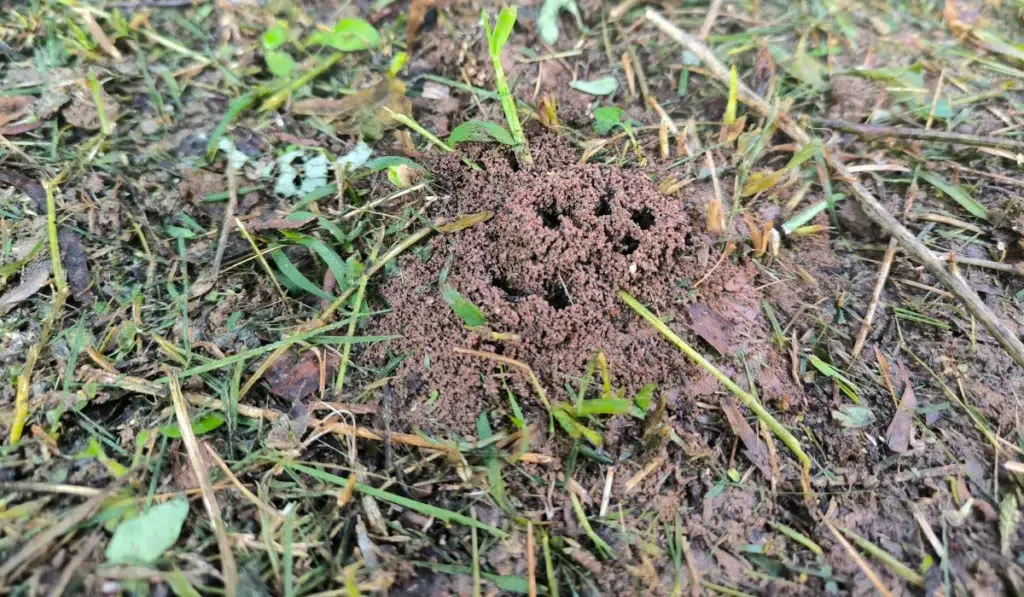
Seeing ants cross your patio, driveway, or kitchen floor does not always tell you where the colony is located. Many ants nest outdoors and send workers away from the nest to look for food and water. Others build colonies beneath stones, inside rotting wood, under concrete edges, or close to the foundation.
For homeowners in Madison, the most useful first step is observation. Instead of treating every ant you see, follow the trail, inspect the surrounding yard, and pay attention to the places where workers disappear. A visible mound can make the search easier, but not every ant species creates one.
This guide explains how to find an ant nest in your yard, which signs deserve closer attention, how to inspect safely, and when a hidden colony may require professional ant control.
Key Takeaways
- Watch the direction ants travel instead of focusing only on the ants closest to your home.
- Look for workers disappearing into soil cracks, mulch, stones, pavement edges, tree roots, stumps, fence posts, or gaps near the foundation.
- Not every ant nest creates a visible mound. Some species use shallow soil nests, hidden cavities, or several connected nesting sites.
- Carpenter ants may nest in moisture-damaged wood and leave coarse sawdust-like debris near an opening.
- Fire-ant mounds deserve caution. Do not disturb a mound with your hands, feet, or yard tools.
- Check the yard after rain because some mound activity becomes easier to notice when soil is freshly disturbed.
- Keep children and pets away from aggressive ant activity while you identify the source.
- Request professional support when the trail disappears into an inaccessible area, several nests appear active, or ants keep returning after cleanup.
Why Ant Nests Can Be Difficult to Find
Ants are social insects, and the workers you see represent only part of the colony. Foraging ants may travel away from the nest to reach food, water, or shelter. The nest entrance may be close to the activity, but it may also sit farther away in a protected part of the yard.
The University of Minnesota Extension guide to ants explains that ants often travel on regular pheromone trails between the nest and a food source. Watching where workers go can help you locate the colony. For some species, including carpenter ants, careful observation after sunset may work best.
Visible Ants May Be Far From the Nest
A trail near your patio door may start in a mulch bed, crack beside the driveway, or tree stump several yards away. Do not assume that the nest sits directly beneath the first ants you notice.
Follow the workers in both directions. One side of the trail may lead toward food or water. The other may lead back toward the nesting area.
Some Colonies Use More Than One Nesting Site
A single trail does not always lead to the colony’s only nest. Some ants maintain connected nesting sites, especially when conditions around a property provide several protected areas.
This is one reason recurring activity can continue even after a visible mound has been addressed.
Some Nests Have No Obvious Mound
Fire ants may create noticeable soil mounds, but other ants nest beneath stones, wood, pavement edges, mulch, or loose debris without building a prominent mound.
Alabama Extension notes that tawny crazy ants, for example, do not form landscape mounds and may tunnel in loose soil or nest beneath moisture-holding materials. This species should be identified professionally because its management differs from routine yard-ant control.
How to Follow an Ant Trail
Following a trail is one of the most practical ways to narrow your search. Ants may appear scattered at first, but a few minutes of observation can reveal a consistent route.
Start Near the Activity You Noticed
Choose one area where several ants are visible. Watch whether they move along a patio edge, fence line, driveway crack, exterior wall, garden border, or walkway.
A flashlight can help when ants are small or active in shaded areas.
Follow the Ants Moving Away From Food
If ants are gathering near a trash can, outdoor dining area, pet bowl, or fallen fruit, look for the workers leaving that food source. Those ants may be moving back toward the colony.
Follow the trail slowly and note where workers disappear.
Inspect the Point Where the Trail Ends
The nest entrance may look like a small opening in soil, a crack beneath a paver, a gap beside a foundation, or a concealed space beneath a stone or board.
Do not place your hand into a hole or move heavy materials without checking the area first.
Observe After Sunset When Carpenter Ants Are Possible
The University of Minnesota Extension carpenter-ant guide notes that carpenter ants search for food between sunset and midnight during spring and summer and may travel considerable distances from the nest.
If you notice large ants near wood, trees, decks, or exterior walls, observe the route in the evening with a flashlight. Avoid disturbing the suspected nesting area.
Where to Look for Ant Nests in a Madison Yard
A systematic walk around the property is more useful than random digging. Start with the places that give ants shelter, moisture, and easy access to food.
Open Lawn Areas
Look for fresh soil, small openings, or visible mounds. Fire-ant mounds may appear in sunny, disturbed areas of the yard and become easier to notice after rain.
Do not step on a mound to test whether it is active. Fire ants can respond quickly when the nest is disturbed.
Driveways, Sidewalks, and Patio Edges
Inspect cracks and seams where concrete meets soil. Ants may use gaps along driveways, pavers, sidewalks, and patio borders as protected entry points.
Pay attention to ants disappearing beneath a slab edge or into a narrow crack.
Mulch Beds and Landscaping Borders
Mulch, leaf litter, stones, and landscape edging can create sheltered areas. Lift lightweight items carefully only when you can do so without putting your hands close to an active colony.
Keep children and pets away while you inspect.
Stumps, Roots, and Firewood
Old stumps, decaying roots, fence posts, and stacked firewood deserve attention when you see larger ants nearby.
The UC IPM carpenter-ant guidance notes that main carpenter-ant nests are often outdoors in old tree stumps, fence posts, or firewood piles, while satellite colonies may occur indoors in moist wood.
Exterior Walls and the Foundation
Watch for workers trailing along siding, brick, utility lines, door frames, and foundation edges. An outdoor colony may send ants indoors through a small structural gap.
Do not seal every gap immediately if you are still tracing the trail. First determine where the ants are traveling and whether indoor activity is also present.
Outdoor Trash and Feeding Areas
Trash cans, grill areas, outdoor kitchens, pet bowls, bird feeders, and fallen fruit can support foraging activity. Clean these areas and then observe whether ants still follow the same route.
Removing food does not eliminate a colony, but it can make the trail easier to interpret.
How to Recognize Common Nesting Patterns
Different ants leave different clues. The goal is not to identify every species from a distance. The goal is to notice the pattern and understand when professional identification matters.
Soil Mounds
A mound in an open, sunny part of the yard may point to fire-ant activity. Alabama Extension describes fire-ant mounds as a familiar concern in Southern yards and notes that disturbing them can lead to stings.
Keep your distance and avoid opening the mound with a shovel, stick, mower, or foot.
Small Openings Without a Mound
Some ants enter and exit through small holes in soil, cracks, or the edges of hard surfaces without leaving a large pile of soil behind.
A steady stream of workers moving through one opening is more useful than the size of the opening itself.
Fast, Erratic Trails With Many Ants
Some nuisance ants form wide, busy trails rather than a neat line. Alabama Extension describes tawny crazy ant trails as fast-moving, erratic, and wide, with large numbers of workers. These ants may nest beneath moisture-holding materials rather than forming a mound.
When the population appears unusually large or difficult to trace, request professional identification.
Sawdust-Like Debris Near Wood
Carpenter ants do not eat wood like termites. They excavate galleries for nesting. This can leave coarse debris near an opening.
UC IPM notes that sawdust accumulations containing pieces of dead ants can help indicate carpenter-ant nesting activity. Check porches, decks, posts, tree stumps, and moisture-damaged wood.
How to Inspect Your Yard Safely
An inspection should help you understand the activity without creating an avoidable sting risk or spreading ants into another area.
Walk the Yard During Daylight
Start with a visual inspection during the day. Check lawn edges, mulch beds, patios, walkways, driveways, fence posts, stumps, utility areas, and the foundation.
Return After Sunset When Needed
If larger ants appear near wood or disappear during the day, observe the area again after sunset. Carpenter ants may be easier to track at night.
Use a Flashlight
A flashlight can make trails easier to see along concrete edges, mulch, exterior walls, and landscaping borders.
Photograph the Activity
Take a clear photo of the ants, the trail, and the suspected nesting area from a safe distance. This can help a pest-control professional evaluate the pattern.
Do Not Dig Into a Suspected Nest
Digging can disturb aggressive ants, damage landscaping, or make the activity harder to trace. Mark the location instead.
Keep Children and Pets Away
Use a temporary barrier or choose another walking route while you decide how to respond. This is especially important when a mound may contain stinging ants.
How to Tell Ants From Termite Swarmers
Winged insects near a yard or foundation can create confusion. Fire ants and other ant species may produce winged reproductives, while termites also swarm.
Alabama Extension explains that fire-ant swarmers have a narrow waist, elbowed antennae, and front wings that are longer than the hind wings. Termite swarmers have a broader waist, straighter antennae, and wings that are more similar in length.
Why Identification Matters
Ant control and termite control require different inspection and treatment plans. Do not assume every winged insect near the home is the same pest.
Collect a sample safely when possible or take a clear photo and request professional identification.
What Attracts Ants to Your Yard?
Finding the nest matters, but the surrounding conditions also deserve attention. Ant colonies remain active where they can find food, water, and shelter.
Accessible Food
Outdoor trash, spilled drinks, pet food, grill residue, birdseed, and fallen fruit can attract foraging ants. Clean up residue and store waste in containers with secure lids.
Moisture
Leaky outdoor faucets, standing water, damp mulch, irrigation issues, and moisture-damaged wood can support activity.
Fix recurring moisture and improve drainage where practical.
Protected Hiding Places
Stones, boards, stacked materials, dense mulch, leaf litter, and wood debris can provide sheltered nesting areas.
Reduce unnecessary clutter and keep the foundation visible enough to inspect.
Structural Gaps
Cracks near doors, windows, utility lines, and the foundation can give outdoor ants a route indoors.
After you identify the trail pattern, seal appropriate gaps and repair worn weather stripping.
What Not to Do When You Find an Ant Nest
Do Not Kick or Disturb a Mound
Do not test a suspected fire-ant mound with your foot, a stick, a rake, or a lawn mower. Keep people and pets away from the area.
Do Not Pour Household Chemicals Into the Nest
Avoid bleach, gasoline, harsh cleaners, and improvised mixtures. These substances can create safety concerns and damage soil or landscaping.
Do Not Spray Every Visible Ant Immediately
Spraying workers may make the trail harder to follow without addressing the colony. The UC IPM ant-management guide explains that baits can be placed near trails or nest openings so workers carry the material back toward the colony.
Use any product only as directed on the label and keep it away from children and pets.
Do Not Assume Every Ant Nest Needs the Same Treatment
Fire ants, carpenter ants, and nuisance trail-forming ants do not require identical responses. Species identification helps determine the next step.
Do Not Ignore Indoor Activity
An outdoor nest may be connected to trails entering the kitchen, bathroom, garage, or another part of the home. Extend the inspection when ants continue appearing indoors.
When to Request Professional Ant Control
A visible trail or small mound may be easy to document, but the nest can remain difficult to access. Professional support becomes more useful when activity keeps returning, the species is unclear, or the suspected colony sits beneath a slab, inside wood, or near an area your household uses regularly.
Consider requesting an inspection when:
- You cannot trace the trail to a clear nesting area.
- Ants return after food cleanup and entry-point repairs.
- Several mounds or nesting sites appear active.
- You notice aggressive ants or suspected fire-ant mounds.
- Large ants appear near wood, decks, porches, tree stumps, or exterior walls.
- You find coarse sawdust-like debris near wood.
- Ant trails move indoors through doors, windows, or utility gaps.
- The nest appears to be beneath a slab, driveway, patio, or inaccessible structure.
Magic City Pest Control provides ant-control services in Madison, AL. Its local service page describes an inspection process that identifies ant species, colony locations, entry points, and foraging trails before treatment recommendations are made.
What a Professional Inspection Should Cover
A professional inspection should evaluate the visible trail, suspected nest entrance, lawn, landscaping, foundation edges, patio and driveway cracks, woodpiles, stumps, moisture sources, and any indoor areas showing activity.
The goal is to determine whether the colony is limited to the yard, connected to an indoor problem, or spread across several nesting sites.
What an Ant-Control Plan May Include
The right plan depends on the ant species and nesting location. Magic City Pest Control states that its Madison ant-control process may include professional-grade baits carried back to the colony, targeted treatment in active areas, exterior protection, and follow-up when needed.
Homeowner prevention still matters between visits. Clean outdoor food residue, fix moisture problems, reduce clutter, and keep the perimeter easy to inspect.
Follow the Trail Before Treating the Yard
Finding an ant nest in your Madison yard starts with patient observation. Follow workers away from food sources, inspect the places where trails disappear, and check common nesting areas such as lawn edges, mulch beds, cracks, stones, stumps, firewood, and foundation gaps.
Do not assume every nest creates a mound. Keep your distance from aggressive activity, avoid household chemicals, and document the location before attempting any label-directed control step.
If the colony remains hidden or ants keep returning, request a free quote from Magic City Pest Control to discuss ant activity around your Madison property.
Frequently Asked Questions
What is the easiest way to locate an ant nest?
Watch ants leaving a food or water source and follow the workers in the direction they travel. Look for the point where they disappear into soil, mulch, a crack, wood, or another protected area.
Do all ant nests create visible mounds?
No. Some ants build noticeable soil mounds, while others nest beneath stones, mulch, pavement edges, wood, or loose debris. A steady trail entering one opening can be more useful than a visible mound.
Should I follow ants at night?
Nighttime observation can help when carpenter ants may be involved. These ants often forage after sunset. Use a flashlight and avoid disturbing the suspected nest.
How can I tell whether a mound contains fire ants?
Do not disturb the mound to test it. Fire-ant mounds often appear in sunny, disturbed areas of a yard. Keep children and pets away and request professional identification when you are unsure.
What does a carpenter-ant nest look like?
Carpenter ants may nest in moisture-damaged wood, tree stumps, fence posts, or firewood. Coarse sawdust-like debris near an opening can be a useful clue.
Can ants nest beneath a driveway or patio?
Yes. Ants may use cracks and protected spaces where concrete meets soil. Watch for workers entering a seam, slab edge, or narrow opening.
Should I spray ants while I am tracing the nest?
Do not spray the trail before you understand where it leads. Treating visible workers may make the route harder to trace without addressing the colony. Use any control product only as directed on the label.
When should I call a pest-control professional?
Request an inspection when the nest remains hidden, ants behave aggressively, several nesting sites appear active, carpenter-ant signs are present, or trails continue entering the home.


