


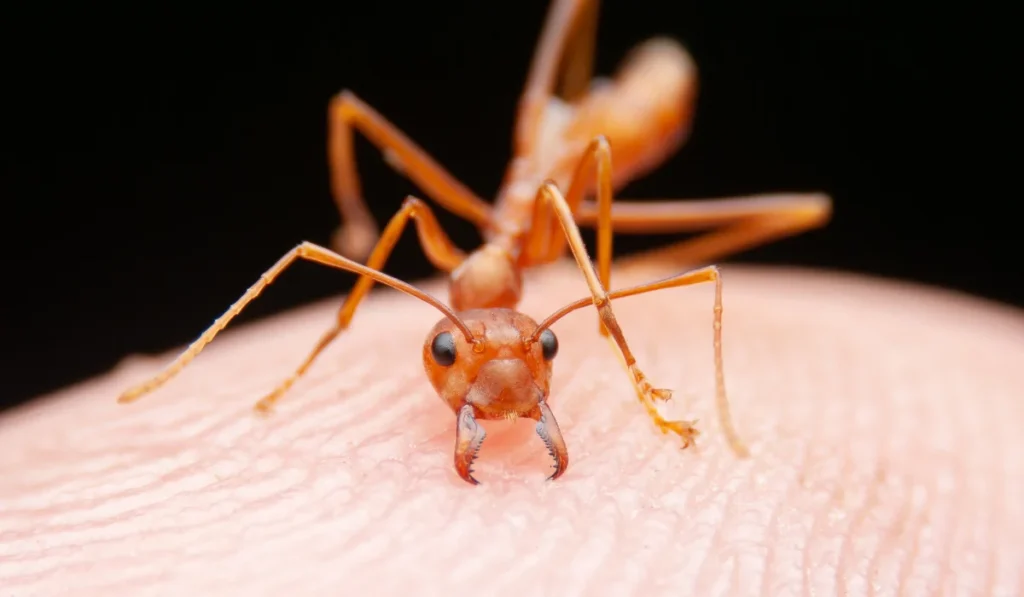
Finding ants on your counter is frustrating, and it may not seem serious at first. When ants crawl near your food, you may wonder: Can ants make you sick?
In Alabama, ants stay active all year. Fire ants in the yard and carpenter ants in damp crawl spaces often enter homes in Birmingham and nearby areas. Ants may look harmless, but they can cause health problems in certain situations.
If you have an ant infestation, you should know how ants spread bacteria, when stings turn dangerous, and how ant control in Alabama protects your home and family.
Key Takeaways
- Ants can spread bacteria such as Salmonella, E. coli, and Staphylococcus. They move between trash, soil, and kitchen surfaces, contaminating food.
- Fire ants cause painful stings and, in rare cases, severe allergic reactions such as anaphylaxis that require immediate medical attention.
- A large or ongoing ant infestation increases risk because more ants travel between dirty areas and food prep spaces.
- Effective ant control focuses on eliminating the entire ant colony, sealing entry points, reducing food and moisture sources, and using professional pest control when needed.
How ants can make you sick
To understand the health risks, you need to look at how ants behave.
Ants live in large, organized colonies. One colony can contain thousands of worker ants searching for food each day. Their strong jaws help them squeeze into small gaps and carry food back to the nest.
When ants move from dirty areas to clean surfaces, they spread germs.
Spreading bacteria and pathogens
Ants travel through soil, garbage, drains, and pet waste before entering your kitchen. Along the way, they pick up bacteria such as Salmonella, E. coli, and Staphylococcus.
Research published in the National Institutes of Health database found that ants collected from domestic kitchens carried coliforms, Bacillus species, E. coli, Salmonella, Listeria, and fungi, highlighting their potential to transfer harmful microorganisms to food.
When ants crawl across countertops, dishes, or pantry shelves, they leave bacteria behind. The bacteria they leave on surfaces increase the risk of foodborne illness, especially for young children, older adults, and people with weakened immune systems.
Some species, such as pharaoh ants, nest indoors. Their small size lets them move through wall spaces and spread contamination inside the home.
Food contamination and foodborne illnesses
Ants constantly search for food. Sugar spills, crumbs, pet food, and even unopened packages attract them.
Ants can chew through some packaging and contaminate dry goods. Even if the food looks untouched, bacteria may still be present. Repeated contamination increases health risks over time.
Ants do not spread disease as rodents do, but they still create health hazards when infestations go unchecked.
Ant bites, fire ant stings, and allergic reactions
In Alabama, fire ants create serious outdoor problems. Unlike many other species, fire ants act aggressively. They sting multiple times when someone disturbs their mound.
Fire ant stings cause painful welts. Most people recover quickly. However, some people develop allergic reactions. In rare cases, a severe allergic reaction leads to anaphylaxis, a life-threatening condition that requires immediate medical care.
If someone has trouble breathing, swelling of the face or throat, or dizziness after a fire ant sting, seek medical help right away.
What ant contamination risks really look like
Many homeowners picture extreme situations when they think about ant-related illness. Most contamination happens during normal daily activity.
Kitchen cross-contamination
Ants enter through small cracks around windows, doors, and foundations. Once inside, they follow scent trails.
If ants travel through trash or drains first, they carry bacteria onto counters and cutting boards. When a large colony stays active indoors, the risk of contamination increases.
Pantry infestations
A small spill in the pantry can attract a few ants. Soon, hundreds may follow.
Carpenter ants often enter homes because of moisture-damaged wood, but they also search for food. If ants invade dry goods, you must throw the food away. Their presence often means a colony nests nearby.
Different ant species prefer different foods. Proper identification helps guide treatment.
Outdoor-to-indoor movement
Heavy rain often pushes fire ants closer to homes. They may build nests near the foundation.
When ants move indoors, they bring soil and bacteria with them. Carpenter ants can also damage damp wood by hollowing it out to build nests.
An outdoor ant problem can quickly turn into a larger indoor issue.
When ant contamination becomes a bigger concern
While Alabama is home to several species of ants, not every ant sighting is serious. But certain situations increase health risks.
Large or ongoing ant infestation
A few ants are common. A steady trail means a well-established ant colony nearby. In Alabama, summer weather often drives ants into kitchens as they search for water and reliable food sources.
More ants moving between dirty areas and your kitchen increases the risk of contamination. Sprays and repellents may drive ants away, but they do not solve the problem.
Professional pest control focuses on eliminating the colony, not just the visible ants.
Vulnerable family members
Homes with infants, elderly adults, or people with health conditions face a greater risk from bacterial exposure.
If someone in your home has reacted to fire ant stings before, future stings may cause more severe allergic reactions.
Moisture and structural issues
Carpenter ants prefer damp wood around windows, roofs, and crawl spaces. While termites cause more destruction, carpenter ants still damage wood over time.
Moist areas within walls also provide ants with nesting sites, increasing contamination and structural concerns.
Ant prevention steps that reduce contamination
If you want to get rid of ants and lower health risks, focus on prevention and long-term ant control.
Seal entry points
Check for cracks around doors, windows, and utility lines. Seal openings to block access.
Remove food sources
Store food in airtight containers. Clean spills right away. Avoid leaving pet food out overnight.
When you remove food sources, ants are less likely to return.
Fix moisture problems
Repair leaks and improve drainage around your foundation. Controlling moisture also helps prevent termites and other pests.
Use targeted treatments
Ant bait is often more effective than surface repellents. Bait allows worker ants to carry the treatment back to the colony.
A professional pest control service will identify the specific ant species and apply the right strategy. Ongoing pest management helps prevent future infestations.
Request an ant inspection in Alabama
So, can ants make you sick? Yes, they can.
In Alabama’s warm climate, multiple species of ants thrive. Without proper ant control, a minor issue can grow into a serious problem that affects your home and your family’s safety.
If you notice repeated trails, indoor nesting, or fire ant mounds near your home, our team at Magic City Pest Control can help. We design our professional pest control and targeted pest management services specifically for Alabama homeowners.
Contact us today or request a free quote and schedule your ant inspection. Let’s eliminate the ant colony and protect your home from ongoing health risks.
FAQs
Can ants directly transmit diseases like mosquitoes do?
Ants do not transmit diseases through bites like mosquitoes. However, they can carry pathogens on their bodies and contaminate food or surfaces, increasing the risk of foodborne illnesses.
Are carpenter ants as harmful as termites?
Carpenter ants do not eat wood like termites, but they can cause property damage by tunneling through damp wood to build nests. Both pests require professional evaluation if found indoors.
When should you call a pest control service for ants?
If you see ongoing trails, repeated pantry contamination, indoor nesting, or fire ant mounds near your home, contact a professional pest control service to eliminate the entire ant colony and prevent further health risks.


