

In Alabama, warm weather brings more outdoor time, but it also brings wasps. Many people expect wasps to be dangerous, and sometimes they are. Some species pollinate plants and control pests, while others are aggressive and can sting when threatened.
If you notice wasp nests under your eaves or yellow jackets flying around your yard, this is a common issue for homeowners across Alabama. Knowing which wasp species you see around your home helps you respond safely and avoid stings.
This guide explains the most common wasps in Alabama, where they build nests, and what to do if they settle too close to your home.
Key Takeaways:
- Alabama’s warm climate supports many wasp species, including yellow jackets, paper wasps, and mud daubers.
- Wasps help nature by pollinating plants and reducing pest insects like caterpillars and spiders.
- Some wasps become territorial when defending nests and can cause painful stings or allergic reactions.
- Regular inspections and professional pest control help manage wasp problems and reduce new nest activity around homes.
Video Guide: Bees vs. Wasps vs. Hornets
This video can help you distinguish these stinging flying insects. Understanding their differences can help you stay safe outdoors, protect pollinators like honey bees, and know when a nest might require professional removal.
Understanding Wasps in Alabama
Alabama is home to many different types of wasps. Both social and solitary wasps thrive in the state.
Social wasps, such as yellow jackets and paper wasps, live in groups and strongly defend their nests. Solitary wasps like mud daubers, potter wasps, and thread-waisted wasps live alone.
They rarely sting and hunt insects, including caterpillars and spiders. Both types help protect gardens, crops, and the local food supply across Alabama.
Experts explain that wasps help control pest populations by feeding on insects like caterpillars, spiders, and cicadas. Still, finding multiple nests around eaves or overhangs can indicate a larger issue that requires professional removal.
We offer safe, professional wasp control across Alabama, helping you remove nests quickly and keep your home comfortable all season long.
Common Types of Wasps Around Alabama Homes
Paper Wasps
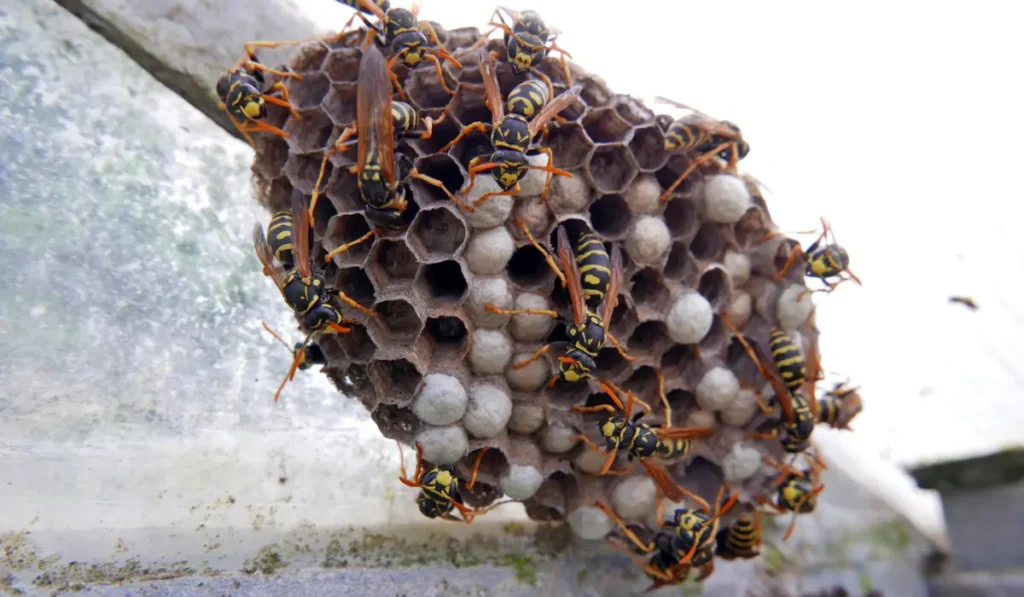
They build umbrella-shaped nests using wood fibers mixed with saliva. These nests often attach under eaves, porch ceilings, and roof edges.
Paper wasps usually avoid people, but they will sting with their stinger if someone disturbs the nest. Wasp stings can cause pain, swelling, and irritation. If you find an active nest near your home, avoid touching it. A pest control company can safely remove it.
Yellow Jackets
According to the Alabama Cooperative Extension System, yellow jackets are Alabama’s most aggressive wasps. They build yellow jacket nests underground or inside walls and can sting repeatedly. Their stings can trigger severe allergic reactions.
These wasps search for food sources, especially in late summer. Open trash cans, sugary drinks, and uncovered food attract them. Keeping food sealed and trash bins closed helps reduce activity, but persistent issues often require professional pest control.
Mud Daubers, Potter Wasps, and Digger Wasps
Mud daubers and potter wasps live alone and rarely sting. Mud daubers build long mud tubes under eaves and ledges. Potter wasps create small clay pots attached to walls or surfaces. Digger wasps nest in soft soil, garden beds, or sandy areas.
These wasps rarely harm people, but their nests can look messy on homes, patios, and garages. Pest control professionals can remove nests without damaging surfaces.
Bald-Faced Hornets and European Hornets
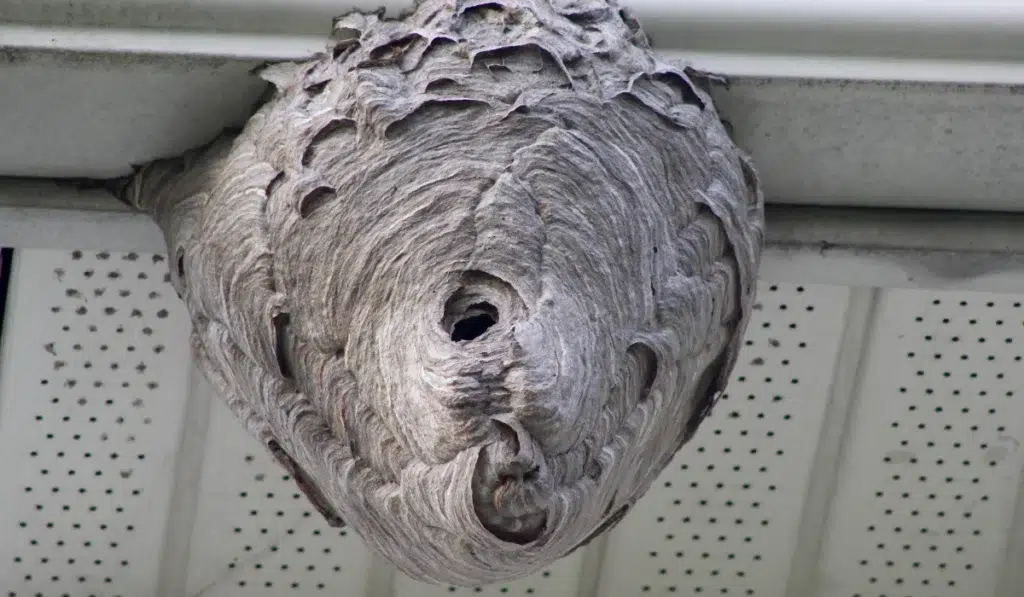
Bald-faced hornets are large black-and-white wasps that build round paper nests in trees, shrubs, or rooflines. European hornets are reddish-brown and often nest inside hollow trees, attics, or wall spaces.
Both species deliver strong, painful stings. Their size and aggressive nest defense make them dangerous to handle. Only trained professionals should remove hornet nests.
We treat hornet infestations across Birmingham, Huntsville, and nearby Alabama communities.
Why Wasps Are Attracted to Alabama Homes
Wasp activity spikes in July because warm weather, open food, and shelter attract them to Alabama homes. Eaves, gutters, and overhangs offer protection from rain and predators. Trash, pet food, and sugary drinks draw in yellow jackets.
Honey bees may build honeycomb in similar areas, but they are protected pollinators. Wasps hunt other insects and pose more risk when they nest near people.
If you see frequent wasp activity around your home, early pest control can stop nests from spreading.
How to Stay Safe Around Wasps
Wasps defend their nests when they feel threatened. Avoid swatting at them, and keep children and pets away from known nesting areas.
DIY wasp control methods can backfire, leading to injuries or property damage. Spraying nests, striking them with tools, or using homemade solutions can trigger wasp swarms. What seems like a quick fix can become dangerous.
A trained pest control team removes nests safely, even in high or hidden areas, and treats those locations to reduce future wasp activity.
Making the Right Wasp Control Choice for Your Alabama Home
When wasps settle too close to living spaces, quick action can help avoid injuries and property issues. Addressing the problem early reduces risks and limits future nesting in hard-to-reach areas.
At Magic City Pest Control, we offer professional wasp control services throughout Birmingham, Huntsville, and surrounding Alabama communities.
Contact us today to schedule an inspection or request a free quote.
FAQs
What months are wasps most active in Alabama?
Wasps are most active from April through October. They build nests in spring and are most aggressive in late summer and early fall.
Are bald-faced hornets common in Birmingham and Huntsville?
Yes. Bald-faced hornets are widespread in central and north Alabama. You can often spot their large paper nests hanging in trees or tucked into roof corners.
How can I prevent wasps from nesting on my property?
Seal cracks in siding, keep trash bins closed, and avoid leaving sugary drinks outside. Routine pest control treatments and repellent applications help reduce repeat nesting.