

Paper wasp nests are common around homes and businesses in Madison, Alabama. You may notice them under eaves, along porch ceilings, or attached to rafters in garages. At first, a small nest may not seem like a problem, but activity can grow quickly as new colonies develop.
These stinging insects are active during warm months and can deliver painful stings if disturbed. While paper wasp behavior is often less aggressive than yellowjackets or hornets, they will defend their nest if they feel threatened.
This guide explains how to identify paper wasp nests, how to tell them apart from other types of wasp nests, and when to call a pest control professional for safe wasp nest removal.
Key Takeaways
- Paper wasp nests have an open, umbrella shape with visible hexagonal cells.
- These nests are made from chewed wood fibers and attached by a single point.
- Paper wasps are less aggressive than yellowjackets but can still cause painful stings.
- Common nesting sites include eaves, porch ceilings, rafters, and tree branches.
- A pest control professional can safely handle paper wasp infestations and removal.
What a Paper Wasp Nest Looks Like
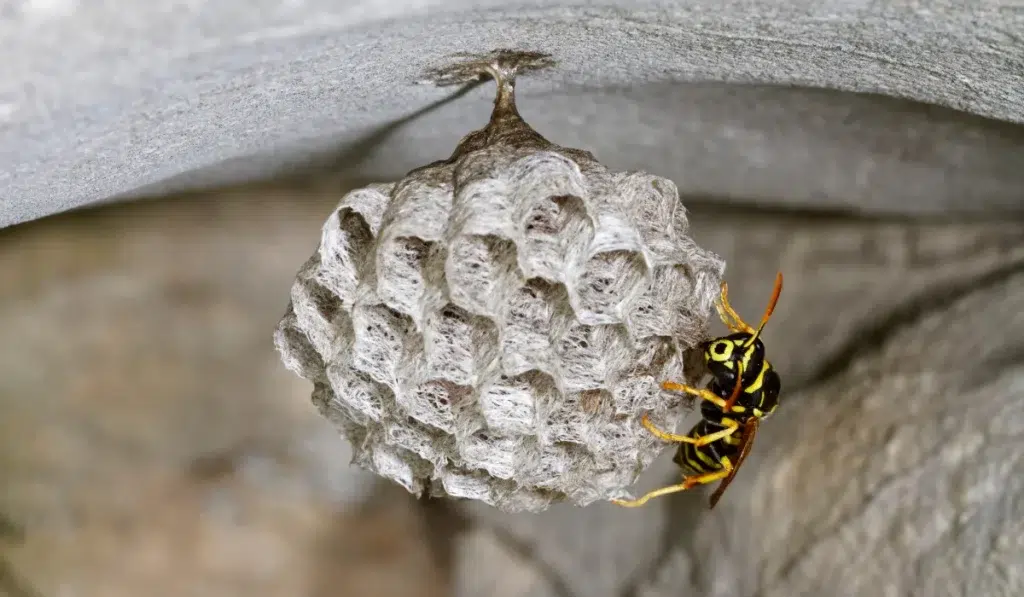
Paper wasp nests have a distinct look that makes them easier to identify once you know what to look for. These nests are built from chewed wood fibers and have a simple, open structure.
Open, Umbrella-Shaped Design
Paper wasp nests hang downward and look like an upside-down umbrella. Unlike enclosed nests, these comb nests are open and easy to see.
Each nest starts as a small nest in early spring and grows as more wasps join the colony. You may see larvae inside the cells as the nest develops.
Visible Hexagonal Cells
The surface of a paper wasp nest is made up of hexagonal cells. These cells are where wasps lay eggs and raise their young.
Because the cells are not covered, you can often see egg-laying activity and developing larvae inside the nest.
Gray, Paper-Like Material
Paper wasps build nests using chewed wood mixed with saliva. This creates a gray, paper-like texture.
You may notice the nest looks thin and layered compared to other nests made by mud dauber or hornets.
Open-Cell Shape and Surface Texture
The shape and surface of a paper wasp nest help set it apart from other stinging insects in North America.
Thin, Layered Structure
Paper wasp nests are made from wood fibers and appear thin and lightweight. The texture comes from chewed wood that forms a layered surface.
This is different from thicker nests built by hornets or the mud tubes built by mud daubers.
No Outer Covering
One key feature is the lack of an outer shell. Paper wasp nests stay open, exposing the hexagonal cells.
This open design makes it easier to spot nests under overhangs, eaves, and sheltered areas.
Attached by a Single Point
Most paper wasp nests are attached by a small stem at the top. This single connection point allows the nest to hang freely.
You will often see them under porch ceilings, along rafters, or on tree branches around your property.
Paper Wasp Nests vs Look-Alike Nests
Not all wasp nests look the same. Knowing the difference can help you avoid confusion and reduce the risk of wasp stings.
Paper Wasps vs Yellowjackets
Yellowjackets build enclosed nests, often hidden in wall voids or underground. Yellowjacket nests are not open like paper wasp nests.
Yellowjackets are also more aggressive and more likely to cause painful stings when disturbed.
Paper Wasps vs Hornets
Hornets build large, enclosed nests with a thick outer layer. These nests often hang from tree branches or structures.
Unlike paper wasp nests, hornet nests fully cover the inner cells, making them harder to see.
Paper Wasps vs Mud Dauber Nests
A mud dauber builds nests from mud instead of wood fibers. These nests look like tubes or clumps attached to walls.
Mud daubers are less aggressive and often target caterpillars for food, which helps with pollination and pest control in some areas.
Paper Wasps vs Honey Bees
Honey bees build wax-based hives, not paper nests. A beehive has a different structure and supports pollination in the environment.
If you are unsure, a pest control professional can help identify the type of wasp or insect you are dealing with.
Paper Wasp Nest Inspection in Madison
If you suspect a nest on your property, inspect common nesting sites carefully. Look under eaves, porch ceilings, and overhangs where wasps build nests in sheltered areas.
Check rafters, garages, and tree branches for early signs of new nests. Catching a small nest early can help prevent larger paper wasp infestations later in the season.
Keep in mind that paper wasps overwinter in protected areas, and new queens start new nests in spring. This means the same nesting sites may be reused year after year.
While some homeowners attempt removal, working near active nests increases the risk of wasp stings. A pest control professional can provide safe wasp control and remove nests without putting you at risk.
Magic City Pest Control offers pest control services in Madison and the surrounding areas. Their team can inspect nesting sites, identify the species of paper wasps, and handle wasp nest removal safely.
Schedule Wasp Nest Removal in Madison, AL
Paper wasp nests may start small, but they can grow quickly as new colonies form. Trying to remove an active nest on your own can lead to wasp stings and increase the risk around your home or business.
Magic City Pest Control provides wasp control and pest control services in Madison, Alabama. Our team can inspect nesting sites, identify the wasp species, and safely remove the nest. Contact us today for a free quote and let us help protect your property from stinging insects.
FAQs
How can I tell if it is a paper wasp nest?
Paper wasp nests have an open structure with visible hexagonal cells and no outer covering. They are usually found under eaves, porch ceilings, or other sheltered areas.
Are paper wasps dangerous?
Paper wasps can cause painful stings if their nest is disturbed. While they are less aggressive than yellowjackets, they will defend their nest if needed.
Should I remove a paper wasp nest myself?
Removing a nest yourself can be risky. A pest control professional can safely remove wasp nests and reduce the risk of stings.