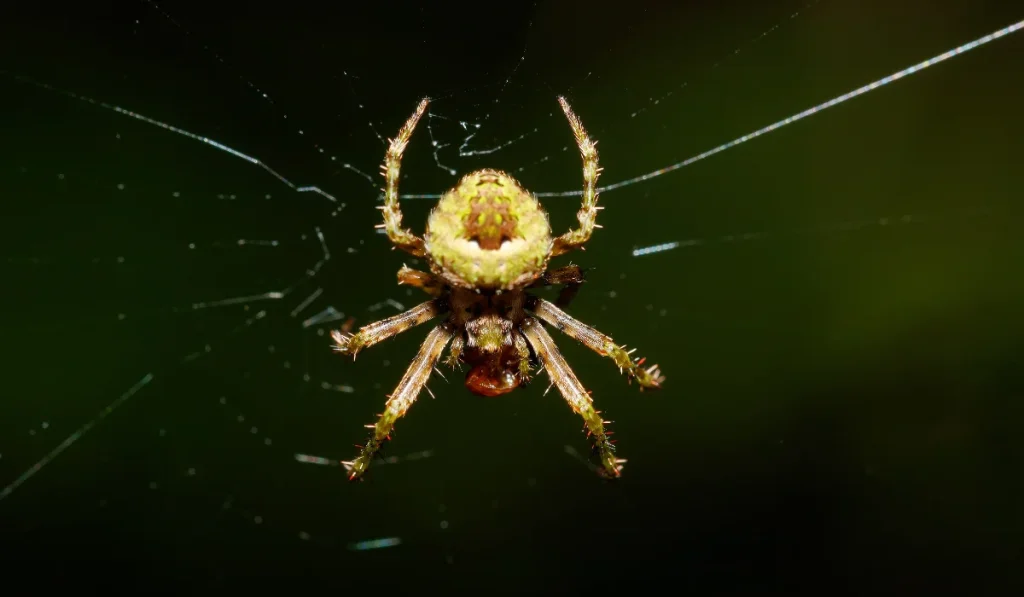


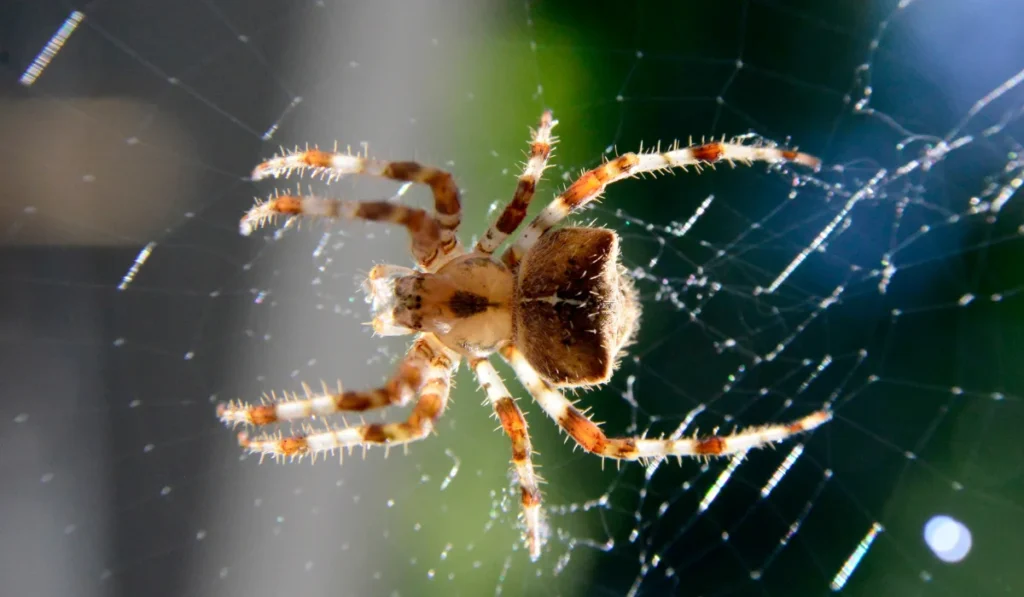
If you walk outside early in the morning and notice a large circular web across a porch or between shrubs, you are likely seeing orb weaver spiders in Alabama. These spiders are common across Alabama, especially during warm months when insect activity increases, and webs appear overnight.
Although their size and large webs can surprise homeowners, Alabama orb weaver spiders are usually harmless and help control flying insects. These arachnids build distinctive wheel-shaped webs and commonly appear around gardens, porch lights, and landscaping.
Because Alabama’s warm climate supports dozens of spider species, it can be difficult to tell whether the spider you spotted is a common orb weaver or another type. Learning how to identify them helps you know if the spider is a helpful garden hunter or if you may need professional spider control in Alabama.
Key Takeaways
- Orb weaver spiders are common outdoor spiders in Alabama that build large circular webs overnight.
- Most orb weaver species are harmless and help control insects around properties.
- Several spiders resemble orb weavers, including jumping spiders, wolf spiders, and crab spiders.
- Professional spider control can help reduce spider activity around entryways, landscaping, and buildings.
How to Identify Orb Weaver Spiders
It becomes easier to recognize orb weaver spiders in Alabama once you know the traits they share. Several species appear across the Southeast, including the spotted orb weaver, marbled orb weaver, the orchard spider, and the well-known yellow garden spider.
Body Shape and Size
One of the easiest ways to identify an orb weaver is its rounded abdomen. Many species have large, bulbous bodies that make them appear bigger than most other spiders around homes. The common orb weaver, including species like Neoscona crucifera and the furrow orb weaver, can grow close to an inch in body length.
Color patterns vary widely. Some species appear brown or gray, while others show bright markings. For example, the marbled orb weaver often has orange or marbled patterns, while the spotted orb weaver displays white dots across the abdomen.
The well-known yellow garden spider stands out for its bold black-and-yellow coloring. In southern states, you might also encounter the golden silk orb-weaver, which spins strong, golden-colored webs commonly seen in parts of Florida and occasionally across the Southeast.
Web Structure
The web itself is often the biggest clue. Orb weavers build large circular webs that resemble a bicycle wheel. The design includes evenly spaced spokes connected by spiral threads.
These webs usually appear in areas where insects are plentiful. You may see them between tree branches, around porch lights, or stretched across walkways in the morning.
Many orb weaver spiders build their webs at night and remove or rebuild them during the day. That’s why homeowners sometimes notice a large web appearing overnight and disappearing the next afternoon.
Behavior
Behavior is another clue when identifying an orb weaver. Unlike aggressive hunters such as the wolf spider or jumping spider, orb weavers stay in their webs waiting for insects to become trapped.
Most species remain outdoors and rarely enter homes. When disturbed, they often drop from their web and hide in nearby vegetation rather than chase or confront people.
This behavior is one reason orb weavers are considered helpful parts of the local ecosystem.
Common Orb Weaver Lookalikes
Because many spiders share similar colors or body shapes, homeowners sometimes mistake other spiders for orb weavers in Alabama, especially when comparing them to other types of spiders found in Birmingham. A few similar species include the following.
Crab Spiders
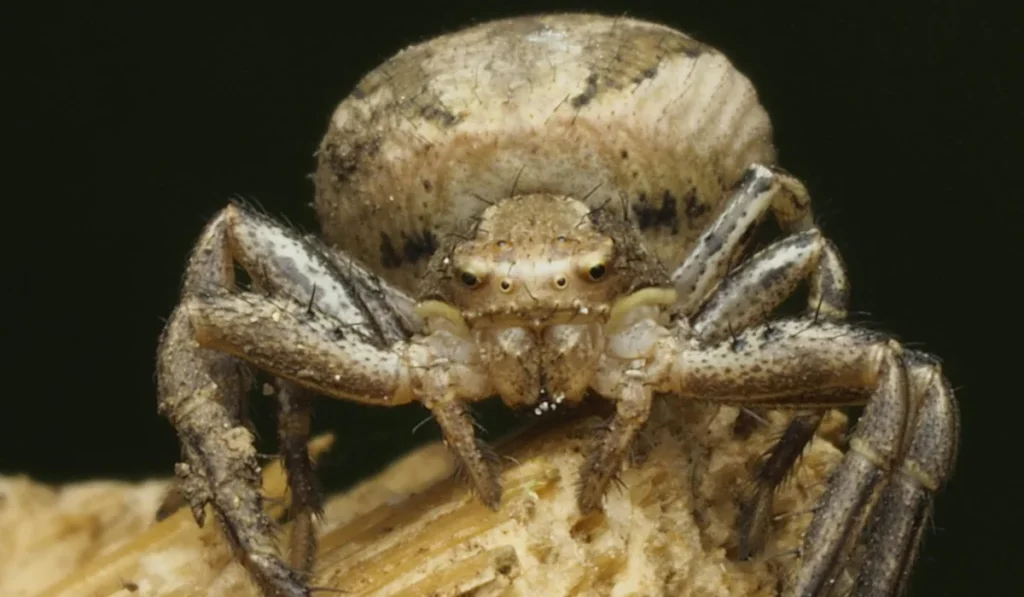
The crab spider gets its name from its sideways walking motion and wide front legs. Unlike orb weavers, a crab spider does not build a large web. Instead, it hides on flowers or plants and waits to ambush passing insects.
Crab spiders often appear in gardens and landscaping beds, where they blend into petals or leaves.
Jumping Spiders
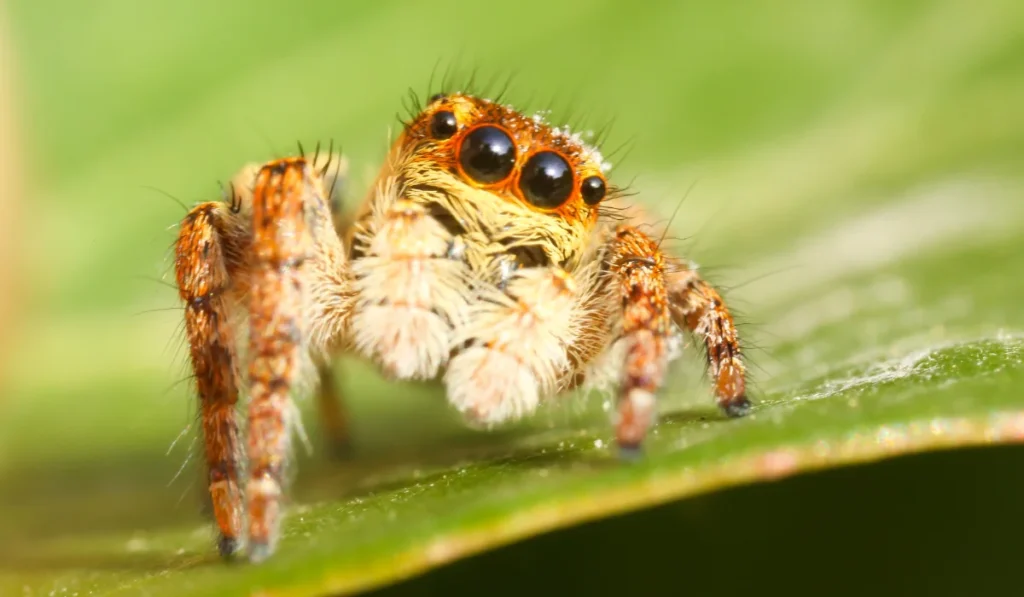
A jumping spider is smaller than most orb weavers but easy to recognize because of its large front eyes and quick movements. Some species found in Alabama include the magnolia green jumper and the dimorphic jumper.
Rather than building webs, these spiders actively hunt insects during the day. Their curiosity and quick jumps sometimes startle homeowners who spot them indoors.
Wolf Spiders and Trapdoor Spiders
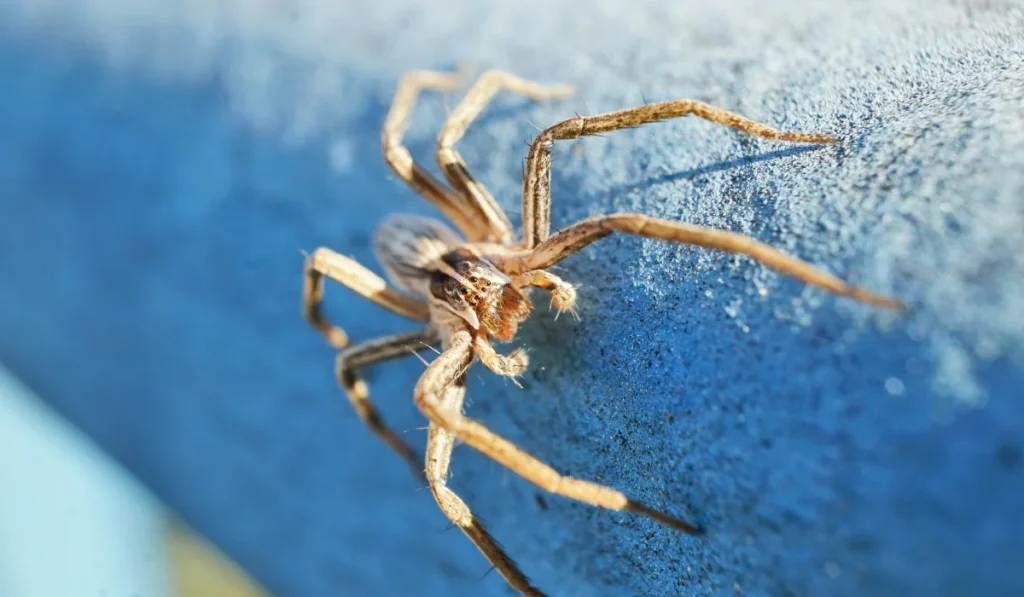
The wolf spider is a large ground-dwelling hunter that runs quickly across yards or garages. It does not build webs like orb weavers and instead pursues prey on foot.
Similarly, the trapdoor spider lives underground and creates silk-lined burrows with small hinged doors. These spiders rarely appear around homes unless the soil is disturbed.
Other Household Spiders
Some spiders that live around homes may also resemble small orb weavers at a glance. These include the common house spider, the southern house spider, the cellar spider, and the triangulate cobweb spider.
In rare cases, homeowners worry about venomous species such as the brown recluse (Loxosceles reclusa), brown widow, or southern black widow (Latrodectus mactans). While these spiders are not orb weavers, misidentification sometimes causes unnecessary concern.
Why They’re Around Your Home
When orb weaver spiders appear around your property, it usually means insects are nearby for them to feed on. These spiders are natural pest managers and often appear where insect populations are active.
Outdoor Lighting and Insects
Porch lights, garage lights, and commercial building lights attract flying insects at night. Orb weavers quickly take advantage of these feeding opportunities by building webs nearby.
Homes and businesses in areas like Birmingham often see increased spider activity during summer when moths, beetles, and mosquitoes gather around lights after dark, which is why many homeowners look for ways to keep spiders out of their homes during Alabama’s rainy season.
Landscaping and Vegetation
Dense shrubs, flower beds, and garden areas create perfect web locations. Spiders can anchor their webs between branches, fences, and patio furniture.
Garden environments also support insects, making landscaping an ideal habitat for species such as the spiny-backed orb weaver, spined micrathena, arrow-shaped micrathena, and gasteracantha cancriformis.
Nearby Water Sources
Properties with ponds, creeks, or heavy irrigation often attract insects like mosquitoes and flies. Larger spiders, such as the fishing spider or Dolomedes species, sometimes appear in these areas as well. While uncommon in most neighborhoods, large ground-dwelling spiders, such as tarantulas, can also live in parts of the Southeast.
In regions near Tennessee or across northern Alabama, these habitats can support a variety of outdoor spiders, including both orb weavers and ground hunters.
Natural Insect Control
Orb weavers are part of the natural balance of outdoor environments. By capturing flying insects in their webs, they help limit pest populations around homes and landscapes.
However, when webs begin to appear near entryways, walkways, or outdoor seating areas, many property owners choose professional pest control to reduce spider activity.
Schedule an Alabama Spider Inspection
Seeing a single web in the yard usually isn’t a concern. However, if you notice frequent spider activity around doors, windows, or commercial entrances, it may help to schedule an inspection.
A pest inspection can show where spiders build webs and why they are drawn to certain areas, helping homeowners understand how to prevent spider infestations around their property.
During a pest inspection, technicians can look for conditions that attract spiders, such as outdoor lighting, nearby vegetation, entry points, and insect activity.
Professional pest control services can help reduce spider activity and web buildup around patios, porches, and other exterior areas of homes and buildings. Treatments often focus on entry points, exterior walls, and areas where insects gather.
If orb weaver spiders in Alabama are appearing regularly around your property, our team at Magic City Pest Control can help. We provide residential and commercial pest control services in the Birmingham area.
If spider activity around your home or business becomes a concern, contact us today to schedule a pest inspection.
FAQs
What do orb weaver spiders look like in Alabama?
Orb-weaver spiders usually have rounded bodies and long legs with distinctive patterns or markings. Many species build large circular webs between trees, shrubs, or structures. Common Alabama species include the spotted orb weaver, the yellow garden spider, and the marbled orb weaver.
Are orb weaver spiders dangerous?
Orb weavers are generally harmless to people. They rarely bite and prefer to stay in their webs outdoors. These spiders help control insects such as mosquitoes and flies, which makes them beneficial in many outdoor environments.
Why do orb weavers build webs around homes?
Orb weavers build webs where insects are active. Porch lights, landscaping, and water sources attract flying insects that become trapped in their webs. Homes and businesses with outdoor lighting often provide the perfect feeding location for these spiders.