


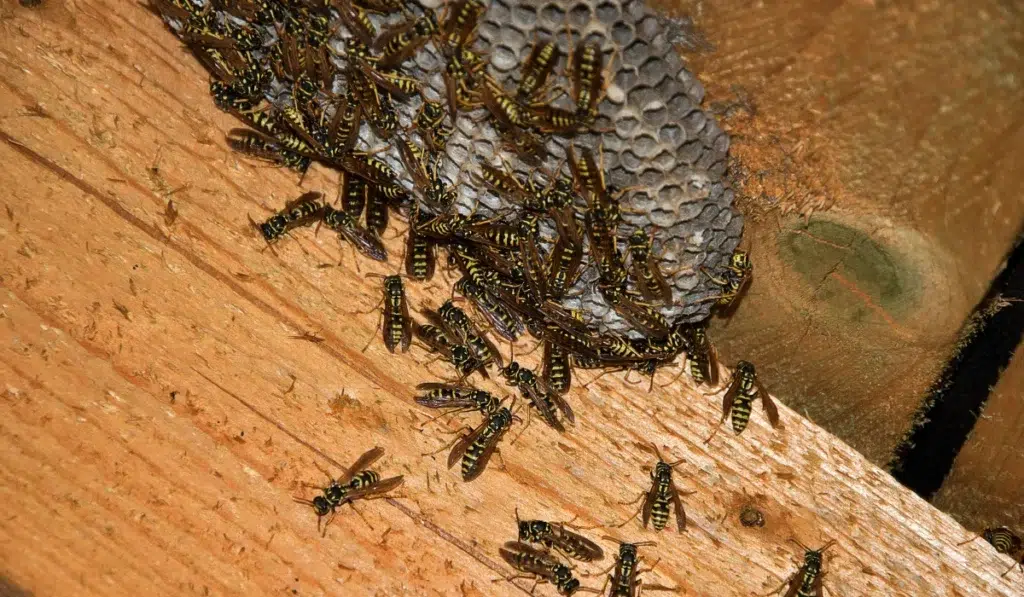
Wasp activity in Alabama changes with the seasons. Homeowners may notice a few queens scouting sheltered areas in spring, more worker traffic around eaves and shrubs during summer, and heavier yellowjacket activity near outdoor food and trash toward late summer and fall.
The most important point is that not every wasp sighting means a nest is nearby. Some wasps are simply foraging. However, steady back-and-forth traffic to the same eave, bush, ground opening, shed, grill, or wall gap deserves a closer look from a safe distance.
This guide explains when wasps are most active in Alabama, how common stinging insects behave through the year, which signs suggest a nearby nest, and when professional support may be the safer next step.
Key Takeaways
- Social wasp colonies begin building in spring and become more noticeable as the colonies grow through summer.
- Yellowjacket activity often becomes more intense in late summer and fall in Alabama.
- Paper wasps commonly build nests beneath eaves, inside sheds, beneath porch ceilings, in shrubs, and in other sheltered locations. Yellowjacket nests may be underground or above ground in wall voids, crawl spaces, attics, stumps, or other cavities.
- Repeated flight to one opening is more significant than a few wasps moving randomly through the yard.
- Do not disturb a ground opening, hidden void, or elevated nest to test whether it is active.
- Cover outdoor food and drinks, keep trash cans closed, collect fallen fruit, and inspect sheltered areas before yard work.
- Request professional support when a nest sits near an entrance, play area, patio, walkway, or other high-traffic space.
When Are Wasps Most Active During the Year?
For many social wasps, the annual cycle starts in spring. A queen that survived the winter begins a new colony, raises the first workers, and expands the nest as warmer weather continues.
The Mississippi State University Extension overview of yellowjackets and hornets explains that an overwintered queen starts a new colony in spring and that the colony grows during summer as more workers develop.
Spring: Queens Begin New Colonies
Spring is the early nest-building stage. Homeowners may notice a small paper nest with only a few open cells beneath an eave, porch ceiling, shed roof, or sheltered outdoor structure.
Activity can be easy to miss during this period because the colony is still small. A quick visual inspection around common nesting sites can help you spot a nest before it becomes harder to manage.
Summer: Worker Activity Increases
As the colony grows, workers begin traveling more frequently between the nest and food sources. You may notice more wasp traffic around shrubs, gardens, grills, trash cans, outdoor dining areas, and sugary drinks.
Mississippi State University Extension notes that adult social wasps feed on nectar and juices while workers hunt prey such as caterpillars or spiders to feed developing larvae.
Late Summer and Fall: Yellowjackets Become More Noticeable
The Alabama Extension guide to yellowjackets identifies the end of summer and fall as peak yellowjacket season in Alabama. During this period, yellowjackets may become especially noticeable around backyards, picnics, trash containers, and other food sources.
Late-season activity deserves caution because nests may contain many workers and can be easy to disturb during mowing, trimming, or yard work.
Winter: Social Colonies Decline
Most social wasp colonies do not remain active year-round. Mississippi State University Extension explains that workers die with the first frosts while fertilized queens survive in sheltered locations and begin new colonies the following spring.
An old paper nest may remain visible after the colony is gone. However, do not assume a nest is abandoned without observing the area from a safe distance.
What Time of Day Are Wasps Most Active?
Many wasps are easier to notice during daylight when they are foraging, moving between the nest and food sources, or hunting prey.
The Utah State University Extension guide to yellowjackets, hornets, and paper wasps notes that yellowjackets can be especially aggressive during the day while searching for food.
Daytime Is Better for Observation
If you suspect a nest, observe the area during daylight from a safe distance. Look for repeated traffic to one opening rather than approaching the nest.
Take a photo or note the location so a pest-control professional can inspect the area more safely.
Do Not Approach the Nest at Night
Wasps may be less active after dark, but that does not make a hidden or elevated nest safe for DIY removal. Ground nests, wall voids, attic areas, and high eaves can create serious sting risks when disturbed.
Leave treatment and removal to a trained professional, especially when the nest location is difficult to access.
Which Wasps Are Common Around Alabama Homes?
Different wasps use different nesting sites. Identification matters because an open paper nest beneath an eave is not the same problem as a yellowjacket colony hidden in the ground.
Paper Wasps
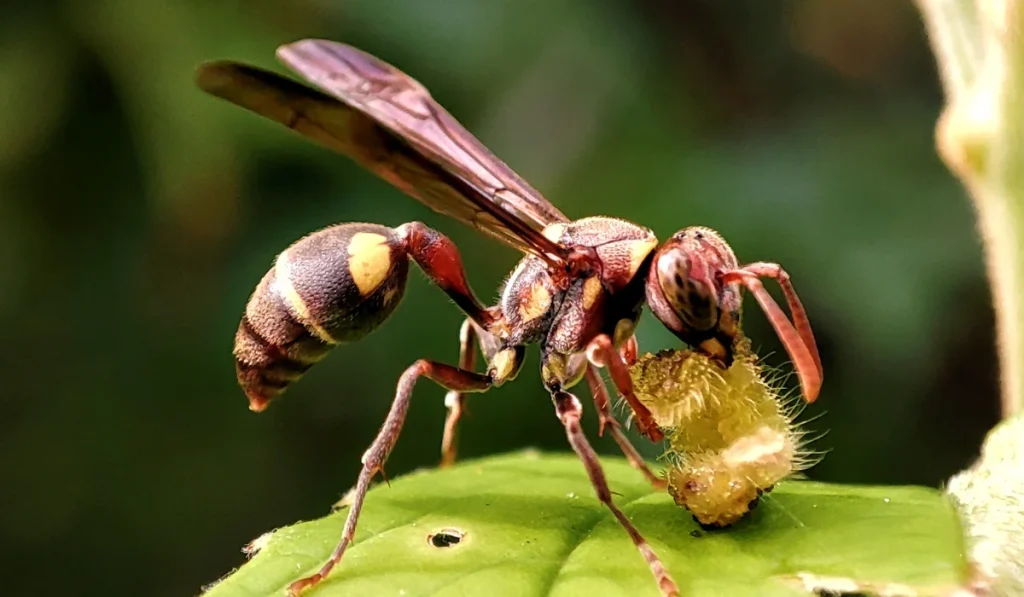
Paper wasps build open, umbrella-shaped nests in sheltered locations. The Mississippi State University Extension guide to guinea wasps notes that paper wasps may nest beneath eaves, in storage sheds, inside infrequently used equipment, in grills, in thick shrubbery, and in other protected areas.
Paper wasps are often noticed during routine chores when someone opens a grill, moves outdoor equipment, trims a shrub, or reaches beneath a porch edge.
Yellowjackets

Yellowjackets may build nests underground or above ground. Alabama Extension notes that underground nests can develop in abandoned animal burrows and litter-covered areas near bushes and shrubs. Above-ground nests may appear in eaves, attics, wall voids, crawl spaces, concrete cracks, hollow logs, stumps, and recycling bins.
Watch for repeated traffic to a small ground opening, especially when mowing or walking through the yard.
Hornets
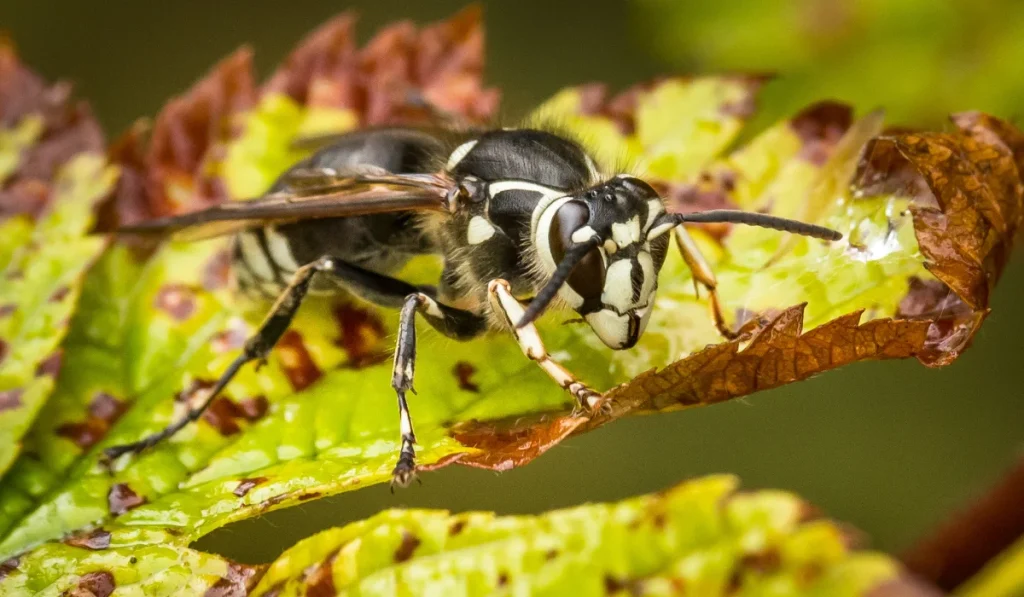
Some hornets build enclosed paper nests in trees, shrubs, or structures. The location matters: a nest high in a tree away from household activity may create a different level of concern than a nest beside a walkway, patio, or entry door.
Solitary Wasps
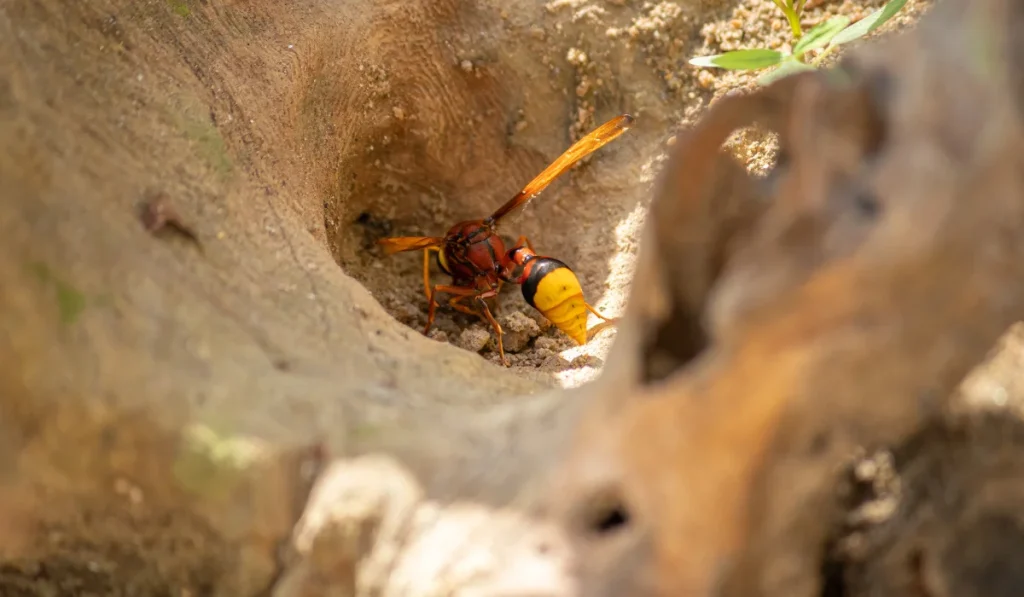
Not every wasp lives in a social colony. Solitary wasps such as mud daubers and cicada killers may appear around homes but often behave differently from yellowjackets and paper wasps.
Identification helps you avoid treating every wasp sighting as the same problem.
Where to Look for Wasp Activity Around Your Home
A visual inspection can help you notice patterns before a nest becomes a surprise during yard work.
Eaves, Soffits, and Porch Ceilings
Look beneath roof edges, porch ceilings, overhangs, and sheltered corners. Small paper nests can be easier to notice in spring before they grow larger.
Shrubs, Hedges, and Dense Foliage
Inspect shrubs before pruning or reaching into dense growth. Paper wasps may build nests in protected foliage, and yellowjackets may use ground openings beneath bushes.
Grills, Sheds, and Outdoor Equipment
Check grills, storage sheds, outdoor furniture, gates, and rarely used equipment before opening or moving them.
Mississippi State University Extension specifically advises caution around grills, storage sheds, equipment, and shrubs because paper wasps may use these sheltered locations.
Ground Openings
Look for wasps repeatedly entering and leaving a hole in the lawn, beside a bush, near a stump, or along a concrete edge. Do not poke the opening, mow over it, or place your foot near it.
Trash and Recycling Areas
Yellowjackets may forage around sugary residue, food waste, and drink containers. Use tight-fitting lids and clean spills promptly.
Wall Gaps and Utility Openings
Repeated wasp movement into a soffit gap, siding opening, wall void, or utility penetration deserves professional attention. Do not seal an active opening before the nest has been assessed.
How to Tell Whether a Nest Is Nearby
A few wasps visiting flowers or moving through the yard may be foraging. A consistent flight path is more significant.
Watch for Repeated Back-and-Forth Traffic
Observe whether several wasps return to the same eave, shrub, hole, or wall opening. Repeated movement can help identify the nest location without requiring a close approach.
Look for an Open Paper Nest
Paper-wasp nests often look like small umbrellas with visible cells. These nests may hang beneath sheltered surfaces.
Check for Ground-Nest Clues
Alabama Extension notes that an underground yellowjacket nest may have an opening approximately the size of a nickel, sometimes with small stones or dirt accumulating nearby.
Pay Attention to Indoor Sightings
A single wasp near a window may have wandered indoors. Repeated sightings near the same room, light fixture, attic access point, or wall area may justify a closer inspection of the exterior.
How to Reduce Wasp Activity Around Your Property
You cannot eliminate every wasp from an outdoor space, and many wasps play useful ecological roles. Prevention should focus on reducing unwanted activity near the areas your household uses most.
Keep Outdoor Food Covered
Cover food and drinks during outdoor meals. Clean tables, grills, and serving areas after use.
Use Trash Cans With Secure Lids
Keep outdoor garbage and recycling containers closed. Clean sugary residue from lids, handles, and the surrounding ground.
Collect Fallen Fruit
Remove overripe or fallen fruit from the yard before it becomes a regular food source.
Inspect Sheltered Areas in Spring
Check eaves, sheds, grills, porch ceilings, and outdoor equipment periodically as warmer weather arrives. Small nests may be easier for a professional to address early.
Repair Screens and Appropriate Gaps
Repair torn screens and close suitable openings before wasps establish activity. Do not seal a gap that appears to contain an active nest.
Keep High-Traffic Areas Clear
Pay closer attention to nest activity near doors, patios, walkways, play areas, mailboxes, and frequently used yard spaces.
What Not to Do Around Wasps
Do Not Swat at Wasps
Stay calm and move away slowly when a wasp flies close to you. Avoid striking at the insect or disturbing nearby vegetation when you suspect a nest.
Do Not Disturb Ground Openings
Do not test a suspected nest with a stick, shovel, mower, or foot. Yellowjackets may respond defensively when a nest is disturbed.
Do Not Knock Down an Active Nest
An exposed nest can still contain defensive wasps. Do not attempt to remove it while insects are active.
Do Not Seal an Active Wall Opening
Repeated wasp movement into a wall, soffit, or attic gap may point to a hidden nest. Sealing the opening before assessment can complicate the problem.
Do Not Assume Every Striped Insect Is a Wasp
Bees, wasps, hornets, and other insects do not require the same response. Ask for identification when the insect or nest type remains unclear.
Health Concerns Linked to Wasp Stings
Most stings cause localized pain, redness, itching, or swelling. However, some people can experience a serious allergic reaction.
The MedlinePlus guide to insect bites and stings advises calling 911 or the local emergency number when symptoms include difficulty breathing, wheezing, facial or mouth swelling, throat tightness, difficulty swallowing, or weakness.
Keep Children and Pets Away From Active Nests
Use another route and block access to the area until the nest has been assessed.
Take Extra Care Around Ground Nests
Ground nests can be difficult to notice during mowing, gardening, or play. Mark the area from a safe distance and avoid disturbing it.
When to Request Professional Wasp Control
A few wasps moving through a yard do not always require treatment. Professional support becomes more useful when a nest sits near a high-traffic area, remains difficult to access, or involves repeated yellowjacket activity.
Consider requesting an inspection when:
- Wasps repeatedly enter and leave the same eave, shrub, wall gap, or ground opening.
- A nest sits near a doorway, patio, walkway, play area, grill, shed, or frequently used yard space.
- You suspect an underground yellowjacket nest.
- Wasps appear indoors repeatedly.
- The nest is elevated or difficult to access safely.
- You cannot distinguish wasps from bees or another stinging insect.
- Someone in the household has a known sensitivity to stings.
Magic City Pest Control provides wasp-control services in Alabama. Its Huntsville service page describes a process that includes locating active nests and high-risk nesting sites, removing accessible wasp, hornet, and yellowjacket nests when safe to do so, applying targeted treatments, treating vulnerable areas, and sharing prevention tips.
What a Professional Inspection Should Cover
A professional inspection should evaluate eaves, rooflines, soffits, sheds, grills, shrubs, tree areas, ground openings, wall gaps, trash zones, and the flight patterns you have noticed.
The goal is to identify the stinging insect, locate the nest, and determine whether treatment or simple avoidance is appropriate.
What a Wasp-Control Plan May Include
The right plan depends on the insect and the nest location. Recommendations may include targeted treatment, removal of an accessible nest when safe, attention to vulnerable nesting areas, and seasonal monitoring for properties with recurring activity.
Magic City Pest Control’s Huntsville page notes that its technicians can treat nests from shrub lines to eaves up to 25 feet high.
Expect More Wasp Activity as Summer Progresses
Wasp activity in Alabama begins building in spring and becomes more noticeable through summer. Yellowjacket pressure often becomes especially noticeable in late summer and fall.
Inspect sheltered areas before yard work, keep food and trash covered, and watch for repeated flight paths to eaves, shrubs, wall openings, or ground holes. Do not disturb a suspected nest to test whether it is active.
If wasps keep returning to the same area or a nest sits close to the spaces your household uses, request a free quote from Magic City Pest Control to discuss stinging-insect activity around your Alabama property.
Frequently Asked Questions
When are wasps most active in Alabama?
Social wasp colonies begin growing in spring and become more active through summer. Alabama Extension identifies late summer and fall as peak yellowjacket season in the state.
What time of day are wasps most active?
Many wasps are easier to notice during daylight while they forage and travel between the nest and food sources. Observe suspected activity from a safe distance rather than approaching the nest.
Where do paper wasps build nests?
Paper wasps commonly build open paper nests beneath eaves, porch ceilings, shed roofs, in grills, inside outdoor equipment, and in dense shrubs.
Where do yellowjackets build nests?
Yellowjackets may nest underground in abandoned burrows or above ground in wall voids, crawl spaces, attics, stumps, hollow logs, concrete cracks, and other cavities.
Do wasps reuse old nests?
Most social-wasp colonies are annual. Workers die after freezing weather, while fertilized queens survive in sheltered areas and begin new colonies in spring.
Should I seal a hole that wasps are entering?
Do not seal an opening while wasps are actively moving in and out. A hidden nest inside a wall, soffit, or attic area should be assessed before the opening is closed.
Should I remove a wasp nest myself?
A nest can create a sting risk when disturbed, especially when it is underground, hidden in a void, elevated, or close to a high-traffic area. Request professional support rather than approaching the nest.
When should I call a pest-control professional?
Request an inspection when wasps repeatedly use the same opening, a nest sits near a doorway or yard activity area, yellowjackets appear to be nesting underground, or the nest remains difficult to access safely.


