


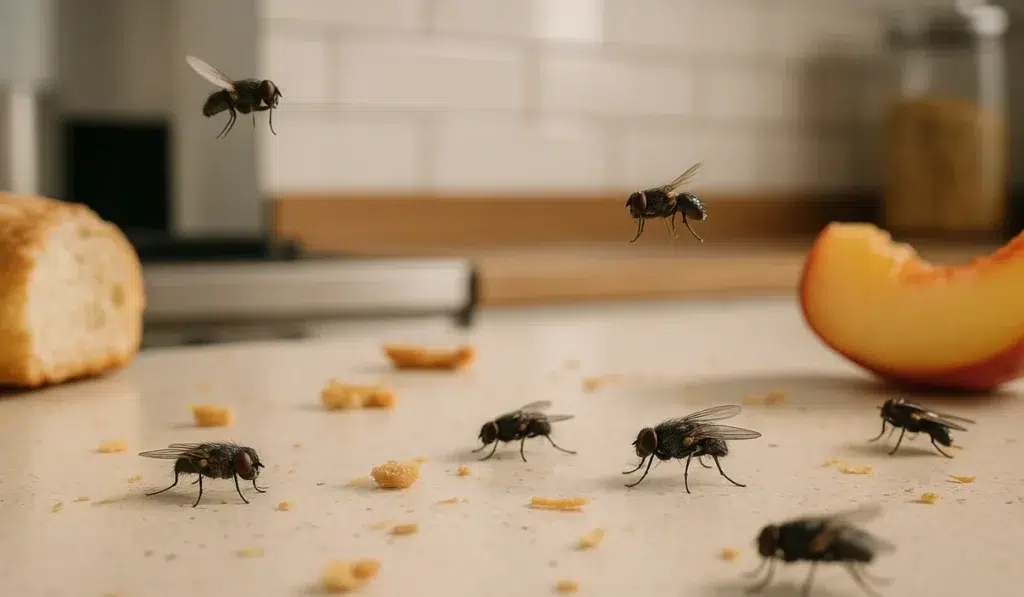
House flies often become more noticeable just as summer starts to fade. Warm weather still supports fast development, several generations may already be active, and late-summer homes and yards often provide more garbage, food residue, pet waste, and other decaying organic matter.
For homeowners in Birmingham, Huntsville, and nearby Alabama communities, the increase can feel sudden. You may notice house flies around kitchen windows, trash containers, patios, garages, and exterior doors during August and September. Outdoor meals, garden produce, and frequently opened doors can make house flies in late summer especially hard to ignore.
The adult flies buzzing through your kitchen are only the visible part of the problem. Lasting fly control starts with understanding why their numbers rise, locating the material where they breed, and preventing more flies from entering your home.
Why House Flies Get Worse in Late Summer
House fly season in Alabama
House fly activity in Birmingham and Huntsville builds as warm weather supports repeated breeding cycles, then becomes most noticeable in August and September as generations overlap and late-summer food, garbage, and yard waste pile up. This is a regional pattern for Alabama, so your yard may run a little ahead or behind. On this chart, hotter cells mark heavier activity.
If you have wondered why there are so many flies in late summer, population growth is usually a major part of the answer. House fly season does not involve one group of adults surviving from spring through fall. New generations continue developing as long as temperatures remain warm and suitable breeding material is available.
By the end of summer, several breeding cycles may have occurred around garbage, animal waste, compost, spoiled food, or wet organic debris. Each cycle adds more adults to the surrounding area. Even if the number of breeding sites stays the same, repeated reproduction can make a late-summer fly infestation seem much larger than the activity you noticed earlier in the year.
Alabama’s extended warm season can keep house flies active after school starts and fall routines return. Cookouts, football gatherings, patio meals, and regular trips through exterior doors give flies more chances to move from outdoor sources into occupied rooms.
Increased visibility also makes the problem feel worse. A fly near an outdoor trash container may go unnoticed, but the same insect quickly draws attention when it lands near food or taps against a kitchen window. Late summer often brings both a larger outdoor population and more contact between flies and people.
How Warm Weather Speeds the House Fly Life Cycle
House flies develop through four stages: egg, larva, pupa, and adult. Females place their eggs in moist material that can feed the larvae after they hatch. Garbage, spoiled food, animal waste, and decomposing plant material can support development when the conditions are suitable.
According to the University of Florida IFAS house fly profile, a female house fly may deposit about 75 to 150 eggs in a batch and more than 500 over her lifetime. Under favorable warm conditions, development from egg to adult can take about 7 to 10 days. Those figures help explain why a small, overlooked breeding source can produce several waves of flies before summer ends.
Overlapping Generations Increase Indoor Activity
The adults you see may come from several breeding cycles and several locations. Some may have developed in your outdoor trash container, while others arrived from pet areas, nearby dumpsters, compost piles, or waste on neighboring properties.
This overlap can make it seem as though flies appeared overnight. In many cases, the population has been developing for weeks. Removing visible adults without correcting the source allows larvae and pupae to continue maturing out of sight.
What Attracts House Flies Around Alabama Homes
What attracts house flies is rarely limited to one dirty countertop. They respond to odors from food, garbage, animal waste, and damp organic material, then search for places where they can feed or lay eggs. A useful inspection should cover both the interior of your home and the surrounding property.
Trash, Recycling, and Food Residue
Trash containers should be one of the first areas you inspect. Leaking bags, meat packaging, leftover food, and residue at the bottom of a garbage can can attract flies, especially when the container sits in summer heat.
Recycling bins can create similar conditions. Soda cans, juice bottles, beer containers, and food packaging may retain enough liquid or residue to produce strong odors. Rinsing containers, cleaning the bin, and keeping the lid closed can reduce the number of flies gathering near doors, garages, and patios.
Indoor food waste also deserves attention. Crumbs beneath appliances, residue beside a trash can, overripe produce, and forgotten pantry items can keep adult flies active. Cleaning the visible counter will not solve the problem when food remains behind the refrigerator or under a nearby cabinet.
Pet Waste, Compost, and Yard Material
Pet waste can become a dependable house fly breeding site when it remains in a warm yard. Picking it up regularly removes odors and the moist material fly larvae need. Check dog runs, kennels, shaded corners, and areas where grass or leaves may hide waste.
Compost requires careful management as well. A maintained compost pile differs from an exposed collection of wet food scraps. Covering fresh additions, controlling moisture, and keeping meat and greasy leftovers out of a basic backyard pile can reduce fly activity.
Grass clippings and garden debris do not always create a house fly problem on their own. The risk increases when yard material stays wet and mixes with food residue, animal waste, or rotting produce. Collect fallen tomatoes, fruit, and other garden items before they soften on the ground.
Kitchens, Garages, and Outdoor Living Areas
Kitchens provide food, moisture, and warmth within a small space. Inspect the areas beside the refrigerator, beneath trash containers, around floor drains, and under small appliances. A thin layer of organic residue can keep flies returning even when the rest of the room looks clean.
Garages often connect outdoor breeding areas with the interior of your home. Trash cans, pet food, recycling, and open garage doors bring flies close to entry points. A worn garage seal or an open door leading into the house gives them a direct route to living spaces.
Outdoor kitchens and patios also attract flies during late-summer meals. Cover food before serving, clean drink spills promptly, and carry plates indoors when the meal ends. Positioning garbage away from doors and seating areas can reduce activity where your family spends time.
How to Tell House Flies From Other Common Flies
Not every flying pest near a sink or window is a house fly. Accurate identification matters because different species breed in different materials. Cleaning a trash container will not correct a drain fly problem caused by organic buildup inside plumbing.
| Type of Fly | Common Appearance or Behavior | Likely Source |
|---|---|---|
| House fly | Medium-sized gray fly often seen near food, waste, doors, and windows | Garbage, animal waste, spoiled food, and decaying organic material |
| Drain fly | Tiny, fuzzy fly with moth-like wings | Organic buildup in drains and other wet plumbing areas |
| Fruit fly | Very small fly often hovering near produce or sweet residue | Overripe fruit, fermenting liquids, and food spills |
| Cluster fly | Larger, slower fly that may gather near sunny windows | Seasonal shelter inside wall voids or upper areas of a structure |
Location can provide an early clue. Flies concentrated around a sink call for a different inspection than flies gathering around an outdoor garbage can. Large numbers appearing in one room may also point to concealed waste or another hidden source.
House flies can pick up microorganisms from waste and transfer them to food or contact surfaces. A systematic review published in BMC Public Health documented many human-associated pathogens carried by house flies. This does not mean every fly will cause illness, but it supports keeping them away from kitchens, dining areas, utensils, and uncovered food.
How to Get Rid of House Flies in Late Summer
Learning how to get rid of house flies starts with source removal. Swatting adults or hanging a trap may reduce the number you see, but those steps do not stop new flies from developing. Effective control combines sanitation, entry prevention, and methods selected for the specific fly involved.
Remove Food and Breeding Material
Empty kitchen garbage often, especially when it contains meat, produce, or wet food. Wash residue from indoor and outdoor containers, repair damaged lids, and prevent bags from leaking into the bottom of the can.
Pick up pet waste, manage compost, remove fallen produce, and clean spills around grills or outdoor dining spaces. Inside, inspect beneath appliances and around trash or recycling stations. These steps remove material that supports larvae and reduce the odors that attract adult flies.
Cleaning should focus on the source rather than simply making the room look tidy. A missed spill under a refrigerator or residue inside a trash container can keep the problem active even after counters and floors have been wiped down.
Close Common Entry Points
Repair torn screens and inspect door sweeps for visible gaps. Keep exterior doors closed when they are not in use, and check weather stripping around garage, patio, and utility entrances. House flies can enter quickly while you carry in groceries, take out the trash, or move between indoor and outdoor areas.
The Penn State guidance on house flies identifies sanitation and exclusion as central parts of control. The two measures support each other. Source removal lowers the population near your home, while exclusion reduces the number that can reach your kitchen and other living areas.
Move outdoor garbage containers away from commonly used entrances when space allows. Keeping the lid closed and the container clean can further reduce the number of flies waiting near the door.
Know When Professional Fly Control Is Needed
Persistent fly activity can mean the breeding source remains hidden or the pest has been misidentified. You may clean the trash area thoroughly and continue seeing flies because they are developing in a drain, a concealed void, a damaged waste container, or another overlooked location.
A professional inspection can identify the fly, trace its activity to the source, and select an approach that fits the conditions. Magic City Pest Control uses different methods based on the type of fly and does not place treatment materials on food-preparation surfaces.
Keeping Late-Summer House Flies Out of Your Alabama Home
House flies become harder to ignore near the end of summer because warm conditions continue, breeding cycles overlap, and organic material accumulates around homes and yards. The most effective response is to locate breeding sources, remove food and waste, clean areas that hold residue, and close the openings flies use to enter.
When flies keep returning after you address those conditions, accurate identification can reveal whether you are dealing with house flies, drain flies, or another species. Magic City Pest Control provides fly control for homes and businesses in Birmingham, Huntsville, and surrounding Alabama communities. To schedule an inspection or discuss recurring fly activity, contact Magic City Pest Control before the problem continues into fall.


