


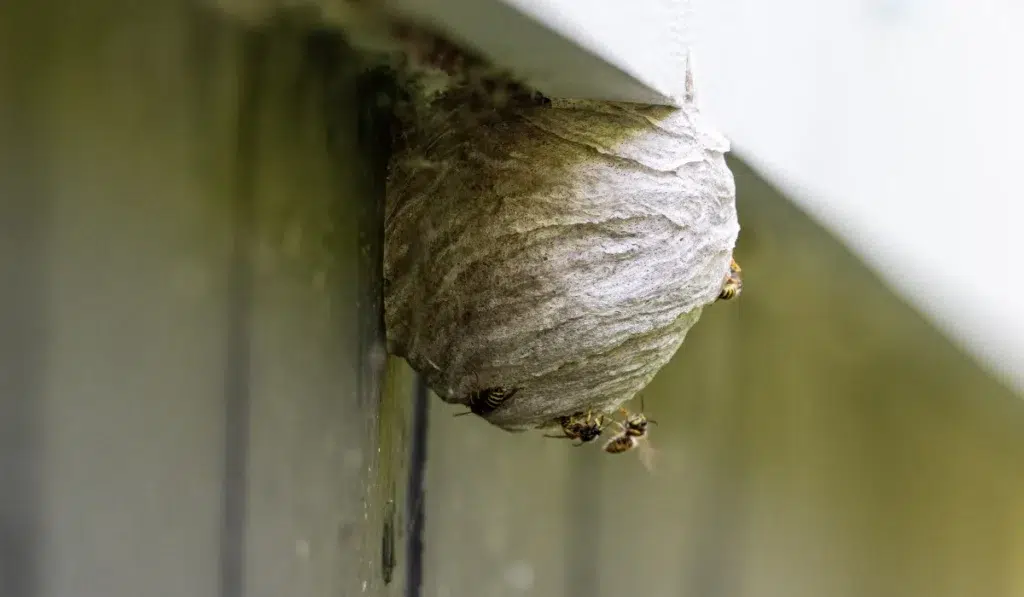
Seeing wasps around an eave, shrub, lawn, or porch does not always mean you have the same kind of problem. Wasps in Alabama include social species that defend colonies and solitary species that behave differently around their nests. Knowing how common wasps nest, where they tend to show up, and when their location creates a sting concern can help you decide whether to leave the area alone, monitor it, or call for professional help.
Common Types of Wasps in Alabama
When identifying wasps in Alabama, color is only one clue. Nest design, location, size, and behavior can provide more useful information, especially when several kinds of stinging insects look similar from a distance. The Alabama Cooperative Extension System is a useful source for Alabama-specific insect information and identification resources.
| Wasp Type | Nest Style | Common Nesting Area | Social or Solitary? | Main Homeowner Concern |
|---|---|---|---|---|
| Paper wasps | Exposed paper comb | Eaves and sheltered structures | Social | Nest defense near frequently used areas |
| Yellow jackets | Concealed nest | Soil or cavities | Social | Nest may be difficult to notice before disturbance |
| Mud daubers | Mud cells or tubes | Sheltered surfaces | Solitary | Often confused with more defensive social wasps |
| Cicada killer wasps | Burrow | Soil | Solitary | Large size can lead to mistaken identification |
| Bald-faced hornets | Enclosed aerial paper nest | Trees, shrubs, or elevated areas | Social | Colony defense around an active nest |
Paper Wasps
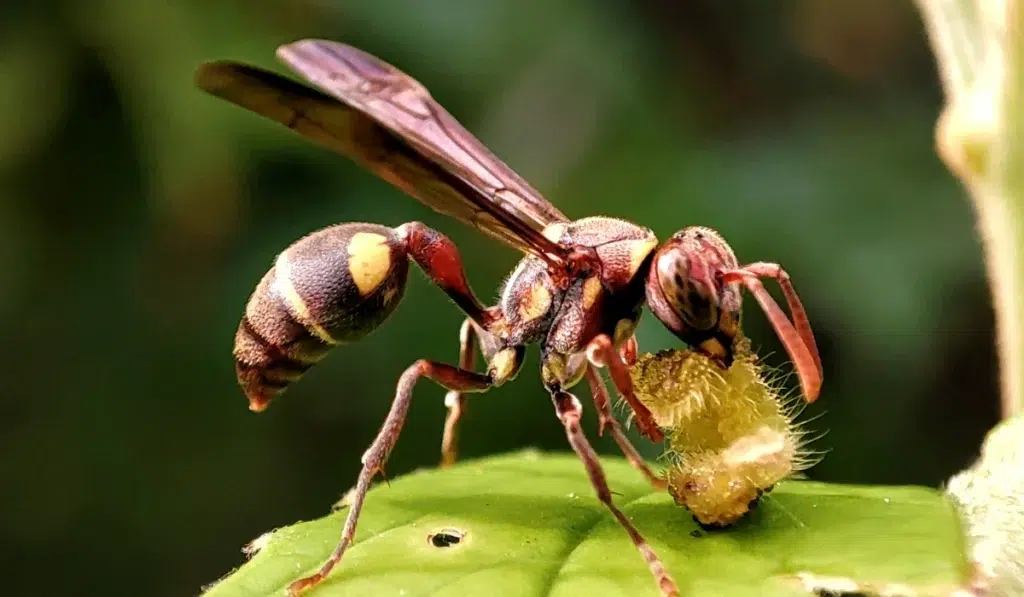
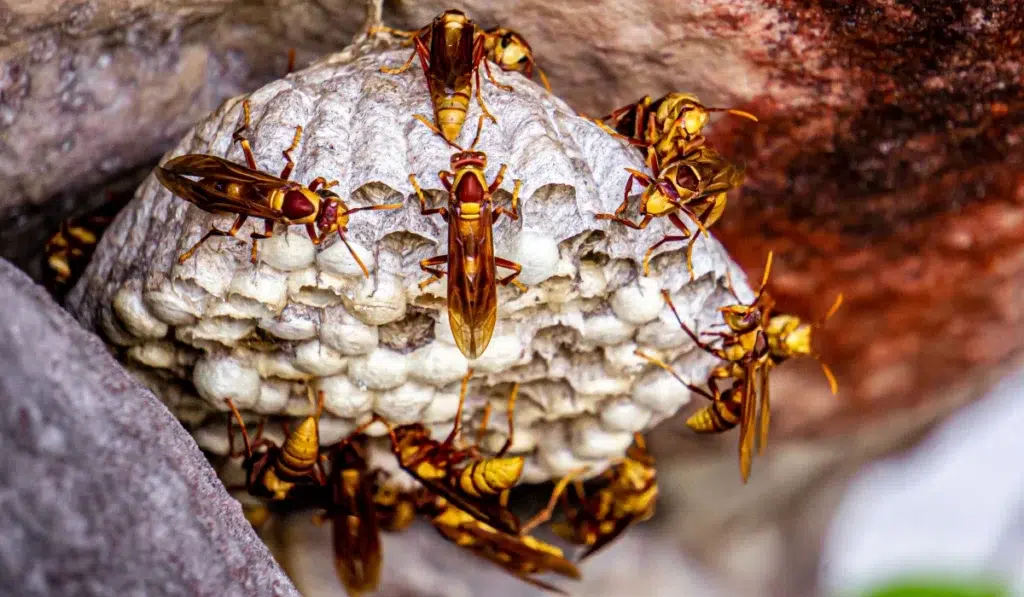
Paper wasps are social wasps that build exposed comb-shaped nests from paper-like material. Around a home, these nests can appear beneath protected exterior areas such as eaves.
Location changes how much concern a nest creates. A colony beside a door, porch, deck, or another area you use regularly presents more opportunity for accidental disturbance than a nest well away from routine activity.
Yellow Jackets
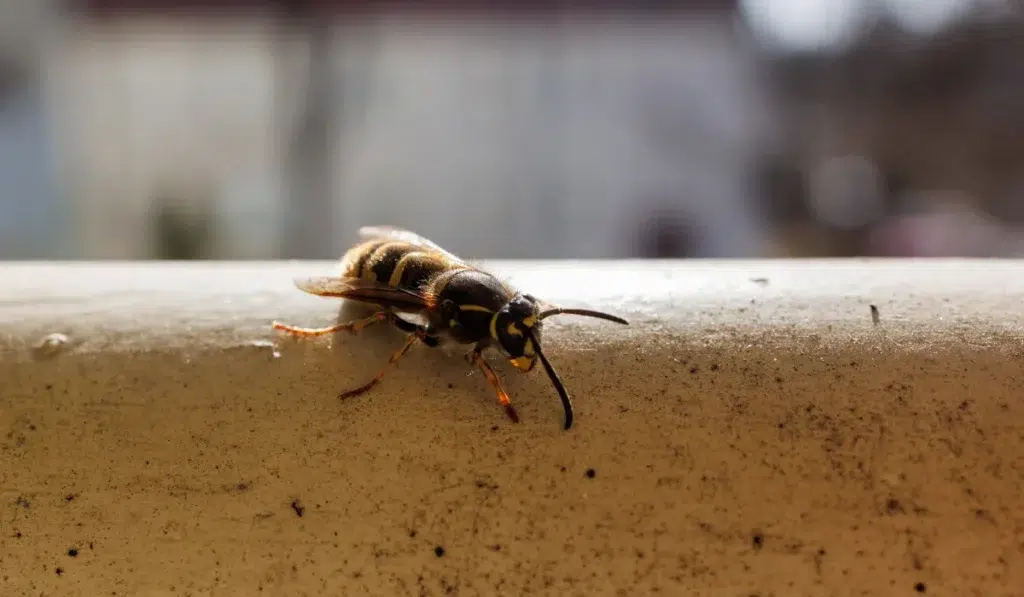
Yellow jackets are social wasps whose nests may be less obvious than an exposed paper-wasp nest. Depending on the species and setting, nesting activity can occur in the ground or inside a cavity.
Repeated traffic can be an important clue. If several wasps continue entering and leaving the same hole or opening, give the area space rather than approaching it closely. This is especially useful around lawns, where mowing, trimming, or walking through the area can put you near the nesting site before you notice it.
Mud Daubers
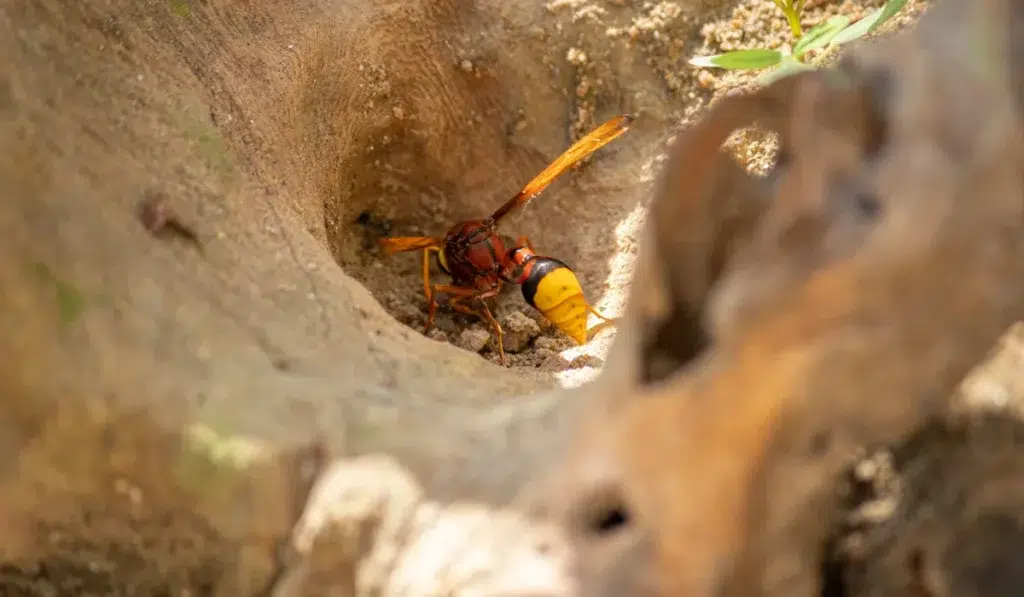
Mud daubers are solitary wasps known for constructing nests from mud. Their nests may appear as mud cells or tube-like structures attached to sheltered surfaces.
Their behavior differs from that of social wasps. Mud daubers are generally less defensive around their nests than colony-forming wasps such as paper wasps and yellow jackets. They can still sting, so they should not be handled carelessly, but a mud nest does not automatically create the same concern as an active social colony near a doorway.
Cicada Killer Wasps
Cicada killer wasps are large solitary wasps associated with burrows in soil. Their size can make them look threatening when they appear over a lawn or near exposed ground.
Size alone does not tell you how defensive a wasp will be. Cicada killers do not maintain the same type of social colony as yellow jackets, even though both can be associated with ground activity. Correct identification helps prevent you from treating every ground-nesting wasp as the same problem.
Bald-Faced Hornets
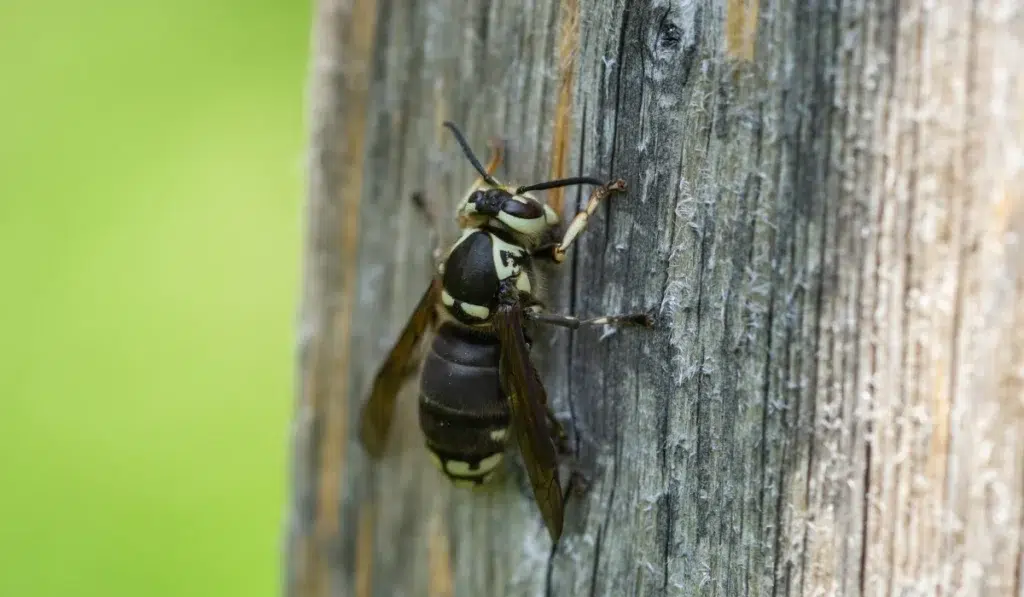
Bald-faced hornets build enclosed aerial paper nests and live in social colonies. Despite their common name, they belong to the yellowjacket group rather than the true hornets.
For homeowners, nest location is the more practical concern. An aerial nest in a tree or shrub beside a walkway, driveway, play area, or outdoor sitting space deserves more caution because people may pass close to it without intending to disturb the colony.
Where Wasps in Alabama Build Their Nests
Wasps in Alabama can use several parts of a residential property for nesting. Depending on the type, activity may appear around eaves, sheltered exterior surfaces, foliage, soil, trees, shrubs, or cavities.
Magic City Pest Control reports that its common wasp issues include activity in grass and around foliage near homes. The company can also treat eaves up to 25 feet high when needed. These service patterns show why looking only for an obvious hanging nest can miss part of the problem.
Structural Areas
Eaves and other protected exterior areas can provide nesting locations for wasps that attach nests directly to structures. A nest over a porch or entryway creates more opportunity for contact than one in an area people rarely use.
If wasps repeatedly disappear into a structural gap, avoid immediately sealing the opening. When a nest is concealed, identifying the insect and the source of the activity first gives you a clearer picture of what you are dealing with.
Lawns and Landscaping
Grass, soil, shrubs, and foliage also deserve attention. Ground activity can be easy to overlook until mowing or yard work brings you close to it.
If wasps repeatedly fly to the same patch of ground or landscaping, observe the pattern from a safe distance. A consistent route into one location tells you more than a single wasp passing through the yard.
How to Judge a Wasp Nest Around Your Home
Finding a wasp nest does not automatically tell you what response is appropriate. Before considering wasp nest removal, focus on three factors: whether the nest appears active, how close it is to people, and whether the wasps are social or solitary.
These details help separate a low-conflict nest from one that interferes with daily activity. They also help you avoid making a decision based only on the size or appearance of the insect.
Check Whether the Nest Is Active
Look for repeated movement into and out of the nesting area without moving closer to investigate. Regular traffic can indicate current activity even when the nest itself is hidden.
If an exposed nest shows no obvious activity, avoid assuming it is safe to handle when you cannot confirm its status. Observation from a distance is a better first step than disturbing the nest to find out.
Consider How Close the Nest Is to People
A nest beside a front door, deck, walkway, play area, or landscape bed that needs regular maintenance creates more opportunity for accidental contact.
A nest far from routine activity may create less immediate conflict. The location should factor into the decision rather than treating every nest as a problem that needs immediate removal.
Determine Whether the Wasp Is Social or Solitary
Social wasps live in colonies, while solitary species do not maintain the same kind of worker-filled nest. That distinction helps explain why two nesting sites can create very different situations.
It does not mean every solitary wasp is harmless or every social nest requires immediate treatment. It means identification gives you more useful context before you decide how to respond.
How Dangerous Are Wasps in Alabama?
The risk from wasps in Alabama depends on the species, whether you are near a nest, how the insects are behaving, and whether anyone involved has a sting allergy. Social wasps deserve particular caution around occupied nests because colony members can defend the nesting area when it is disturbed.
According to the CDC’s National Center for Health Statistics, hornet, wasp, and bee stings combined caused 788 deaths in the United States from 2011 through 2021. Of those deaths, 84% occurred among males. Those figures combine bees, wasps, and hornets, so they should not be interpreted as a count of deaths from wasps alone.
Sting Allergies Change the Level of Risk
People with known insect-sting allergies should follow guidance from their healthcare provider for managing exposure. The American Academy of Allergy, Asthma & Immunology provides medical information about insect-sting allergies and anaphylaxis.
The circumstances around a sting also matter. A wasp flying through a garden away from its nest is a different situation from repeated activity around a ground opening or an occupied social nest next to a porch.
Nest Location Matters as Much as the Insect
A nest in an area that people rarely approach creates a different level of exposure from one beside a door, patio, driveway, or area where children play.
For that reason, evaluating risk should include both identification and location. Focusing only on how large or intimidating the wasp looks can lead to the wrong conclusion.
When Are Wasps Most Active in Alabama?
Wasp activity changes through the warmer portion of the year, but there is no single calendar date that applies to every species or every nest. For many temperate social wasps, colonies develop during the warmer months and can become more noticeable as activity increases.
Solitary wasps follow different nesting patterns because they do not maintain the same kind of social colony. Season alone cannot identify the wasp or tell you whether a nest needs attention.
Watch Activity Rather Than the Calendar
A developing nest with limited traffic and a well-established social colony can look very different. Instead of relying on the month, watch for repeated movement to a nesting area and changes in activity around parts of the property you use regularly.
This gives you information that is specific to your home. A consistent flight path to a hole, cavity, eave, or shrub is more useful than assuming all Alabama wasps follow exactly the same seasonal schedule.
How to Reduce Wasp Activity Around Your Home
You cannot prevent every wasp from entering a yard, but routine property maintenance can reduce some of the situations that bring them into close contact with people.
The most useful approach is to notice nesting activity early, manage food and trash around outdoor gathering areas, and pay attention to places where repeated wasp traffic could create a conflict.
Check Sheltered Exterior Areas
Look periodically at eaves, porch areas, rooflines, and other protected exterior surfaces during the warmer months. Spotting new activity early can help you address a nesting site before it becomes difficult to reach or begins interfering with a frequently used space.
If wasps are repeatedly entering a gap or concealed area, avoid putting your hands near the opening. Note where they are traveling and keep your distance until the activity can be identified.
Manage Outdoor Food and Trash
Yellow jackets and other social wasps can show interest in food around outdoor gathering areas. Keeping food residue and trash managed can reduce unnecessary attraction around patios, decks, and outdoor eating spaces.
This step will not prevent every wasp from entering the yard, but it can reduce one source of repeated activity in places where people spend time.
Check Lawns and Landscaping Before Yard Work
Magic City Pest Control commonly handles wasp activity in grass and foliage near homes. Before mowing, trimming shrubs, or working in an area where you have already seen repeated traffic, look for a consistent flight path from a safe distance.
The goal is not to inspect the nest closely. It is to recognize a pattern before yard work brings you into the middle of the activity.
When Professional Wasp Control Makes Sense
Professional wasp control can be a practical choice when a nest is high, concealed, close to a frequently used area, or associated with repeated activity that you cannot safely identify from a distance.
It can also help when you are not sure whether the insects are wasps, bees, or another stinging species. Correct identification affects how the situation should be handled.
High or Concealed Nests
Magic City Pest Control’s service information notes that technicians commonly address wasps around grass and foliage and can treat eaves up to 25 feet high. That capability is useful when the nesting area cannot be safely reached or inspected from ground level.
Hidden activity inside a cavity or around a ground opening also creates uncertainty. In those situations, a professional inspection can help identify the source without requiring you to approach the nest closely.
Repeated Seasonal Activity
Magic City Pest Control also reports that many customers seek consistent service through the season rather than help with a single isolated indoor problem. That can be useful for properties where wasps repeatedly appear around landscaping, rooflines, patios, and other exterior areas.
Magic City Pest Control does not treat honey bees. If you are unsure whether you are seeing paper wasps, yellow jackets, mud daubers, bees, or another stinging insect, describe its appearance, nesting location, and activity when arranging service rather than assuming every stinging insect is a wasp.
Handling Wasps Around Your Alabama Home
Wasps in Alabama range from solitary species that may create little conflict to social colonies located directly beside areas your family uses every day. Identifying the insect, locating the nest without disturbing it, and considering how often people pass through the area can help you choose a response that fits the situation.
If repeated wasp activity is showing up around your lawn, foliage, eaves, entryways, or outdoor living spaces, Magic City Pest Control can help assess the source and recommend an appropriate treatment plan. To arrange service, contact Magic City Pest Control and describe where you are seeing the activity and how often it occurs.


