


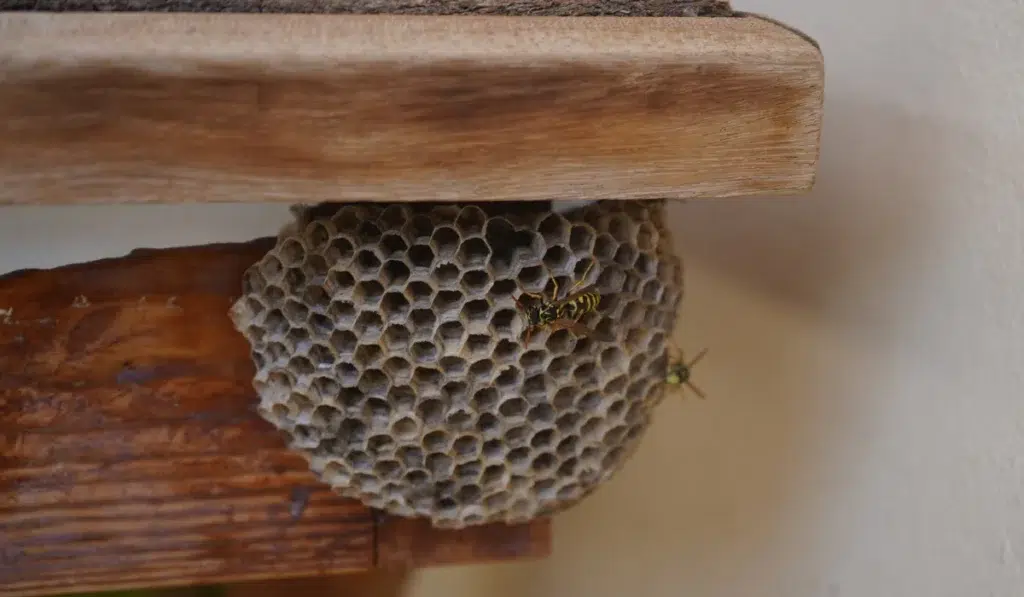
If you’ve spotted a paper nest tucked under your eave or a cluster of yellow jackets near your back steps, you’re not imagining things—wasp activity in Alabama peaks hard in June and July. The heat and humidity that define a Birmingham summer are exactly what these insects thrive in. Most wasps aren’t looking for a fight, but a nest near a door, play area, or AC unit is a real problem that needs handling the right way.
Here’s what you need to know.
Key Takeaways
- Several wasp and hornet species are active in Alabama during summer, and they behave differently from one another.
- Nests built near doors, play areas, or HVAC equipment pose the greatest risk to your family.
- DIY sprays work in limited situations—underground nests and large aerial colonies are best left to a professional.
- Magic City Pest Control serves Birmingham and the surrounding metro with reliable wasp and stinging insect treatment.
Which Wasps Are Actually Common in Alabama?
Alabama wasps and hornets, identified
A calm look at the stinging insects you’ll run into around Birmingham this summer, and what each one means for your yard.
Paper Wasps
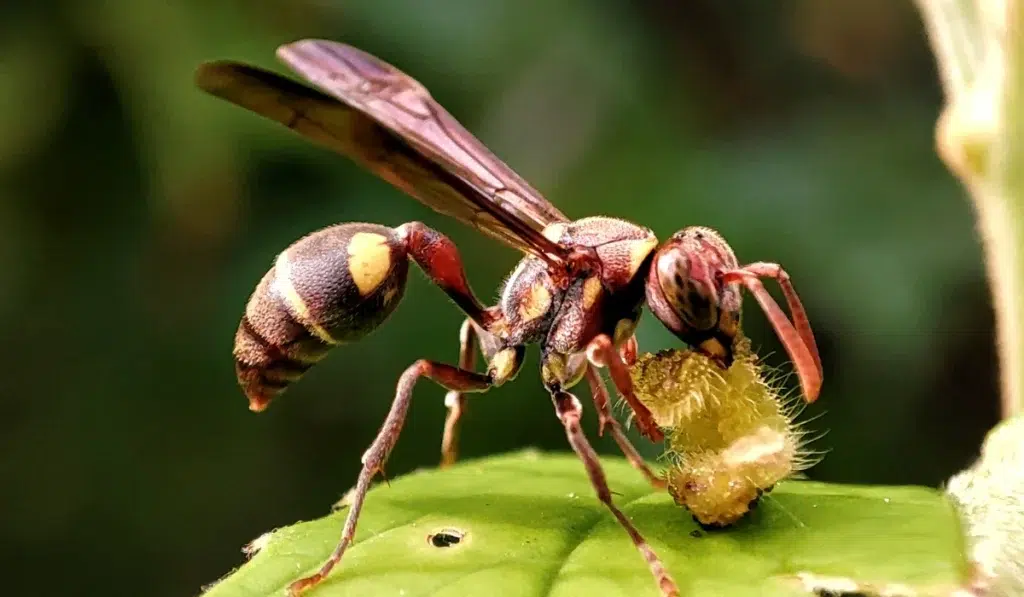
These are the long-legged wasps you’ll see building open, umbrella-shaped nests—usually under porch ceilings, eaves, shutters, and deck railings. Paper wasps are common throughout Birmingham, Hoover, and Vestavia Hills neighborhoods. They’re not aggressive unless the nest is disturbed, but “disturbed” can mean walking too close to a nest above your front door.
Yellow Jackets
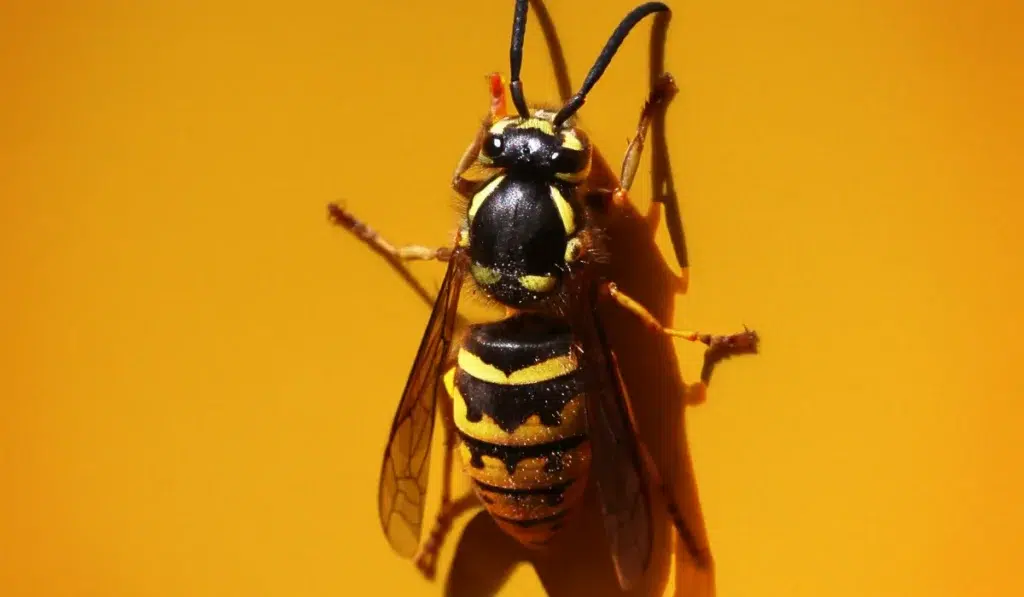
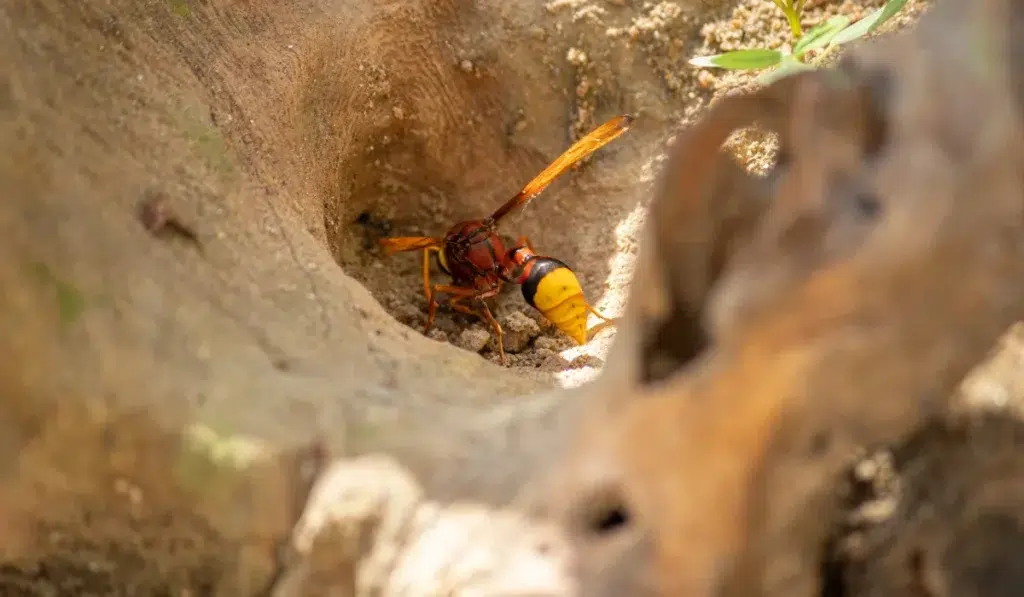
Yellow jackets are the ones that give wasps a bad reputation. They’re aggressive, they can sting multiple times, and they often build nests underground—in old rodent holes, beneath landscape timbers, or inside wall voids. If you’ve stepped on what looked like nothing and suddenly had a dozen wasps on you, that was almost certainly a yellow jacket colony. In the Birmingham area, yellow jacket populations grow significantly by midsummer.
Bald-Faced Hornets
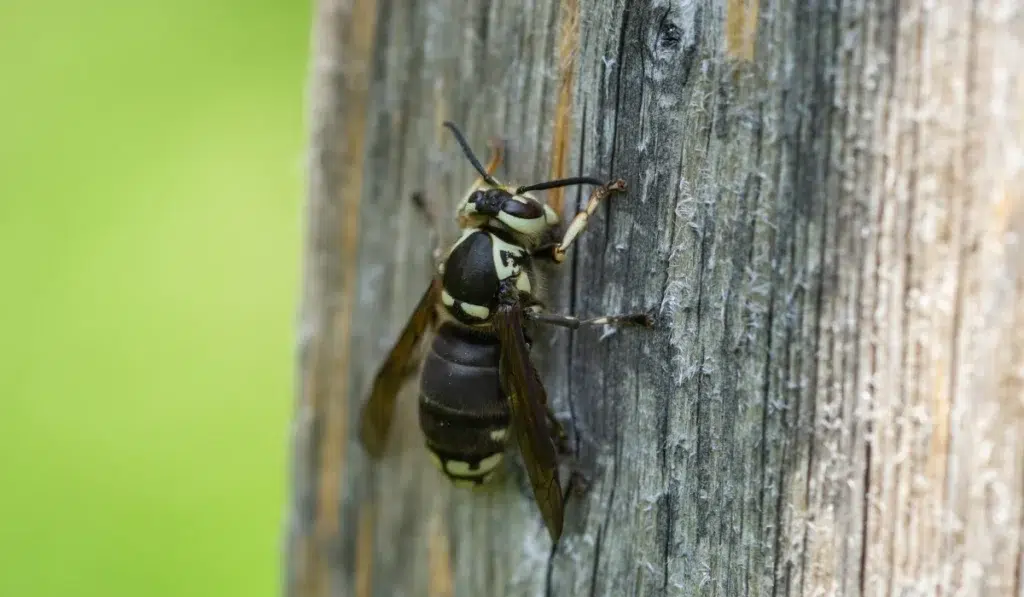
Technically a type of yellow jacket, bald-faced hornets build large, gray, papery aerial nests—the football-shaped kind you’ll sometimes see hanging from a tree limb or roof overhang. They’re more aggressive than paper wasps and will defend their nest actively. Leave these alone and call a professional.
Mud Daubers
Mud daubers build small, tube-shaped mud nests on walls and ceilings. They’re solitary insects and rarely sting. A broom can handle a fresh, unoccupied mud tube. If you’re unsure whether the nest is active, don’t touch it.
Why Wasps in Alabama Summer Are a Bigger Deal Than Other Seasons
Wasp colonies start small in spring—a single queen builds a starter nest and raises the first batch of workers. By June, the colony has grown substantially. By late summer, a well-established yellow jacket nest can hold several thousand workers, and the whole colony is on edge because food sources are getting competitive.
Alabama’s heat also pushes wasps to seek water and shade, which brings them closer to homes. Gutters, soffits, crawlspace vents, and outdoor faucets are all attractive to them.
Where to Check for Nests Around Your Birmingham Home
Walk around your home and outbuildings and look carefully at these spots:
- Eaves and soffits—paper wasps and bald-faced hornets both favor these.
- Porch and deck ceilings—paper wasp nests often start small and blend in.
- Window and door frames—check the top corners especially.
- Attic vents and crawlspace openings—yellow jackets can establish colonies inside.
- Landscape timbers, retaining walls, and rock beds—underground yellow jacket entries are often small and easy to miss.
- Grill covers, outdoor furniture, and stored equipment—wasps will nest inside anything that sits undisturbed for a few weeks.
When DIY Is Reasonable—and When It Isn’t
A small paper wasp nest with fewer than a dozen cells, located somewhere accessible and away from foot traffic? A can of wasp freeze spray applied at dusk is a reasonable approach for most homeowners. Wear long sleeves, and have an exit path ready.
That said, call a professional for:
- Any underground nest—you can’t see the full colony, and disturbing it without proper equipment is genuinely dangerous.
- Large aerial nests—anything bigger than a softball, or any bald-faced hornet nest.
- Nests inside walls, soffits, or attic spaces.
- If anyone in your household has a known bee or wasp allergy.
- If the nest is near a high-traffic area—doors, AC units, play equipment, or outdoor dining areas.
What Not to Do
Don’t spray a nest in the middle of the day. Don’t pour gasoline into a ground nest. Don’t knock down an active aerial nest with a stick or broom. And don’t assume a nest is abandoned just because it looks quiet.
Magic City Pest Control Can Handle Stinging Insects Across the Birmingham Metro
If you’ve got an active wasp or hornet nest that you’d rather not deal with yourself, that’s exactly what we’re here for.
Our residential pest control program covers stinging insects as part of our 17-point protection plan, and we serve homeowners throughout Birmingham, Hoover, Vestavia Hills, Mountain Brook, Pelham, Helena, Alabaster, and beyond.
Contact us or give us a call at (205) 538-1435 to schedule a visit.
Frequently Asked Questions
Are Wasps in Alabama Dangerous, or Are People Just Overreacting?
They can be genuinely dangerous in the right circumstances. A disturbed colony—especially yellow jackets—can deliver multiple stings very quickly, which is serious for anyone. For someone with a venom allergy, even one sting is a medical emergency. Nests near high-traffic areas of your yard or home deserve prompt attention.
What Time of Year Do Wasps Go Away in Alabama?
Wasp colonies decline in fall as temperatures drop. Worker wasps die off, and only newly mated queens survive to overwinter and start new colonies the following spring. In Alabama, that typically means colonies start thinning out in October and November. But summer—June through September—is when colonies are at full strength.
Can Wasps Come Back After a Nest Is Removed?
Yes, they can—especially if the removal doesn’t address the underlying attractant. If a nest is removed but the entry point into a wall or soffit isn’t sealed, wasps may investigate the same location the following season.
Does Magic City Pest Control Handle Wasp Nest Removal in Birmingham?
Yes. Magic City Pest Control serves Birmingham and the surrounding metro including Hoover, Vestavia Hills, Mountain Brook, Pelham, Helena, and Alabaster. Stinging insect treatment—including wasp and hornet nests—is covered under our residential pest control plans.
Call us at (205) 538-1435 or contact our team to schedule service.


