

Those large brown beetles bumping into your porch lights on summer evenings are likely June bugs. A june bug in Alabama is generally harmless to people and homes. Adults don’t sting or normally bite, and finding several outside doesn’t mean your home is infested. Certain June beetle grubs, however, can feed on grass roots and damage lawns. Here’s how to identify these beetles, understand their seasonal activity, and recognize lawn problems that deserve a closer look.
What Is a June Bug in Alabama?
“June bug” is a common name for several scarab beetles, including brown May and June beetles and green June beetles. These insects share some physical features, but their appearance, activity patterns, and feeding habits differ.
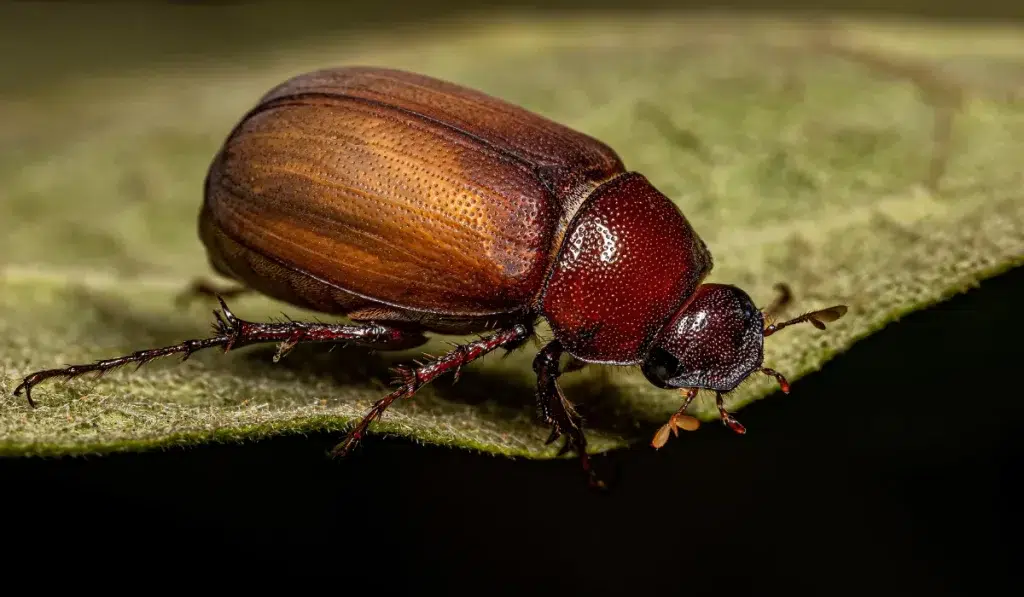
Most June beetles have oval bodies, hard wing covers, and relatively short antennae. Depending on the species, you might find a brown beetle around your porch at night or notice a metallic green beetle flying across the yard during the day.
Brown May and June Beetles
Many brown May and June beetles belong to the genus Phyllophaga. Their bodies range from reddish-brown to dark brown, with hard outer wing covers protecting the thinner wings underneath.
These are common nighttime visitors around outdoor lights. You can distinguish them from cockroaches by their rounded, sturdy bodies and shorter antennae.
Their name refers to a familiar period of adult activity, not a fixed calendar. Depending on the species and conditions, brown May and June beetles can appear at different times throughout spring and summer.
Green June Beetles
Green June beetles (Cotinis nitida) have metallic green bodies, sometimes with bronze or tan coloring along the edges. They’re generally larger and more colorful than the brown beetles homeowners find around porch lights.
They’re also active during daylight hours. You may see them flying over grass, moving through gardens, or feeding on ripe fruit.
The distinction matters for lawn damage. Many Phyllophaga larvae feed on living plant roots, while green June beetle larvae primarily consume decaying organic matter. Green June beetle grubs can disturb turf as they burrow, but their feeding habits differ from those of root-feeding white grubs.
Why Do June Bugs Appear in Late Spring and Summer?
June beetles spend their immature stages underground. When development is complete and seasonal conditions are suitable, adults emerge, reproduce, and, depending on the species, feed on vegetation.
The period when you see adults depends on the species and local weather. You might notice more beetles during certain weeks of spring or summer, followed by a decrease in activity as their seasonal flight period passes.
Why June Bugs Gather Around Porch Lights
Many brown May and June beetles fly at night and are attracted to artificial lighting. A porch fixture, garage light, or bright window can draw beetles from nearby vegetation.
This explains why several may appear around one entrance while other parts of the yard seem quiet. The gathering reflects their attraction to the light and doesn’t establish where the beetles developed underground.
June beetles can be awkward flyers. They may collide with windows or siding, circle a fixture repeatedly, and eventually settle on the porch. It’s common to find a few resting near the light the following morning.
For a Birmingham or Huntsville homeowner, this can be more annoying than harmful. If the beetles remain outdoors and your lawn shows no unusual damage, there’s generally little reason to intervene.
Are June Bugs in Alabama Harmful?
Adult June bugs are not considered dangerous to people. They don’t sting and aren’t recognized as significant biting pests or human disease vectors.
A beetle may land on your arm or cling briefly to your clothing. Its legs can feel scratchy, but that sensation isn’t the same as a bite. You can gently brush it away or move it outside using a container.
June beetles also don’t chew through structural wood or establish breeding populations inside houses. When one appears indoors, it has usually entered through an open door, damaged screen, or another accessible opening.
Can Adult June Bugs Damage Plants?
Some brown May and June beetles feed on tree and shrub leaves. Green June beetles may feed on ripe or damaged fruit.
Occasional feeding isn’t necessarily a problem for established plants. If you’re seeing noticeable leaf injury or damaged fruit, identify the insects responsible before deciding how to respond.
The type of damage matters as much as the insect’s appearance. Leaf feeding, fruit feeding, and root damage occur in different places and may involve different beetle species.
Can June Bug Grubs Damage Your Lawn?
The immature stages of certain June beetles can cause more trouble than the adults. Root-feeding white grubs live in the soil, where they consume grass roots as they develop.
When enough roots are damaged, the grass struggles to absorb the water and nutrients it needs. Affected areas may thin, turn brown, or become loose enough to pull away from the soil.
A cluster of adult beetles around your porch light doesn’t establish that your lawn has damaging numbers of grubs. To assess the lawn, look for symptoms in the grass and inspect the soil beneath affected areas.
June Bug vs. Other Common Alabama Insects
Brown June beetles can be mistaken for cockroaches, especially when you see one flying near a doorway. Green June beetles are sometimes confused with other colorful scarab beetles.
Body shape, antenna length, and markings offer better identification clues than color alone. These features also help distinguish June bugs from other beetles found in Alabama.
June Bug vs. Palmetto Bug
Palmetto bugs are cockroaches, not beetles. In Alabama, the name commonly refers to large cockroaches such as the American cockroach.
A June beetle has a rounded body and short antennae. A palmetto bug has a flatter body and much longer antennae, often extending beyond its body.
The distinction is useful when you find an insect indoors. An occasional June beetle generally wandered inside, while palmetto bugs around Birmingham homes can raise different concerns because some cockroaches live or reproduce in and around buildings.
June Bug vs. Japanese Beetle
Japanese beetles have metallic green bodies, copper-colored wing covers, and small white hair tufts along their sides. These markings help distinguish them from brown June beetles and green June beetles.
Japanese beetles are known for feeding on leaves and flowers. If your garden plants show visible feeding damage, examine the beetles and the affected vegetation rather than assuming all scarab beetles cause the same injury.
Signs June Bug Grubs May Be Damaging Your Lawn
White grubs are the immature forms of several scarab beetles. They typically have soft, pale bodies, darker heads, and a curved shape resembling the letter C.
Some species feed on grass roots, while others consume decaying material in the soil. Identifying the type of grub matters because finding a white larva doesn’t automatically explain lawn damage.
The Alabama Cooperative Extension System offers turfgrass and pest management information relevant to Alabama homeowners. Local guidance is useful when evaluating lawn symptoms because the cause of damage and the appropriate response depend on the grass and growing conditions.
What Grub Damage Looks Like
Root-feeding grubs can leave irregular brown or thinning patches in the lawn. The affected grass may seem unusually dry or fail to recover as expected when neighboring areas remain healthy.
A more revealing sign is weakened root attachment. If extensive feeding has damaged the roots, a section of turf may lift away from the soil like loose carpet.
Animals digging in the lawn can also prompt an inspection because some search for insects underground. Digging alone, however, doesn’t identify the insects present.
These symptoms aren’t exclusive to grubs. Drought, drainage problems, turfgrass disease, and other root problems can also weaken or discolor grass.
How to Check for June Bug Grubs
Start at the edge of a damaged patch where struggling grass meets healthier turf. Carefully lift a small section so you can examine both the roots and the soil immediately beneath them.
Look for curved, cream-colored larvae with darker heads. Check whether the roots are intact or noticeably shortened, and compare the damaged area with nearby healthy grass.
If you find grubs, don’t assume treatment is necessary. The species, number of larvae, extent of injury, and condition of the lawn all influence whether they’re causing a meaningful problem.
The University of Georgia Cooperative Extension offers regional turfgrass and insect management information that can help inform this assessment. For persistent damage, a qualified lawn professional can examine the site and determine whether root-feeding grubs are involved.
How to Keep June Bugs Away From Your Alabama Home
For beetles gathering near your house, start with outdoor lighting and entry points. These changes are easier than attempting to eliminate June beetles from the surrounding yard, and they address the places where homeowners usually encounter them.
Adjust Your Porch Lighting
Turn off porch and patio lights when they aren’t needed. If you want lighting for security or visibility, motion-activated fixtures can reduce the amount of time lights stay on.
You can also consider warmer-colored outdoor bulbs, which may attract fewer insects than some cooler-colored alternatives. Results vary by insect species and lighting conditions, so changing bulbs won’t guarantee a beetle-free porch.
Where practical, position fixtures away from doors that open frequently. This can help shift insect activity away from the entrance rather than concentrating it where your family comes and goes.
Check Doors, Screens, and Other Openings
June beetles generally enter homes by accident. A door left open during the evening or a torn screen can give them an easy way inside.
Inspect window screens, door sweeps, and weatherstripping. Repair visible gaps and make sure exterior doors close securely, particularly near lights that attract nighttime insects.
These precautions also help with pest-proofing Birmingham patios and outdoor spaces, where other seasonal insects may gather around doors and exterior fixtures.
If a beetle gets indoors, you can usually place a container over it, slide a piece of paper underneath, and release it outside.
Watch for Changes in Lawn Health
Healthy lawn care won’t prevent every white grub, but it can help grass tolerate environmental stress and make damage easier to recognize.
Water according to your turfgrass needs and current conditions. Mow at the recommended height for your grass type, and pay attention to patches that continue thinning or browning despite regular care.
Before making treatment decisions, inspect the roots and soil. The University of California Integrated Pest Management Program provides guidance on turfgrass pest identification and management that emphasizes understanding the pest problem before selecting a response.
When Should You Call a Professional About June Bugs?
A few adult beetles at your porch light usually don’t justify a service visit. Start by changing unnecessary lighting and checking the openings around your entrance.
Professional pest identification becomes useful when insects repeatedly enter your home or you’re unsure whether you’re seeing June beetles, cockroaches, or another household pest.
For an affected lawn, contact a qualified lawn care or pest professional if patches continue spreading, grass lifts away with few roots attached, or you find numerous grubs beneath damaged turf. A proper assessment can help distinguish root-feeding insects from irrigation, disease, or soil problems.
Keeping June Bug Problems in Perspective
June bugs may create a commotion around porch lights, but adult beetles generally aren’t a danger to your household. The useful distinction is between temporary nighttime visitors and signs of actual lawn damage.
If your grass has irregular brown patches or weakened roots, inspect the soil before assuming grubs are responsible. If the beetles are simply gathering near an exterior light, small lighting and entryway changes may be all you need.
For recurring beetles indoors or other household pest concerns, Magic City Pest Control can help you discuss the next steps. You can contact Magic City Pest Control to ask about beetle identification and available pest control services in your area.
Frequently Asked Questions About June Bugs in Alabama
Do June Bugs Bite or Sting People?
June bugs don’t sting and aren’t considered biting pests of humans. They may land on your skin or cling to clothing, and their legs can feel prickly. These encounters generally occur when beetles fly near outdoor lights, and you can move them away without special treatment.
Why Are There So Many June Bugs Around My Porch Light?
Many brown May and June beetles are active at night and drawn to artificial light. Your porch fixture can attract beetles from nearby vegetation, so several appearing together doesn’t mean they’re breeding in your yard. Switching off unnecessary lights or using motion-activated fixtures can help.
Are June Bugs Bad for Your Lawn?
Some June beetle grubs feed on grass roots and can damage turf when enough are present. Others, including green June beetle larvae, mainly feed on decaying organic matter. If your lawn develops brown patches or loose turf, inspect the roots and soil before attributing the damage to grubs.
Are June Bugs the Same as Palmetto Bugs?
No. June bugs are beetles, while palmetto bugs are cockroaches. June beetles usually have rounded bodies, short antennae, and hard wing covers. Palmetto bugs have flatter bodies and much longer antennae. That distinction helps you decide whether you’ve found a seasonal beetle or an insect associated with household pest problems.