

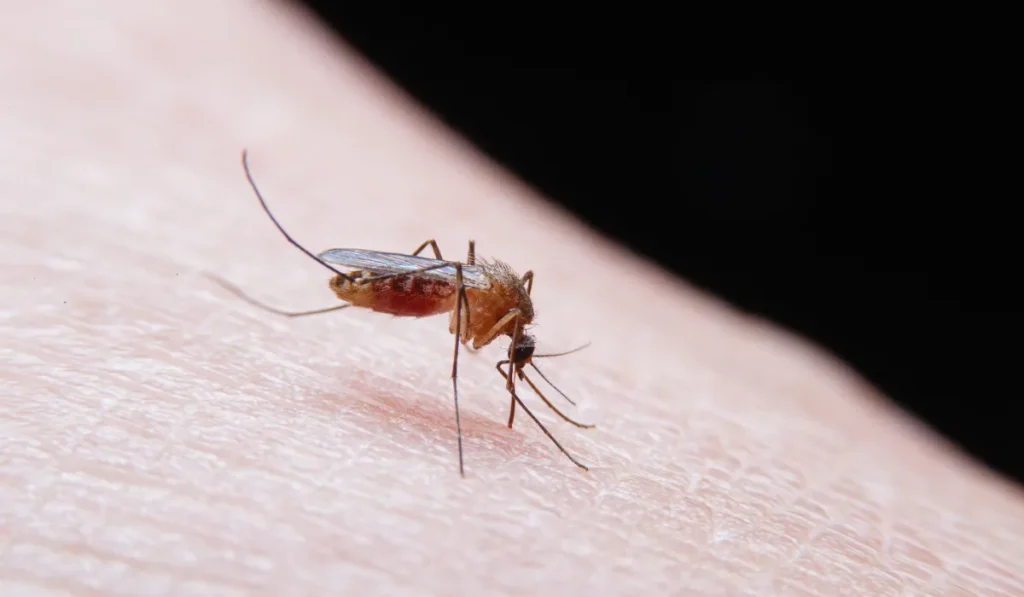
The types of mosquitoes in Alabama include Asian tiger mosquitoes, southern house mosquitoes, Anopheles mosquitoes, and several floodwater species. Their habits explain why you might get bitten on a shaded patio in the afternoon, encounter more mosquitoes around sunset, or notice a sudden increase after heavy rain. Some breed in small containers, while others develop in stagnant drainage water or flooded ground. Recognizing these differences helps you find likely breeding sites and decide what to check around your yard.
What Are the Main Types of Mosquitoes in Alabama?
Alabama has many mosquito species, but a few types and groups are particularly useful for homeowners to recognize. Their markings can help with identification, while their feeding times and breeding habits provide clues about where mosquito problems begin.
1. Asian Tiger Mosquito (Aedes albopictus)
If a small, black-and-white mosquito keeps biting you while you’re working in the garden, the Asian tiger mosquito is one possibility. It has white bands on its legs and a single white stripe running down the center of its upper back.
Asian tiger mosquitoes are active during daylight hours, especially in shaded areas. You may encounter them while watering plants, sitting beneath a covered patio, or working around shrubs during the afternoon.
Their breeding habits make them particularly relevant to residential properties. Females deposit eggs along the inside walls of water-holding containers, where the eggs can hatch when water levels rise.
Flowerpot saucers, buckets, discarded tires, and outdoor toys can all collect enough water for these mosquitoes to develop. If you’re experiencing frequent daytime bites, inspecting these items is a useful starting point.
2. Southern House Mosquito (Culex quinquefasciatus)
Southern house mosquitoes look different from Asian tiger mosquitoes. They’re generally brown, with less noticeable markings, making them harder to identify without a closer examination.
These mosquitoes are primarily active from dusk into the night. You might encounter them while sitting on the porch after dinner or spending time outside after sunset.
Southern house mosquitoes favor stagnant water containing organic material, such as decaying leaves and other debris. Poorly maintained drainage areas, neglected water features, and certain stormwater structures can support their development.
Unlike container breeders that use small household items, these mosquitoes can take advantage of water sources that are less obvious or harder to access. Southern house mosquitoes are also among the Culex species associated with West Nile virus transmission.
3. Anopheles Mosquitoes
Anopheles mosquitoes can sometimes be recognized by how they rest. Rather than holding their bodies nearly parallel to a wall or other surface, they often rest with their bodies angled upward.
Several Anopheles species occur in the southeastern United States, including members of the Anopheles quadrimaculatus group. Their preferred habitats vary, but many breed in relatively permanent water sources with vegetation, including ponds, marshes, and wetland edges.
These mosquitoes generally feed during evening and nighttime hours. If your property borders a vegetated pond or similar water source, the surrounding habitat may support certain Anopheles species.
Some Anopheles mosquitoes transmit malaria in places where the disease circulates. Finding one in Alabama, however, does not establish that malaria is being transmitted locally.
4. Floodwater Mosquitoes
Floodwater mosquitoes are a group rather than a single species. They include certain mosquitoes in the Aedes and Psorophora groups that develop in areas affected by periodic flooding.
Many floodwater mosquitoes lay eggs in low-lying ground before water is present. When heavy rain floods the area, suitable conditions can trigger hatching. This differs from mosquitoes that depend on water remaining in a container.
The result can be a noticeable increase in mosquitoes after substantial rainfall. Some floodwater species bite aggressively and travel away from their breeding sites.
For homeowners near fields, drainage corridors, or other low-lying areas, this distinction matters. Mosquitoes developing outside your property can still reach your backyard, even when you’ve removed standing water from household containers.
5. Yellow Fever Mosquito (Aedes aegypti)
The yellow fever mosquito resembles the Asian tiger mosquito at first glance. Both have dark bodies with white markings, but the yellow fever mosquito has a pale, lyre-shaped pattern on its upper back rather than one straight white stripe.
This mosquito commonly bites during daylight hours and breeds in artificial containers, particularly those around buildings. Uncovered water storage containers, buckets, and discarded items can provide suitable conditions.
The species can transmit dengue, Zika, chikungunya, and yellow fever viruses in areas where those illnesses circulate.
Its importance as a disease vector makes it worth recognizing, but that doesn’t mean it’s equally common throughout Alabama. Its presence also doesn’t establish that these diseases are being transmitted locally.
How Do the Types of Mosquitoes in Alabama Compare?
Biting time can help narrow down which mosquitoes you’re encountering, but the breeding habitat often provides a more useful clue. A mosquito appearing on your patio in daylight may have developed in a nearby container, while one arriving after heavy rain may have originated from flooded ground beyond your yard.
Which Mosquitoes Are Most Likely to Bother You at Home?
A mosquito problem can look different from one Alabama yard to another. The time of day, nearby vegetation, and recent weather all affect which mosquitoes you’re likely to encounter.
Daytime Bites Around Patios and Gardens
Asian tiger mosquitoes are worth investigating when bites occur during daytime activities. Shaded patios, garden beds, and seating areas near shrubs can provide places where adult mosquitoes rest between feeding.
Look for water-filled containers close to these areas. A saucer beneath a potted plant or an unused bucket behind a shed may be easy to overlook during routine yardwork.
Mosquitoes Appearing Around Sunset
If mosquito activity increases as daylight fades, southern house mosquitoes and other evening-biting species may be involved.
Check accessible drainage areas, water features, and places where water remains stagnant. Nearby ponds or other permanent water habitats may also support species that are active after sunset.
Sudden Mosquito Activity After Rain
Heavy rain creates two different problems. It fills containers that support species such as Asian tiger mosquitoes, and it can flood ground where floodwater mosquito eggs have been waiting to hatch.
That’s why mosquito activity after heavy rainfall can increase even when you maintain your yard regularly. The mosquitoes may be developing in different habitats, including locations beyond your property.
Which Alabama Mosquitoes Can Carry West Nile Virus?
Certain Culex mosquitoes, including the southern house mosquito, are important West Nile virus vectors. A vector is an organism capable of transmitting a disease-causing agent between hosts.
According to the CDC’s West Nile virus information, people primarily become infected through the bite of an infected mosquito. A mosquito belonging to a vector species is not necessarily infected, and its appearance cannot tell you whether it carries the virus.
Other mosquito groups have different disease associations. Certain Aedes mosquitoes can transmit dengue and Zika viruses where those diseases circulate, while some Anopheles mosquitoes transmit malaria in affected regions.
For Alabama-specific health information, the Alabama Department of Public Health is an appropriate source for current guidance. If you develop concerning symptoms after a mosquito bite, seek medical advice rather than trying to identify the mosquito from the bite itself.
Bite marks are also unreliable for determining which insect was responsible. For example, bed bug bites and mosquito bites can produce similar skin reactions, making the surrounding circumstances more useful than the appearance of a welt alone.
Where Do Different Mosquito Types Breed Around Your Yard?
Mosquitoes pass through four life stages: egg, larva, pupa, and adult. Larvae and pupae develop in water, which makes breeding-source management an effective part of mosquito prevention.
The best place to begin is with the water sources you can safely inspect and maintain.
Small Containers and Outdoor Equipment
Container-breeding mosquitoes can use ordinary items that collect rainwater. Check flowerpot saucers, buckets, watering cans, discarded tires, children’s toys, and containers stored behind sheds.
Look beneath decks, behind outdoor furniture, and around rarely used equipment. These locations may hold water long after the rest of your yard has dried.
Birdbaths need attention, too. Emptying, scrubbing, and refilling them regularly helps interrupt mosquito development without removing a useful water source for birds.
Gutters, Drains, and Neglected Water Features
Standing water containing leaves and other organic debris can support certain Culex mosquitoes. Clogged gutters, poorly draining areas, and neglected ornamental water features deserve regular inspection.
Clear debris from accessible gutters and downspouts, maintain fountains or ponds, and address drainage problems that leave unnecessary standing water.
If a public storm drain appears to be holding stagnant water, report it to the appropriate local authority. Don’t attempt to enter or open drainage structures yourself.
Temporarily Flooded Ground
Floodwater mosquitoes can originate from areas that are dry between rain events. Low spots, fields, and drainage corridors may become breeding habitats when water temporarily covers the ground.
Improving drainage on your own property can help where practical, but not every flooded habitat is within a homeowner’s control.
This is an important distinction when mosquitoes keep returning after you’ve removed standing water from containers. Your yard may be receiving adult mosquitoes from a larger surrounding area.
How Can You Prevent Mosquitoes Based on Their Breeding Habits?
Mosquito prevention works best when you address the habitats that match the activity you’re seeing. Start with water sources you can remove, then inspect drainage and areas where adult mosquitoes rest.
Remove Water From Containers Every Week
Inspect your yard at least once a week, particularly during warm, rainy weather. Empty and scrub containers that collect water, store unused items under cover, and keep water storage containers securely closed.
Scrubbing matters because some container-breeding mosquitoes attach eggs to container surfaces above the waterline. Simply tipping out the water may leave eggs behind.
Replace birdbath water regularly, and avoid leaving water in unused outdoor equipment.
Maintain Drainage and Water Features
Keep gutters and downspouts clear, remove organic debris from accessible drainage areas, and maintain ornamental ponds or fountains.
For properties with recurring standing water, identify whether the problem comes from blocked drainage, uneven ground, or an item that can be moved or emptied.
These routine measures are part of reducing mosquitoes in your Birmingham backyard, especially when several breeding habitats exist close together.
Reduce Bites While Spending Time Outside
Some mosquitoes will continue reaching your property from nearby areas, so personal protection remains useful even after breeding sites have been addressed.
The CDC’s mosquito prevention guidance recommends using EPA-registered insect repellents according to label directions, maintaining window and door screens, and wearing clothing that covers exposed skin.
Shaded, sheltered areas can also provide resting places for adult mosquitoes. Maintaining vegetation around frequently used outdoor spaces may help make those areas less favorable, although it won’t eliminate mosquitoes on its own.
When Does Professional Mosquito Control Make Sense?
If mosquitoes remain a regular problem after you’ve emptied containers and corrected obvious drainage issues, a professional inspection can help identify conditions you may have missed.
This can be especially useful when your property has dense vegetation, difficult-to-access resting areas, or nearby water habitats outside your control.
What to Expect From Magic City Pest Control
Magic City Pest Control offers monthly yard mosquito treatments intended to reduce mosquito populations around residential properties.
The company’s process includes identifying conditions that contribute to mosquito activity and explaining which changes homeowners can make to help reduce breeding opportunities. A typical treatment takes approximately 30 minutes, depending on yard size.
The advantages of professional mosquito control include having a technician assess problem areas and coordinate treatment with practical property maintenance.
Recurring service doesn’t replace weekly water removal. Both approaches have a role when mosquitoes continue returning throughout the warmer months.
Make Your Alabama Yard Less Welcoming to Mosquitoes
Different mosquito species call for different prevention measures. If you’re getting bitten during the day, inspect small containers near patios and gardens. For mosquitoes appearing after sunset, check stagnant water and drainage areas. Following heavy rain, look for temporary flooding while recognizing that some mosquitoes may come from beyond your property.
Weekly water removal, regular yard maintenance, and personal bite protection can help you manage mosquito activity. When those steps aren’t enough, a professional treatment plan may help reduce the mosquitoes resting around your home.
Magic City Pest Control provides recurring mosquito control for homeowners in Birmingham, Huntsville, and surrounding communities. You can review service availability in Birmingham or Huntsville, or contact Magic City Pest Control to discuss mosquito treatment options for your property.
Frequently Asked Questions About Alabama Mosquitoes
What Kind of Mosquitoes Are Found in Alabama?
Alabama is home to Asian tiger mosquitoes, southern house mosquitoes, several Anopheles species, and different floodwater mosquitoes. Yellow fever mosquitoes are another species to recognize, although their local distribution varies. These mosquitoes differ in appearance, feeding times, and the water sources they use for breeding.
What Time of Day Are Mosquitoes Most Active in Alabama?
It depends on the species. Asian tiger mosquitoes commonly bite during the day, while southern house mosquitoes and many Anopheles mosquitoes are more active from dusk into the night. Some floodwater species also bite during daylight hours. Shade and weather conditions can influence activity.
Why Are Mosquitoes Worse After Heavy Rain?
Rain fills containers, creates temporary pools, and floods ground where certain mosquito eggs are already present. Container-breeding and floodwater mosquitoes can both benefit from these conditions, although they use different habitats. The timing of increased mosquito activity depends on the species, temperature, and water conditions.
How Can You Tell What Type of Mosquito Is Biting You?
Look at its markings, the time of day, and nearby breeding habitats. Asian tiger mosquitoes have distinctive black-and-white markings, while southern house mosquitoes are generally brown. These clues can narrow the possibilities, but accurate identification may require closer examination by someone trained in mosquito identification.