



Spiders in Alabama range from outdoor web builders and active hunters to a small number of species whose bites can be medically significant. If you find a spider in your garage, storage room, yard, or home, accurate identification is more useful than judging it by size or color. This guide covers the Alabama spiders homeowners commonly notice, how to recognize brown recluses and black widows, why spiders show up around homes, and what you can do to reduce unwanted spider activity.
Common Spiders in Alabama You May Encounter
Alabama spiders, identified
A calm look at the spiders Alabama homeowners commonly notice, from web builders in the yard to the two groups worth extra caution.
Spiders are arachnids, not insects, and adult spiders have eight legs. Different types also use different hunting strategies. Some wait in webs for prey, while others actively hunt insects and other small arthropods.
Behavior, web type, body shape, markings, and location can all help with identification. Looking at several features together is more reliable than trying to identify a spider from color alone.
Wolf Spiders
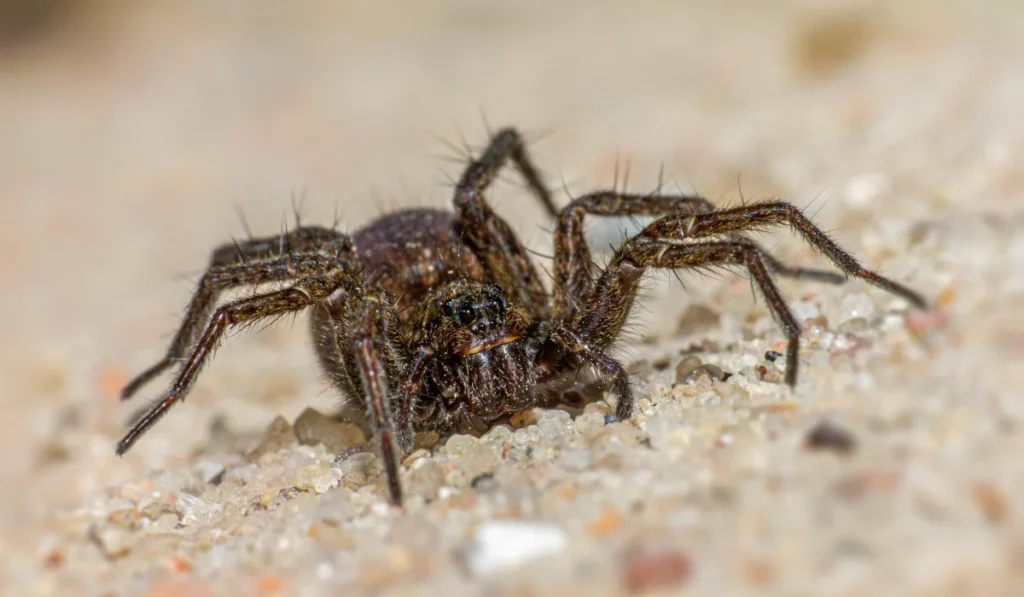
Wolf spiders hunt on foot instead of building a web to trap prey. Their fast movement often makes them more noticeable than spiders that remain in one location.
You may encounter wolf spiders outdoors in lawns and landscaped areas or find one that has wandered into a garage, basement, or another part of the house. A wolf spider moving quickly across the floor can look imposing, but size and speed alone do not indicate that a spider is medically significant.
Orb Weavers and Yellow Garden Spiders
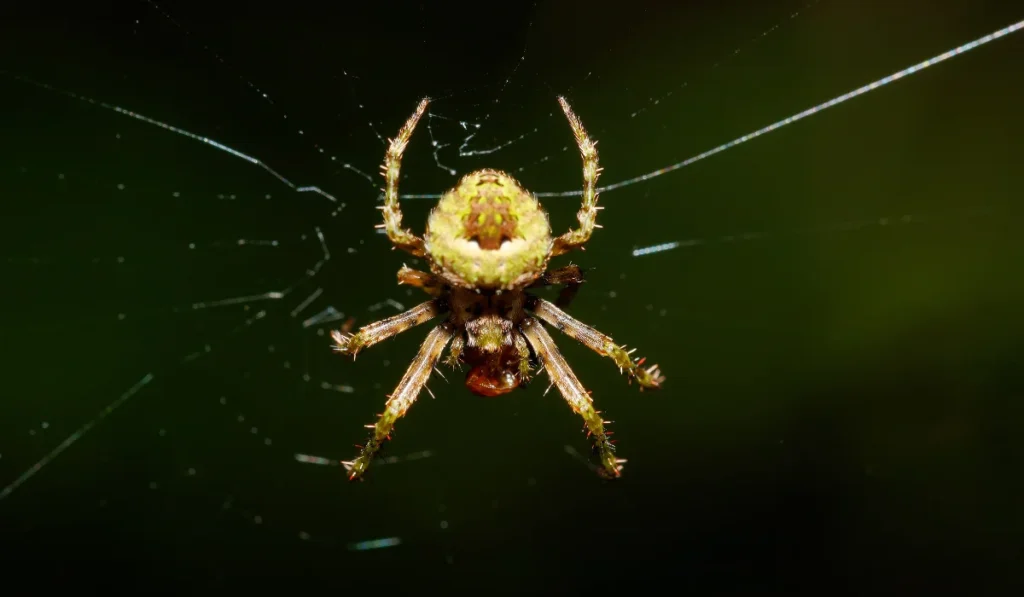
Orb weavers build the organized, circular webs commonly seen between shrubs, around porches, and across garden spaces. Yellow garden spiders are conspicuous members of this group because of their black-and-yellow coloring and large webs.
An orb weaver in an out-of-the-way area of the yard is feeding on insects and other small prey. It becomes more of a household nuisance when webs repeatedly appear across doorways, walkways, decks, or other areas you use regularly.
Jumping Spiders
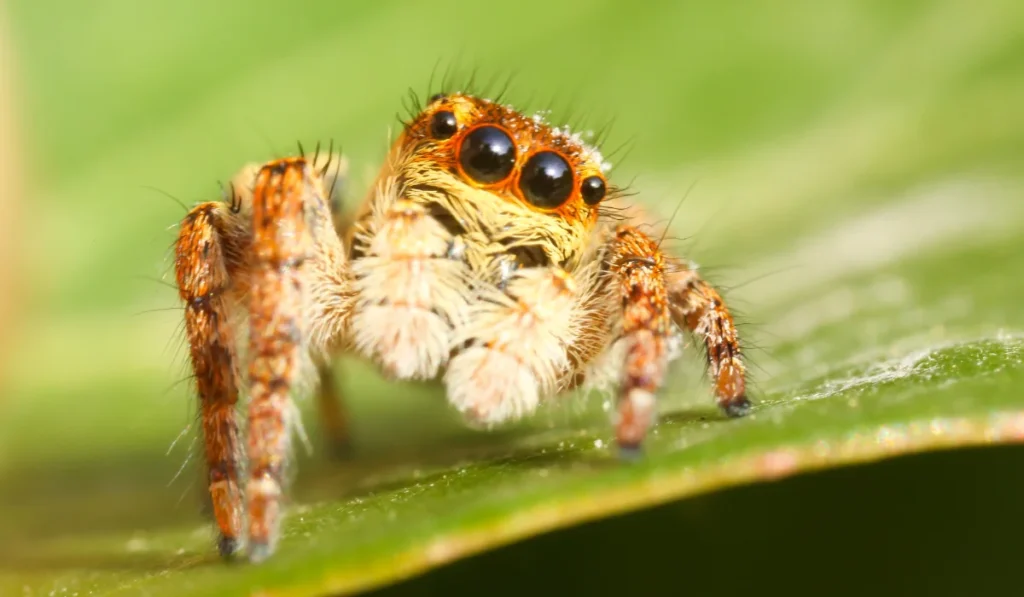
Jumping spiders are compact, active hunters with prominent forward-facing eyes. Instead of waiting in a large capture web, they move across walls, plants, windows, and other surfaces while searching for prey.
That behavior explains why you might spot one on a sunny window frame or exterior wall. Small insects gathering in the same area provide hunting opportunities, so reducing prey activity can make the location less attractive to spiders.
Cellar Spiders
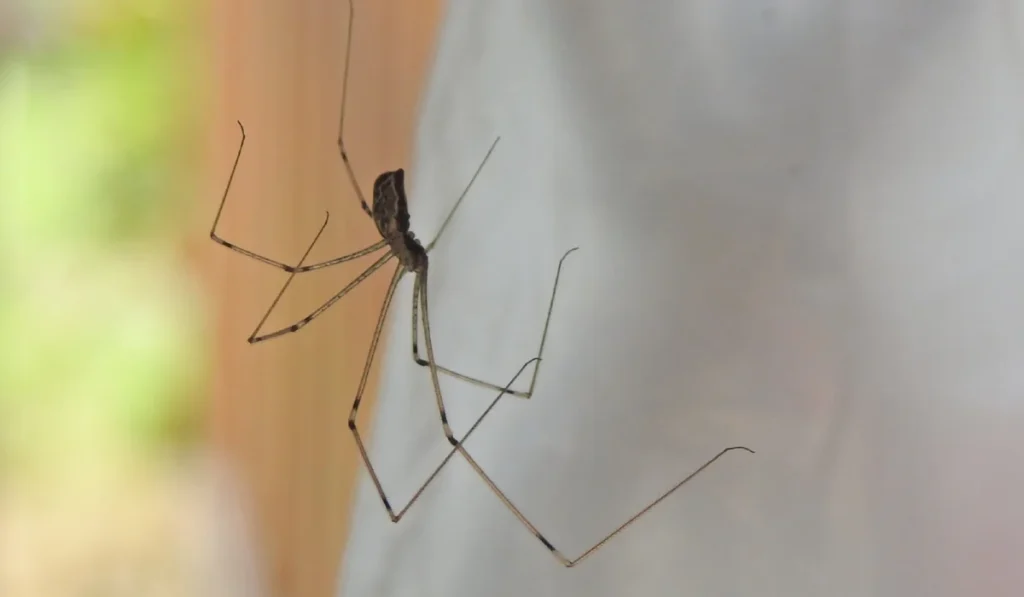
Cellar spiders have long, thin legs and build loose, irregular webs. They commonly occupy sheltered areas where the web can remain undisturbed, such as garages, basements, storage rooms, and ceiling corners.
If you keep seeing webbing in the same area, remove accessible old webs and monitor the location. Fresh webbing makes ongoing activity easier to recognize and keeps abandoned webs from accumulating.
Which Spiders in Alabama Are Dangerous?
Most spiders homeowners encounter are not considered medically significant. In Alabama, the two groups that deserve the most attention are recluse spiders and widow spiders.
You may also see people search for “poisonous spiders in Alabama,” but venomous is the more accurate term. A venomous animal delivers venom through a bite or sting.
Brown Recluse Spiders in Alabama

Alabama lies within the documented geographic range of the brown recluse, but not every small brown spider found inside a home is a recluse. Brown recluse spiders have six eyes arranged in three pairs and are also associated with a violin-shaped marking, although that marking should not be used by itself to confirm an identification.
The University of Kentucky Department of Entomology’s brown recluse guidance describes the spider’s identifying characteristics and the types of locations where it may be found. Brown recluses favor sheltered, relatively undisturbed areas, so homeowners should use care when handling stored belongings or reaching into spaces they cannot see clearly.
Misidentification is common enough to deserve attention. The University of California, Riverside’s brown recluse identification resource explains why brown coloration or a violin-like marking alone is not enough to identify the species reliably.
If you suspect a brown recluse is present, avoid handling the spider with bare hands. A clear photograph or safely collected specimen can be more useful for identification than trying to identify the species from a skin reaction.
Black Widow Spiders in Alabama
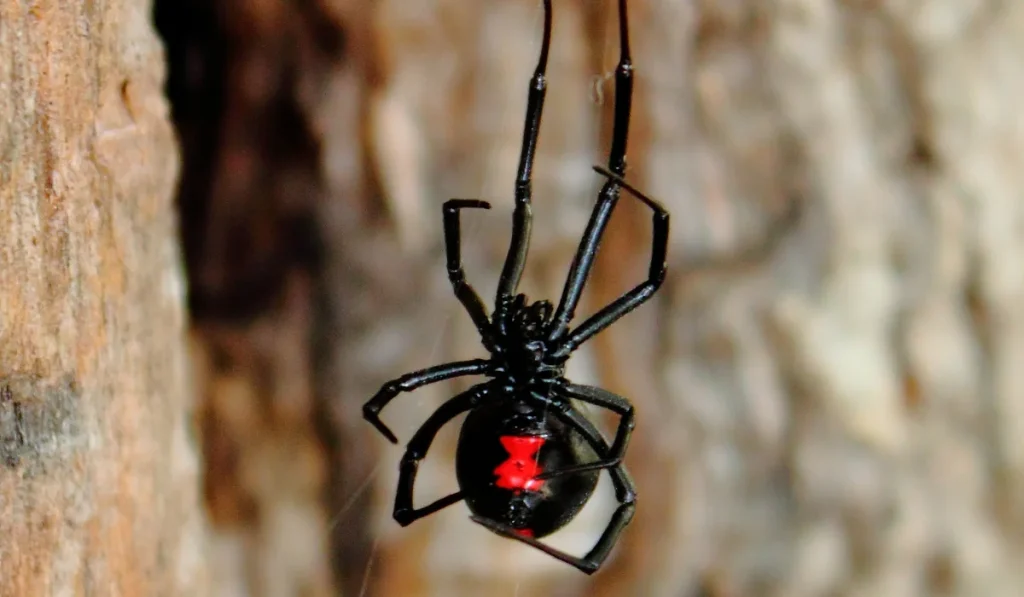
Widow spiders are the other group Alabama homeowners should recognize. Mature female black widows are dark-bodied spiders, and the familiar red hourglass marking may be visible on the underside of the abdomen.
Black widows build irregular webs in protected locations. Sheltered corners, outdoor storage spaces, sheds, and stacked materials can provide places where their webs remain undisturbed.
Use care when moving boxes, equipment, firewood, or other stored materials, particularly when you cannot see where you are placing your hands. Gloves and a visual inspection can reduce direct contact with hidden spiders.
The CDC and NIOSH guidance for venomous spiders identifies widow and recluse spiders as U.S. spiders capable of causing medically significant bites.
Why Spiders Come Into Alabama Homes
A spider inside your house does not automatically mean you have a large indoor population. Some species wander indoors while hunting, while others settle in garages, storage areas, corners, and other sheltered locations.
Understanding what brings them close to the structure can make prevention more effective.
Food Sources
Spiders feed on insects and other arthropods. When flies, ants, roaches, moths, or other small pests are active around a home, spiders have a food source.
That is why removing spiders without addressing other pest activity can produce short-lived results. Exterior lights around doors and porches can also draw flying insects, creating feeding opportunities for spiders nearby.
Entry Points
Openings that allow small pests inside can also provide access for spiders. Damaged window screens, gaps beneath exterior doors, worn garage-door seals, and visible cracks or openings around the structure are all worth checking.
Closing obvious openings helps reduce access for spiders as well as the insects they may follow indoors.
Shelter Around the Structure
Conditions immediately around the home can provide protected areas for pest activity. Branches touching the structure, dense vegetation, leaf buildup, mulch near the foundation, and stored materials can create sheltered spaces.
Magic City Pest Control’s regular service checklist calls for technicians to inspect for branches touching the home, mulch near the foundation, and gaps or holes while removing spider webs and other material from the structure.
How to Keep Spiders Out of Your House
Keeping spiders out of Alabama homes works best when you address access, shelter, webbing, and prey together. Focusing only on the spider you can see may leave the conditions that attracted it unchanged.
Seal Common Entry Points
Start with obvious routes into the home. Repair torn screens, replace damaged door sweeps or garage-door seals, and address visible openings around doors, windows, garages, and foundation areas.
You do not need to assume every small gap is responsible for a spider sighting. Focus first on openings near places where you are already seeing spiders or other pest activity.
Reduce Hiding Places
Keep stored belongings organized so you can inspect and clean around them. Garages, storage rooms, closets, and other spaces that remain undisturbed for long periods give spiders more places to stay hidden.
Outside, avoid piling firewood, boxes, or other materials directly against the house. Trim vegetation that rests against the structure and clear unnecessary leaf or debris buildup near exterior walls.
Remove Accessible Webs
Removing spider webs from eaves, porch corners, garages, and other reachable areas improves visibility and makes new activity easier to detect.
If a web returns shortly after removal, the location is still providing the spider with something it needs, such as prey, shelter, or a suitable attachment point. Do not place yourself at risk to reach webs near electrical equipment, on high ladders, or in areas where you suspect widow or recluse activity.
Address Other Pest Activity
Spider control and general pest control often overlap because spiders rely on other arthropods for food. If small insects remain active around windows, doors, exterior lighting, or storage areas, removing individual spiders does not address the food source.
Look at both sides of the problem. Reduce spider access and shelter while also addressing the insects attracting them.
What Should You Do if You Think a Spider Bit You?
A skin lesion or irritated area does not prove that a spider caused the injury, and the appearance of a bite cannot reliably identify a spider species by itself.
Avoid Identifying the Spider From the Bite
This distinction is especially useful with suspected brown recluse bites because unrelated skin conditions can be incorrectly attributed to spiders. If you actually see the spider, do not pick it up with your bare hands.
If you can safely take a clear photograph without risking another bite, the image may help with later identification.
Know When to Seek Medical Guidance
Clean the affected area and monitor your symptoms. If pain, swelling, muscle symptoms, or other reactions are severe or continue to worsen, seek medical guidance.
The CDC and NIOSH guidance linked above recommends medical attention for concerning reactions associated with venomous spider bites. A pest professional can help evaluate spider activity around the property, but medical symptoms should be assessed by a qualified healthcare professional.
When Spider Control in Alabama Makes Sense
Professional spider control in Alabama can be useful when basic prevention is not reducing the problem. Frequent indoor sightings, webs that keep returning in occupied areas, suspected widow or recluse activity, and noticeable insect activity around the property are all reasons to investigate further.
What a Professional Inspection Looks For
A thorough inspection should look beyond the individual spider that happened to be visible. Eaves, foundations, doors, windows, cracks, storage spaces, landscaping, mulch, and exterior clutter can all help explain how pests are using the property.
Magic City Pest Control’s documented regular service process includes brushing spider webs from the structure and inspecting for branches touching the home, mulch near the foundation, and visible gaps or holes. Foundation and eave areas are also part of the regular service process.
Why a Broader Approach Helps
Looking at the whole property helps connect spider activity to the conditions supporting it. A web on the porch may be only the visible part of the issue if insects are gathering nearby or exterior openings provide easy access.
Spiders are also one of Magic City Pest Control’s identified priority pest topics, while general pest control is a priority service for the company.
Living With Fewer Spiders in Your Alabama Home
Spiders in Alabama are part of the local environment, and many spend their time hunting other small pests. The goal around your home is to recognize the spiders that require added caution while reducing unwanted activity where you live, work, and store belongings.
Focus on Conditions, Not Just Individual Spiders
Start with identification rather than assumptions. Keep obvious entry points closed, remove accessible webs, reduce clutter and exterior shelter, and pay attention to other pest activity that may be supplying spiders with food.
If spiders continue appearing around your property, Magic City Pest Control can help evaluate the conditions contributing to the problem. You can also contact Magic City Pest Control to discuss spider activity in your home or around the exterior.


