

If you live in Decatur, AL, you may see small wasp nests forming under your eaves or behind your gutters. At first, the nest may not seem like a big problem. In just a few weeks, that small nest can grow and put your family at risk of painful stings.
You need professional pest control in Decatur, AL, when stinging insects start flying near your front door, garage, or backyard patio. In Decatur neighborhoods with trees and shaded yards, rooflines create good nesting spots for paper wasps and some hornets.
When you know why wasps choose these areas, you can stop a wasp problem before it grows. If the nest grows larger or activity increases, a local pest control company like Magic City Pest Control can remove it and help prevent wasps from returning.
Key Takeaways
- Wasps build nests on eaves and gutters because these areas provide shelter, stable surfaces, and protection from disturbance.
- Decatur’s warm climate and frequent standing water increase the risk of wasp infestations.
- Gutter cleaning, sealing entry points, and reducing insect activity help prevent nesting sites.
- Magic City Pest Control provides professional wasp control, wasp nest removal, and follow-up services to prevent recurring infestations.
Why Wasps Build Nests on Eaves and Gutters
Wasps love gutters and eaves because these areas give them shelter and strong places to attach their nests. That is why you often see wasp nests along roof edges.
Shelter from rain and heat
Wasp nests need protection from heavy rain and hot sun. Eaves provide a covered space that shields nests from storms. Spring and summer storms are common in Decatur, so this cover helps nests survive.
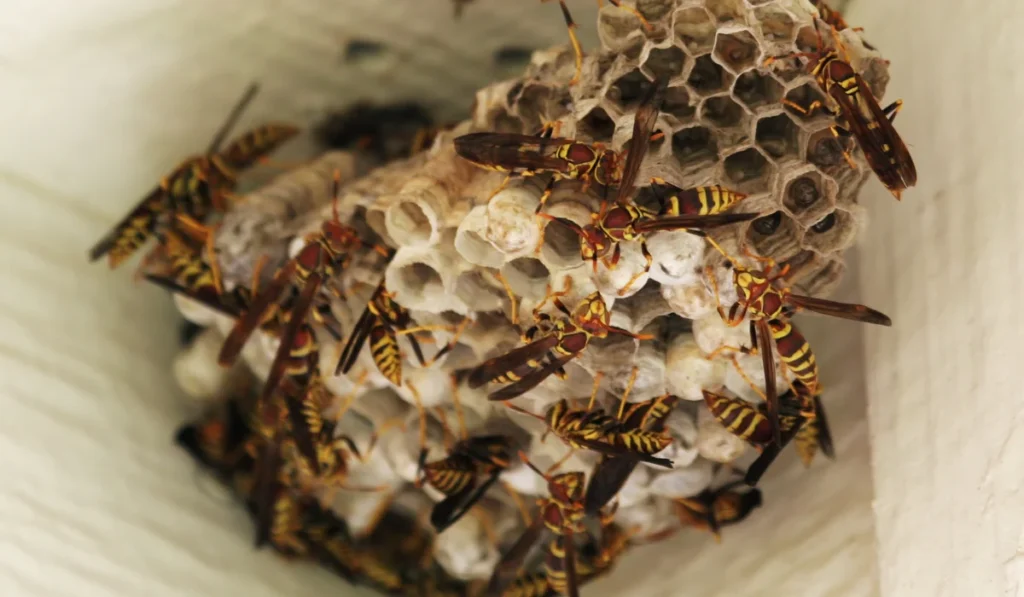
Gutters under soffits create another protected space. This space blocks wind and rain. Paper wasps, which are common in Alabama, often build nests in these spots.
Some hornets also attach nests to roof corners, soffits, and covered eaves. When hornets find good cover, they usually stay.
European hornets also feed on tree sap. They commonly attack plants such as boxwood, dogwood, and birch. If these trees or shrubs are close to your home, you may notice increased hornet activity around your property.
Strong, stable surfaces
Wasps need a solid surface to attach their nests. The undersides of eaves and the edges of gutters provide wasps with flat, stable areas to build their nests.
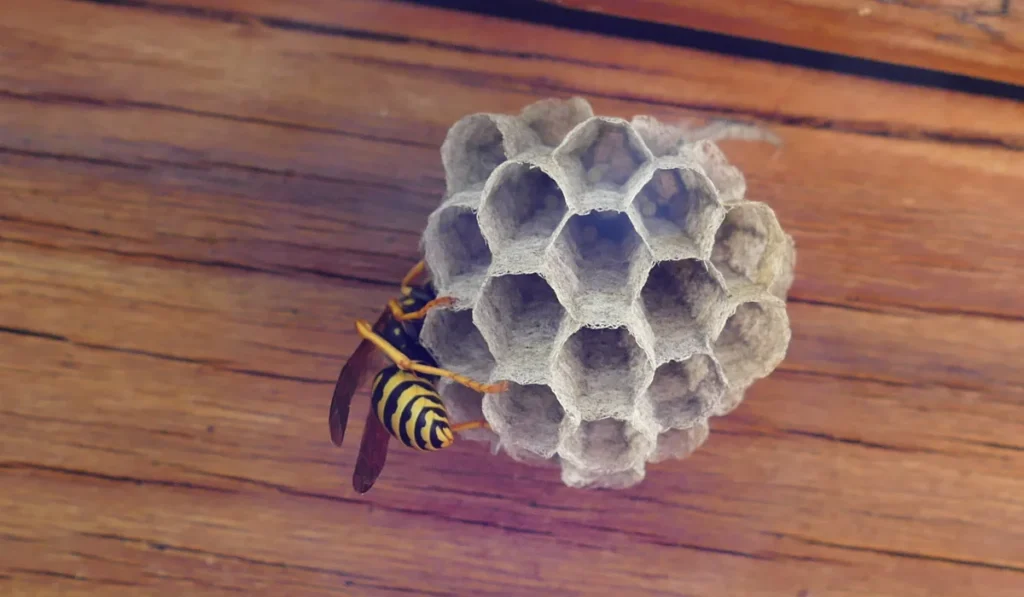
Paper wasps chew wood fibers to make a paper-like material. If your home has exposed wood or water damage near the fascia boards, wasps find it even more attractive. Over time, several nests can form along the same part of your roofline.
Height and low disturbance
Stinging insects prefer areas that people do not disturb. Eaves and gutters sit high above the ground, away from pets and children. This height makes the area safer for nesting.
Yellow jackets often build nests in the ground, but they may also move into wall voids or roof gaps. Once inside wall voids, these wasps can grow their nests out of sight. As the colony grows, it can turn into a larger wasp problem that is harder to control.
Sometimes, yellow jacket and hornet nests grow large before homeowners notice them.
What Makes Decatur Homes More Appealing
Certain local conditions in Decatur increase the risk of wasp infestations. Climate, landscaping, and home design all play a role.
Long, warm seasons
North Alabama’s warm climate allows wasps to stay active for much of the year. In Decatur, wasp colonies can begin forming in early spring and continue growing into fall. The longer the season, the larger the nest. South Dakota State University recommends managing wasps in early spring, as soon as you notice activity.
Decatur and nearby cities such as Huntsville experience long, warm seasons that support year-round pest activity.
Because the season is longer, professional pest control plays a bigger role in preventing recurring wasp activity and other seasonal pest problems.
Standing water and clogged gutters
Clogged gutters trap leaves and debris. After rain, this creates standing water. Moisture softens wood and attracts stinging insects.
Water damage near soffits and fascia boards can also create small gaps. These gaps allow wasps to move into wall voids or attic spaces. What starts as a small outside nest can turn into a hidden pest infestation inside your home.
Routine gutter cleaning removes debris and standing water that attract nesting wasps.
Landscaping and food sources
Flowers, gardens, and outdoor trash cans attract insects. Wasps feed on nectar and hunt other insects, so they stay near steady food sources.
Controlling ants and flies lowers the food supply that attracts wasps. When food sources drop, wasps are less likely to stay near your home.
Remove standing water from birdbaths and plant trays to reduce insect activity and future wasp problems.
How to Prevent Eaves-and-Gutter Nesting
Learning how to spot and get rid of the wasp infestation in your home begins with prevention. You can lower your risk of wasp infestations by taking practical prevention steps.
A combination of home maintenance and pest control services is most effective. Preventing nests is much easier than dealing with large wasp colonies later in the season.
Stay consistent with gutter cleaning
Gutter cleaning is one of the most effective prevention steps. Clean gutters remove moisture and hidden nesting spots.
Check that downspouts drain properly. Remove leaves after storms. Schedule gutter cleaning in spring and late summer before peak nesting months.
Seal gaps and repair damage
Inspect soffits, fascia boards, and roof edges for cracks or water damage. Seal small gaps with the right materials. Replace damaged wood when needed.
Sealing gaps helps prevent wasps and termites from entering. In Alabama, termite infestations are common, so regular inspections are essential.
Our pest control experts at Magic City Pest Control can inspect your home, find risk areas, and stop nests before they grow.
Reduce insect activity around your home
Limiting other insects makes your home less attractive to wasps. When you lower insect activity, you reduce the chance that wasps will nest near your home.
Keep trash sealed tightly. Clean outdoor eating areas. Trim branches that touch your roofline.
Avoid risky do-it-yourself sprays. Disturbing a nest without proper equipment can cause wasps to attack.
Professional wasp nest removal by a trained exterminator works better than store-bought sprays. After removal, your technician will return to confirm the nest is gone.
Schedule a Wasp Inspection in Decatur, AL
Wasp activity around your home can escalate quickly, especially during peak season. What starts as a small nest can turn into frequent buzzing near doors, windows, and outdoor living areas.
At Magic City Pest Control, we provide targeted treatment plans based on the type of wasp on your property. You receive clear next steps, straightforward pricing, and efficient service.
Take action before the problem spreads to new areas of your home and disrupts your pest-free environment.
Contact us today to schedule your service.
FAQs
Why do wasps build nests under eaves instead of in trees?
Wasps choose eaves because they offer shelter from rain and sun, along with stable surfaces for attaching wasp nests. These protected areas allow wasp colonies to grow with less disturbance.
Can clogged gutters cause a wasp infestation?
Yes. Gutters filled with debris create moisture and standing water, which attract stinging insects and increase the likelihood that wasps will build nests near your roofline.
Is professional wasp control better than DIY removal?
Yes. Large wasp colonies, yellow jacket nests, and hornet nests can become aggressive if disturbed. Magic City Pest Control provides safe and effective solutions using appropriate materials, thorough inspections, and follow-up care.