

If you notice buzzing insects around your porch, yard, or roofline, you may be seeing yellow jackets or paper wasps. Both are common stinging insects found throughout Alabama and commonly gather near homes, patios, and outdoor eating areas.
At first glance, these insects look similar. Both have dark bodies with bold yellow markings, and both belong to a group of social wasps that live in colonies. For this reason, many homeowners assume they are the same pest. In reality, the key differences between yellow jackets and paper wasps affect how they behave, where they build nests, and how likely they are to sting.
Knowing these differences can help homeowners avoid painful stings. Some nests stay quiet and cause little trouble, while others can lead to repeated wasp stings if the colony feels threatened. This guide will help you identify the insects around your home and know when to call a professional for wasp control in Alabama.
Key Takeaways
- Paper wasps have slimmer bodies with long legs that hang while flying, while yellow jackets appear shorter, thicker, and more compact.
- Paper wasps usually hunt insects like caterpillars, while yellow jackets act as aggressive scavengers that search for sugary and protein-rich food sources.
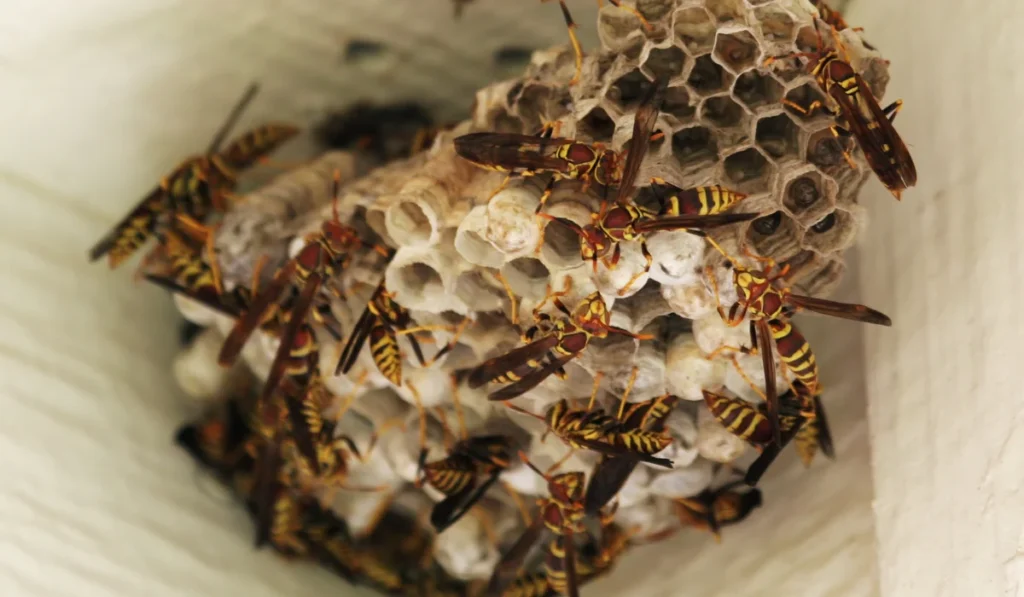
- Paper wasp nests are open umbrella-shaped nests that hang from eaves, porch ceilings, or other overhangs.
- A yellowjacket nest often appears in the ground, inside wall voids, or in sheltered areas like sheds and attics.
- Yellow jacket stings often happen when someone disturbs a colony because these social wasps defend their nests aggressively, while paper wasps usually sting when someone gets too close to their nest.
Alabama Homeowner ID Guide: Yellow Jackets vs. Paper Wasps
You can identify yellow jackets versus paper wasps by looking at a few visual clues. Body shape, antennae, and flight behavior help show which wasp species is active around your property.
Body Shape and Proportions
A clear way to distinguish paper wasps from yellow jackets is by body structure. Paper wasps have slender bodies with narrow waists and long legs that dangle during flight.
Yellow jackets, which belong to the genus Vespula and sometimes Dolichovespula, look thicker and more compact. Their bodies look sturdy and shorter than paper wasps, and the bright yellow markings on the abdomen stand out clearly.
Antennae and Facial Features
The head also shows key differences. Paper wasps have longer antennae that often curve slightly outward. Their overall shape appears delicate compared to other types of wasps.
Yellow jackets have shorter antennae and a broader face. Because of their shape and color pattern, some people mistake them for hornets.
Flight Patterns
Flight behavior also helps with identification. Paper wasps in Alabama tend to glide slowly between structures and plants, often with their legs hanging below their bodies.
Yellow jackets move quickly and directly. They often hover near outdoor dining areas, trash cans, or sugary drinks, searching for easy food sources.
Side-by-Side: Body, Flight, and Behavior Clues
Yellow jackets and paper wasps share some physical similarities, but their behavior around homes is very different.
Body Structure Differences
The insect’s overall build gives the first clue. Paper wasps look narrow and elongated, while yellow jackets have thick, compact bodies designed for quick movement and defense.
The European paper wasp is one of the most common species found around homes in Alabama. Yellow jackets are related to species that people sometimes mistake for bald-faced hornets, though they belong to different groups.
Feeding Behavior
Paper wasps hunt insects such as caterpillars and other garden pests. They capture these insects and feed them to developing larvae inside their nests. Because of this behavior, they can help control certain pests around gardens and landscaping.
Yellow jackets behave very differently. They act as opportunistic scavengers, searching for protein and sugar sources. During late summer, they frequently gather around outdoor meals, soda cans, or garbage bins.
Interaction With Other Insects
Paper wasps often coexist with beneficial insects such as pollinators and nearby honey bees.
Yellow jackets are more aggressive toward other insects. They may attack competing insects or raid colonies to gather protein for their young.
Nest ID Guide: Where Each One Builds
Nest location is often the clearest way to identify the wasp species and spot a yellow jacket nest around your property.
Paper Wasp Nests Under Roofs and Overhangs
Paper wasp nests are usually visible and easy to recognize. They appear as open clusters of cells that resemble a small gray honeycomb.
These nests often hang upside-down from sheltered surfaces such as eaves, porch ceilings, fences, or garage overhangs. Because the nest stays exposed, it is easy to see insects moving around it.
Yellow Jacket Nests in the Ground or Walls
Yellowjackets usually build their nests out of sight. Many colonies are ground-nesting, forming large underground nests in abandoned rodent burrows or small holes in the lawn.
Other nests appear inside buildings. Yellow jackets may establish colonies in wall voids, sheds, crawl spaces, or attics, where the nest stays out of sight while the insects enter and exit through small openings.
Tree and Shrub Nesting Species
Some related insects, including bald-faced hornets and European hornets, build enclosed nests in trees or shrubs.
These nests look like large paper balls with a single entrance. They differ from the open nests of paper wasps, which makes them easier to identify when you spot the structure.
What It Means for Sting Risk
Both yellow jackets and paper wasps can sting, but their behavior determines how likely they are to sting.
Aggression Levels
Paper wasps usually remain calm unless someone approaches their nest closely. Many people live with small colonies under roof eaves without experiencing problems.
Yellow jackets behave more defensively. Disturbing a ground-nesting colony can trigger multiple yellow jacket stings because workers rush out to defend the nest.
Repeated Stinging Ability
Unlike honey bees, both paper wasps and yellow jackets have smooth stingers that allow them to sting multiple times.
This ability makes encounters more painful when several insects defend the nest at once.
Allergic Reactions
Most wasp stings cause temporary swelling and discomfort. However, some people may experience an allergic reaction that requires immediate medical attention.
Because yellow jackets defend their nests in groups, people may receive multiple painful stings if a colony is disturbed.
Schedule an Alabama Nest Inspection
If you see increased wasp activity around your home or business, identifying the insect is the first step. Paper wasps, yellow jackets, and other wasp species in Alabama, such as mud daubers, can appear similar at first glance.
Nests often develop in places that are difficult to reach safely. Colonies may hide in wall voids, sheds, or attics, where they remain active without being noticed. Removing these nests without the proper equipment can increase the risk of stings.
A professional inspection can identify the species, locate the nest, and determine the safest way to handle the problem. At Magic City Pest Control, we provide residential pest control, commercial pest control, and wasp control services across the Birmingham and Huntsville service areas, including nearby communities such as Mountain Brook, Vestavia, Madison, Athens, and Decatur.
If you suspect a yellowjacket nest or paper wasp nests around your property, contact us today to schedule an inspection. Our trained pest control technician can identify the species, locate the nest, and handle the problem using the proper equipment and treatment methods.
FAQs
How can you tell the difference between yellow jackets and paper wasps?
The easiest way to identify them is by body shape and nesting style. Paper wasps have slender bodies with long legs and build open umbrella-shaped nests under eaves. Yellow jackets are stockier and often build nests underground or inside structures.
Are yellow jackets more aggressive than paper wasps?
Yes. Yellow jackets defend their nests aggressively and often act as scavengers around food sources. Paper wasps are usually less aggressive and tend to sting only when their nest is disturbed.
Should homeowners remove wasp nests themselves?
Homeowners sometimes address small exposed paper wasp nests, but nests inside wall voids, attics, or underground are generally safer to leave to pest management professionals. A trained pest control technician can identify the species and safely remove the nest.