


When boxelder bugs cover one side of your home, they are not feeding on the siding. They are using the sun-warmed surface to stay active as outdoor temperatures fall. At the same time, they are gathering near cracks and openings that may lead to protected spaces inside the structure.
This is why boxelder bugs on siding often appear in large groups on one wall while another side of the house remains clear. South- and west-facing walls usually receive more afternoon sun, so they stay warmer than shaded surfaces. Window frames, door trim, soffits, siding edges, and utility openings can also give the insects places to shelter.
Boxelder bugs are nuisance pests rather than structural pests. They do not eat siding, insulation, furniture, or wood, but they can become frustrating when large numbers enter wall voids, attics, or living spaces. Understanding why they gather and where they go next can help you stop an outdoor cluster from becoming an indoor problem.
Why Boxelder Bugs Gather on Sunny Siding
Boxelder bugs gather on warm exterior walls because sunlight raises the surface temperature. As the weather cools in late summer and fall, a sunny wall gives them a place to absorb warmth and remain active. Their activity may become especially noticeable later in the day, after the siding has spent several hours in direct sunlight.
The University of Wisconsin-Madison Extension’s boxelder bug guidance explains that these insects commonly collect on warm, sunny sides of buildings before seeking protected places to spend the colder months. The wall acts as a staging area where they can rest, warm themselves, and move toward nearby shelter as temperatures continue to drop.
The siding is not a food source. Boxelder bugs do not chew through vinyl, brick, paint, or structural wood. They gather there because the surface is warm and because it often sits close to gaps around trim, vents, rooflines, and utility penetrations.
Why One Wall Has More Bugs Than Another
Sun exposure is the main reason one side of your home may attract far more boxelder bugs. South- and west-facing walls often receive stronger afternoon sun, while walls sheltered from wind may hold warmth longer. A darker exterior surface may also warm more quickly, though color alone does not create an infestation.
Nearby trees can influence the location of activity. Boxelder bugs are closely associated with boxelder trees, especially seed-bearing trees, and they may also feed on parts of some maple species. If a host tree grows near one side of your property, the nearest sunny wall may become a convenient gathering place.
The condition of the exterior matters as well. A wall with loose siding, worn trim, damaged screens, or gaps around windows may offer both warmth and access to shelter. A large group outside does not prove that boxelder bugs are already inside, but it does show you where to begin your inspection.
What Boxelder Bugs on Your House Are Telling You
Boxelder bugs on your house usually point to two favorable conditions: warmth and shelter. They are not building nests on the siding, and they are not damaging the exterior. They are gathering before moving into cracks, voids, and other protected spaces where they can avoid cold weather.
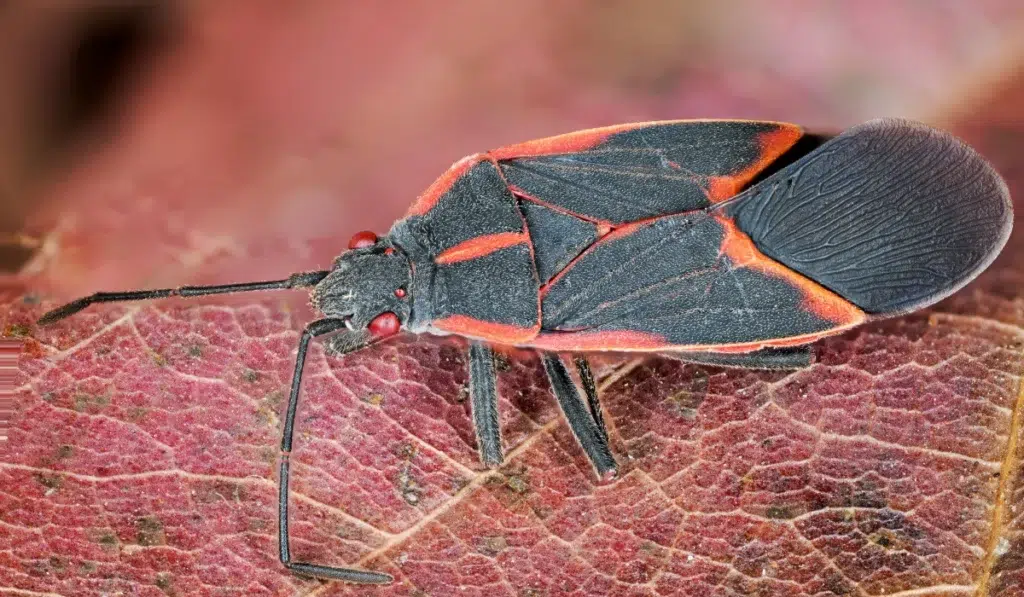
Adult boxelder bugs are generally black with narrow red or reddish-orange markings along the body and wings. Their shape is longer and narrower than that of many other household pests. Young boxelder bugs, called nymphs, are smaller and show more red coloring before their wings fully develop.
According to the University of Minnesota’s boxelder bug information, adults are about half an inch long and often become noticeable when they gather on buildings. Their dark bodies and red-orange lines make them easier to recognize once you know what to look for.
Boxelder Bugs Compared With Stink Bugs
Boxelder bugs and stink bugs may both gather around buildings during seasonal changes, but they do not look alike.
| Feature | Boxelder Bug | Brown Marmorated Stink Bug |
|---|---|---|
| Body shape | Long and narrow | Broad and shield-shaped |
| Color | Black with red-orange lines | Mottled brown |
| Common outdoor location | Sunny walls and nearby openings | Walls, windows, doors, and rooflines |
| Indoor concern | Nuisance activity and surface spotting | Nuisance activity and strong odor |
| Odor when crushed | Can produce an unpleasant smell | Known for a strong smell |
Location alone is not enough for identification. Look at the body shape, coloring, and markings before deciding which pest is present. A clear identification helps you focus on the right entry points and seasonal behavior.
What Happens When Boxelder Bugs Get Inside
Boxelder bugs in the house usually entered through small exterior gaps while looking for winter shelter. Common access points include openings around windows and doors, loose siding edges, attic vents, soffits, utility penetrations, foundation joints, and gaps beneath rooflines.
Once indoors, the adults may settle inside wall voids, attics, and other protected areas. They do not create a feeding population inside because the home does not provide the plant material they normally use. They also do not feed on clothing, stored food, furniture, insulation, or structural wood.
Boxelder bugs in winter may remain hidden for long periods. When sunlight warms an exterior wall or indoor temperatures rise, some adults may become active and move toward windows or other bright areas. A boxelder bug crawling across a windowsill in January may be an overwintering adult that entered months earlier, not evidence of a new indoor population.
Their main indoor effects are nuisance activity, surface spotting, and odor when crushed. Large numbers can collect near windows or move from concealed spaces into living areas. These problems are irritating, but they are different from structural damage.
Use a vacuum to remove visible boxelder bugs from windowsills, walls, and floors. Crushing them can leave marks on curtains, furniture, or painted surfaces. Empty the vacuum contents promptly so captured insects do not crawl back into the room.
How to Prevent a Boxelder Bug Infestation
Boxelder bug prevention works best before large fall gatherings begin. Once adults settle deep behind siding or inside wall voids, they become harder to reach. An exterior inspection before seasonal activity increases gives you time to close the routes they are most likely to use.
Start with windows and doors. Repair torn screens, replace worn weather stripping, secure loose trim, and install door sweeps where gaps are present. Pay close attention to corners and joints where different building materials meet because narrow openings in those areas can provide easy access.
Next, inspect the rest of the exterior. Check siding edges, soffits, fascia boards, vents, foundation joints, and the spaces around pipes, outdoor faucets, cables, and utility lines. Seal unnecessary openings and repair damaged materials, but do not block required ventilation or drainage points.
The Penn State’s boxelder bug guidance identifies exclusion as a central part of managing these seasonal invaders. This approach works because boxelder bugs use openings that already exist rather than creating new holes in the structure.
Nearby host trees may explain why boxelder bugs return each year, but removing a boxelder tree does not guarantee that the activity will stop. Adults can travel from trees on neighboring properties or elsewhere in the area. Exterior repairs often provide a more practical way to keep the insects from entering your home.
What to Do With Bugs Already Indoors
Vacuum boxelder bugs from walls, floors, and windowsills instead of crushing them. If they keep appearing in the same room, inspect the nearby window frame, ceiling edge, baseboard, or utility opening for a likely access point.
Indoor removal only addresses the insects you can see. It does not correct the exterior gap that allowed them inside. Recurring activity near one window may point to damaged weather stripping, a loose screen, or a crack around the frame.
When new bugs keep appearing, a larger group may be sheltering inside a concealed space. Make note of where you see them, then inspect the corresponding exterior wall. Sealing likely entry points after seasonal activity slows can reduce the chance of the same problem returning.
When Professional Boxelder Bug Control Makes Sense
Professional boxelder bug control can help when large groups return to the same walls each year, bugs enter several rooms, or the likely openings are high or difficult to reach. It is also useful when you are not sure whether the insects are boxelder bugs, stink bugs, or another seasonal pest.
A thorough inspection should confirm the pest, identify the sunny surfaces where adults gather, and locate the openings they may use. It should also account for nearby host trees, damaged screens, siding gaps, vents, soffits, and utility penetrations.
Professional service can be especially helpful when bugs appear near upstairs windows, ceilings, or attic spaces. Those sightings may point to roofline or soffit gaps that are difficult to inspect from the ground. Finding and correcting those routes is more effective than repeatedly removing insects after they enter.
Keeping Boxelder Bugs Outside Your Alabama Home
Boxelder bugs are sunning on your siding because the wall gives them warmth and puts them close to protected winter shelter. They are not eating the exterior or damaging the structure, but they can become a persistent nuisance when cracks and gaps allow them indoors.
The best response combines accurate identification with timely exclusion. Check sunny walls, windows, doors, vents, soffits, siding edges, and utility openings before seasonal activity increases. Vacuum bugs that enter the home, and avoid crushing them on finished surfaces.
Magic City Pest Control serves homeowners in Birmingham, Huntsville, and surrounding Alabama communities. If boxelder bugs keep gathering on your siding or appearing inside, contact Magic City Pest Control to schedule an inspection and identify the exterior conditions helping them reach your home.


