

A pile of loose soil in the lawn may not look like much until ants start pouring out of it. Fire ants defend their nests quickly, and someone who steps on an active mound can receive several stings before realizing where the ants came from. That makes identification useful before mowing, gardening, playing outside, or working around the yard.
Given Alabama’s long history with imported fire ants, understanding these pests is particularly important for local residents. Established across the state for decades, fire ant colonies regularly appear in lawns, parks, pastures, and landscaping beds with suitable soil. What presents as a simple mound on the surface is actually just the tip of an extensive underground nest. The mound you see above ground is only the visible portion of a much larger nest.
Understanding that colony is the key to understanding the pest. Fire ant problems are not just about individual ants crawling through the grass. Their nesting behavior, reproduction, defensive response, and ability to establish new colonies all affect what homeowners see around Birmingham, Huntsville, and other Alabama communities.
Why Are Fire Ants So Common in Alabama?
Alabama has a direct connection to the history of imported fire ants in the United States. Red imported fire ants, Solenopsis invicta, were introduced through the Mobile area during the first half of the 20th century. They later spread throughout much of the Southeast.
The Alabama Cooperative Extension System reports that the red imported fire ant arrived in Mobile from South America, with its introduction generally placed in the 1930s. Alabama’s climate and available nesting habitat helped the species become established. Fire ants are now a familiar concern on residential, agricultural, recreational, and commercial properties across the state.
Their success comes partly from their ability to use many kinds of open ground. Maintained lawns, landscape beds, roadsides, pastures, parks, and disturbed soil can all support colonies. This flexibility means a well-maintained Birmingham lawn is not automatically protected just because the grass is healthy and regularly cut.
How Can You Identify Fire Ants?
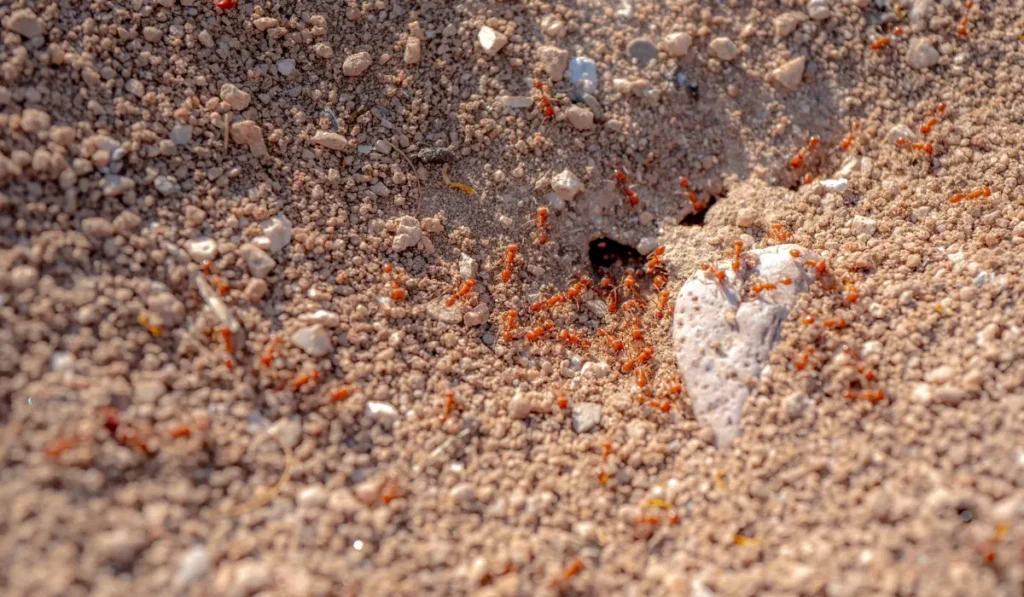
Fire ants are small, reddish-brown ants, but color is not enough for a confident identification. Several other ants can look similar from standing height. A better identification considers the workers, nest, location, and behavior together.
One useful characteristic of red imported fire ants is worker-size variation. Workers from the same colony occur in different sizes, so ants moving around an active mound may not all look identical. When the nest is disturbed, workers can also reach the surface rapidly and respond defensively.
You do not need to kick a mound to test that response. If ants are already moving around the soil, observe them from a safe distance and avoid putting hands, feet, or tools into the nest. A professional inspection is a better option when identification remains uncertain.
| Identification feature | What you may notice | How useful is it? |
|---|---|---|
| Color | Reddish-brown workers | Helpful, but not enough by itself |
| Worker size | Small and larger workers together | Stronger identification clue |
| Mound | Loose or freshly moved soil | Useful when combined with ant appearance |
| Central entrance | Often no obvious hole on top | Helps distinguish the mound from some other ant nests |
| Defensive activity | Workers respond rapidly to disturbance | Strong behavioral clue |
What Does a Fire Ant Mound Look Like?
A fire ant mound often appears as a dome or patch of loose soil. One feature that surprises homeowners is the lack of a conspicuous entrance hole in the center. Workers use underground passages and can enter and leave through openings away from the most obvious part of the mound.
The visible soil is not the nest itself. Most colony activity takes place below ground, where tunnels and chambers provide space for workers, developing ants, and reproductive members of the colony. That is why judging a colony only by the height or width of the mound can be misleading.
Mound appearance also changes. A freshly worked nest can look obvious because loose soil contrasts with the surrounding lawn. At other times, the same colony may be much harder to spot, especially when grass grows around the mound or surface activity slows.
| What you see | What it can tell you | What it cannot tell you |
|---|---|---|
| Fresh loose soil | Workers have been moving soil | When the colony first became established |
| No obvious center hole | Consistent with typical fire ant mound structure | That no ants are entering or leaving |
| Workers on the surface | The nest is active | The total size of the colony |
| Several mounds | Fire ant activity occurs in multiple locations | Whether every mound belongs to a separate colony |
| Flattened soil | The surface has been disturbed | That the colony underneath is gone |
Why Do Fire Ant Mounds Become More Noticeable After Rain?
Rain often makes fire ant activity easier to notice. Moist soil can be easier for workers to move than hard, dry ground, so fresh mound construction may become more visible when conditions change. A pile of newly excavated soil also stands out clearly against a wet lawn.
That does not mean the rain created the colony. A mound that seems to have appeared suddenly may belong to fire ants that were already established below ground. Surface appearance is only a snapshot of activity taking place in a larger underground nest.
This distinction is useful after periods of wet Alabama weather. Instead of assuming every fresh mound represents a brand-new infestation, homeowners can treat it as a sign that existing colony activity has become easier to see. It is a good time to check other frequently used parts of the property for additional mounds.
Why Do Fire Ant Stings Hurt?
People often refer to fire ant bites, but the painful injury is primarily caused by a sting. A worker uses its mandibles to grip the skin and then brings its abdomen forward to sting. One worker can sting repeatedly, and several ants may be on the skin at the same time after someone contacts a mound.
That behavior explains why accidentally stepping into a nest can produce a cluster of sting sites rather than one isolated mark. The initial sensation is often sharp or burning, and skin changes can develop afterward. Reactions vary, so the number of marks alone does not tell you how a particular person will respond.
Most importantly, some people can experience a serious allergic reaction to fire ant venom. Anyone showing signs of a severe allergic reaction needs prompt medical attention. Mississippi State University Extension provides research-based information on imported fire ant biology and stings for residents across the Southeast.
The safest approach around a suspected mound is to avoid testing it with your hands or feet. Children and pets also deserve extra attention in yards with active colonies because they may not recognize a mound before making contact with it.
How Big Can a Fire Ant Colony Get?
A mound may look like the center of the problem, but a fire ant colony is a complex social group. Mature red imported fire ant colonies can contain large numbers of workers, along with developing ants and one or more queens depending on the colony’s social form. Published estimates vary with colony type and maturity, which is why a single fixed number can be misleading.
Workers handle different jobs inside and outside the nest. They care for developing ants, maintain the nest, forage for food, and respond when the colony is threatened. The queen’s main role is reproduction rather than digging mounds or gathering food.
This organization explains why killing a handful of workers on the surface does not equal colony control. The ants people see while walking through the yard represent only a portion of what is happening below ground.
What Are Flying Fire Ants?
Winged fire ants have a different job from the workers around a mound. Mature colonies can produce winged males and females, often called reproductive ants. These individuals leave established nests and participate in mating flights when conditions are suitable.
After mating, a female can attempt to establish a new colony. She sheds her wings and begins the early stages of reproduction in a protected location. If conditions support the young colony, its worker population grows and eventually begins maintaining a larger nest.
This part of the fire ant life cycle explains how activity can spread beyond existing mounds. It also shows why a property is not isolated from surrounding fire ant populations. Even after existing colonies are addressed, new reproductive ants from elsewhere can reach suitable ground.
Where Do Fire Ants Build Nests Around Alabama Homes?
Lawns are one of the easiest places to spot fire ant mounds, but they are far from the only location worth checking. Fire ants can establish nests in landscape beds, garden areas, around pavement edges, near utility equipment, and in other sections of exposed or disturbed soil.
Location also changes the practical risk. A mound at the edge of a large property may go unnoticed for weeks, while one beside a front walkway can put people within inches of the nest every day. Play areas, pet spaces, gardens, mailboxes, and frequently used paths deserve closer attention for that reason.
Homeowners doing yard work should be particularly careful around unfamiliar patches of loose soil. Mowing, edging, planting, or moving landscaping materials can bring a person into direct contact with a colony before the mound has been identified.
| Location | Why it matters | What homeowners may notice |
|---|---|---|
| Lawn | Frequent foot and mower traffic | Fresh mounds in turf |
| Landscape bed | Loose soil provides nesting opportunities | Soil piles near edging or plants |
| Walkway or driveway | People regularly pass nearby | Mounds along pavement edges |
| Play or pet area | Greater chance of accidental contact | Mounds near paths or equipment |
| Garden | Soil is frequently disturbed | Workers or fresh soil around beds |
| Utility area | Ground may remain relatively undisturbed | Mounds beside posts, boxes, or equipment |
Why Doesn’t Knocking Down a Fire Ant Mound Solve the Problem?
Flattening a mound changes the surface, but it does not remove the underground colony. Workers can repair damaged portions of a nest as long as the colony remains active. The absence of a dirt pile the next morning is therefore not reliable proof that the fire ants are gone.
The same problem applies to focusing only on ants foraging above ground. Those workers are part of a much larger social colony. Effective management has to account for the colony rather than treating every visible worker as an isolated pest.
Texas A&M AgriLife Extension has developed extensive research-based fire ant management guidance that distinguishes between treating individual mounds and managing fire ant populations across a larger area. That distinction is useful for homeowners because one isolated mound and recurring colonies throughout a yard are different problems.
A property with repeated activity needs to be evaluated as a whole. The number of mounds, their locations, how people use the yard, and the history of fire ant activity all help determine an appropriate control approach.
Can You Keep Fire Ants From Returning?
Fire ants are well established in Alabama and surrounding states, so no yard exists in a bubble. Winged reproductive ants can move into suitable areas, which means eliminating existing colonies does not guarantee that a property will never have another mound.
Regular inspection is more realistic. Pay attention to lawns, walkways, gardens, play spaces, and pet areas, especially when fresh soil makes mounds easier to see. Finding activity before someone steps into it also reduces the chance of an unpleasant first encounter.
Basic yard maintenance helps you see what is happening. Keep heavily used areas accessible enough to inspect, and be cautious when moving soil or landscaping materials near active colonies. If mounds continue to return across different sections of the property, treating them as unrelated one-off events can miss the larger pattern.
Getting Fire Ants Under Control in Alabama
The mound is what catches your eye, but the colony below it is the real problem. Good fire ant control starts with correct identification and an understanding of where colonies are active, especially when mounds keep returning around lawns, walkways, play areas, or other frequently used spaces.
If fire ants are becoming a recurring problem around your Birmingham, Huntsville, or surrounding-area property, Magic City Pest Control can assess the activity and determine an appropriate treatment plan. Contact Magic City Pest Control to schedule service and get help managing fire ant colonies around your property.