


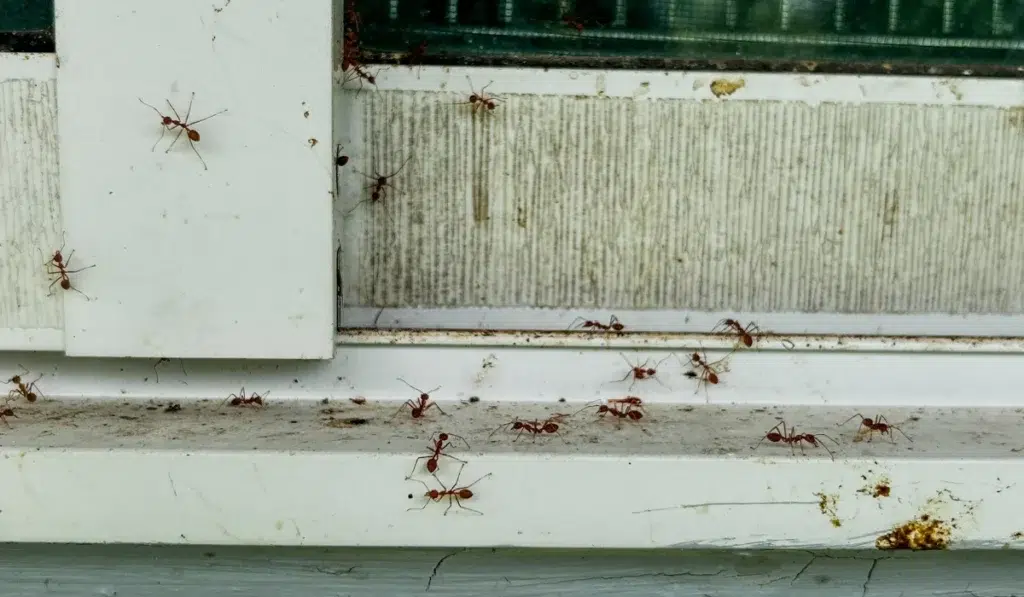
If ants are showing up along your kitchen counter, around a bathroom sink, or in mounds across the yard, identifying the species can help explain what is happening. Several types of ants in Alabama may turn up around homes and businesses, including red imported fire ants, Argentine ants, carpenter ants, odorous house ants, pharaoh ants, acrobat ants, and little black ants. Their nesting habits, size, color, trails, and behavior can all provide clues. This guide covers the ants Alabama property owners may encounter, how to tell them apart, and what to look for when ant activity keeps returning.
Types of Ants You May Encounter in Alabama
Ant identification is easier when you look at more than color. A dark ant moving across a countertop could belong to several species, while an ant associated with a soil mound or damp wood gives you more useful information.
The Alabama Cooperative Extension System provides Alabama-specific pest and entomology resources that can help homeowners understand insects found around the state. For day-to-day identification, start with the ant’s location and behavior, then consider its appearance.
| Ant Type | Useful Identification Clue | Where You May Notice Activity |
|---|---|---|
| Red imported fire ants | Soil nests and defensive stinging | Lawns, landscaped areas, open ground |
| Argentine ants | Small workers traveling in obvious trails | Foundations, kitchens, sinks, outdoor edges |
| Carpenter ants | Larger ants associated with wood | Damp or weathered wood, wall voids, exterior trim |
| Odorous house ants | Small dark ants that release an odor when crushed | Kitchens, counters, moisture-prone areas |
| Pharaoh ants | Very small yellowish ants | Protected indoor spaces, cracks, wall voids |
| Acrobat ants | Abdomen may be raised over the body when disturbed | Damp or decayed wood, exterior structural areas |
| Little black ants | Very small dark workers | Foundations, yards, kitchens, other indoor areas |
Seven Ants Alabama Property Owners May See
Alabama ants, identified
Ants show up differently depending on the species. Here is what each of the seven ants covered in this guide looks like, where it tends to turn up, and what its behavior can tell you.
Some Alabama ant species are mainly outdoor concerns, while others readily enter structures. Their colony structure and nesting habits also differ, which is one reason the same response does not work equally well for every ant problem.
Red Imported Fire Ants
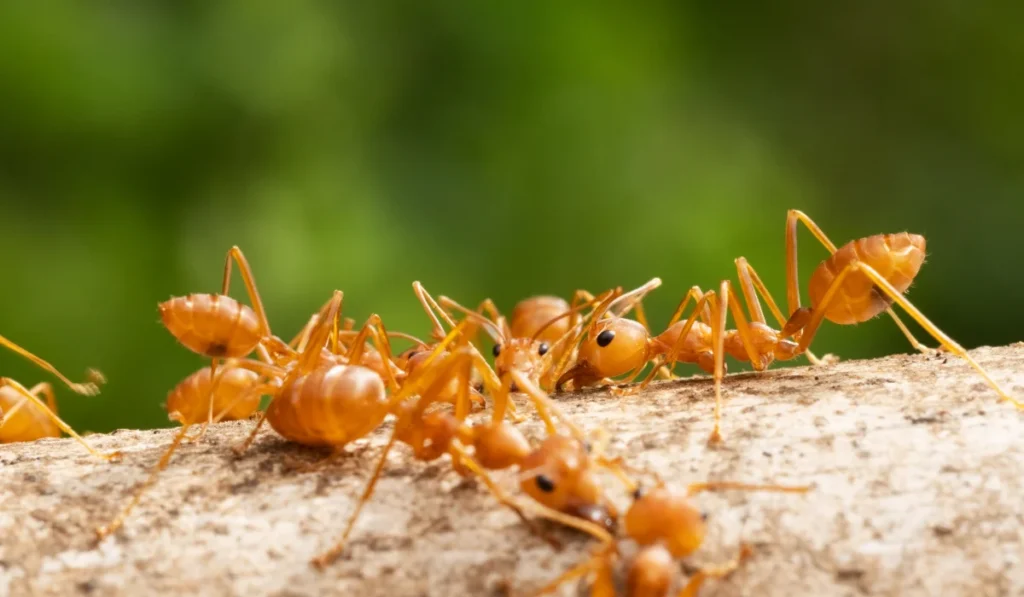
Red imported fire ants, Solenopsis invicta, are an introduced species established in Alabama and other parts of the southeastern United States. They nest in soil and often create visible mounds in lawns, landscaped areas, and other open ground. Fire ants defend their colonies by stinging when the nest is disturbed, so mounds beside walkways, play areas, patios, or other frequently used spaces deserve particular attention.
The USDA Animal and Plant Health Inspection Service maintains federal information about imported fire ants, including quarantine requirements that apply to the movement of certain materials from regulated areas. Because quarantine boundaries and requirements can change, USDA information should be used for current regulatory details.
Argentine Ants
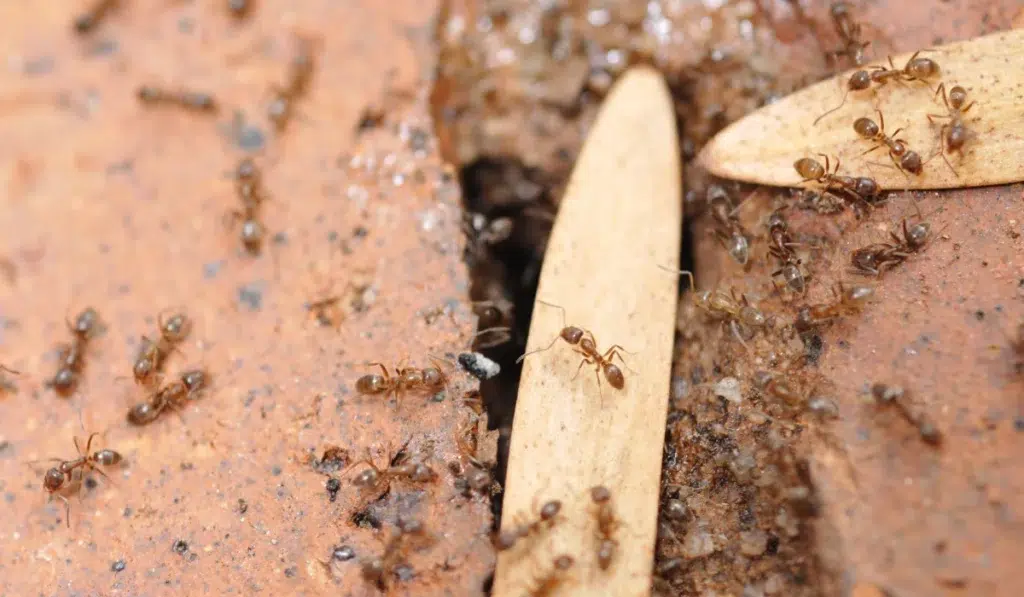
Argentine ants, Linepithema humile, are small brown ants that commonly travel in noticeable trails. Their colonies can contain multiple queens and may occupy more than one nesting location, allowing large numbers of workers to move between food, water, and shelter.
Around a building, you may see trails along foundations, exterior walls, counters, or plumbing areas. If workers repeatedly enter from the same crack or follow the same edge of a counter, watch their route before cleaning the area. It may point toward an entry location or nesting area.
Carpenter Ants
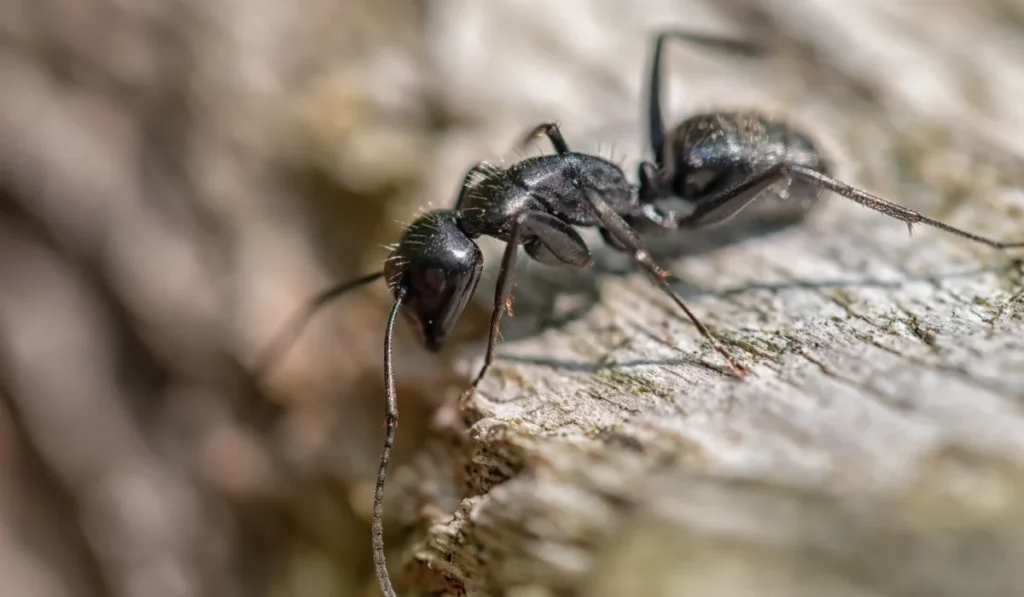
Carpenter ants belong to the genus Camponotus. They are generally larger than many household nuisance ants and may be black, reddish, or a combination of colors depending on the species. Carpenter ants do not consume wood as food the way termites do. Instead, they excavate it to form nesting galleries.
Moisture-damaged or softened wood can be especially suitable for nesting, so recurring carpenter ant activity can also be a reason to inspect the area for leaks or persistent dampness. The University of Florida IFAS Extension provides entomology information on carpenter ants and other household ants, including their biology and nesting behavior.
Odorous House Ants
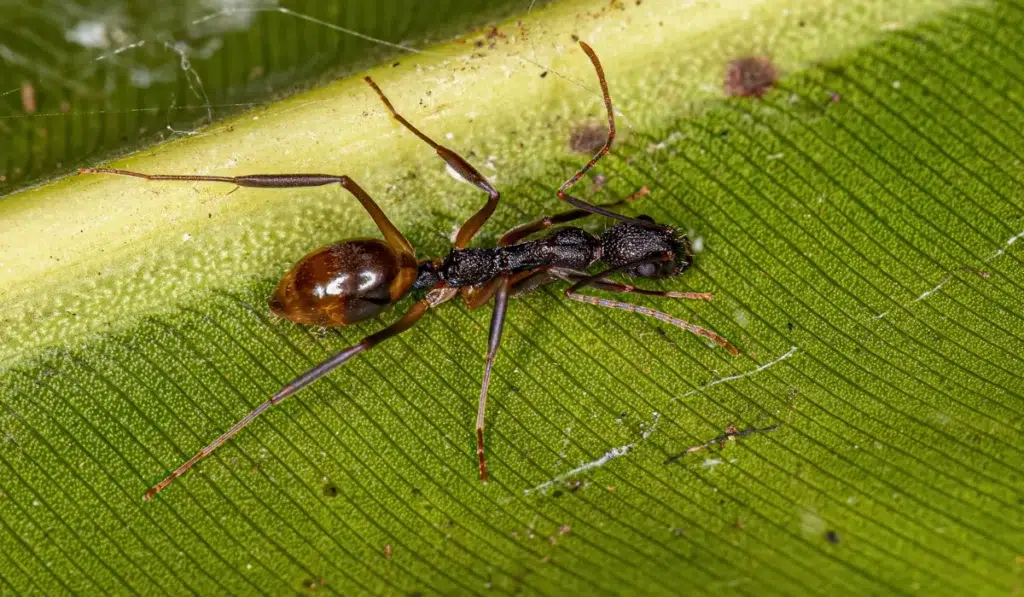
Odorous house ants, Tapinoma sessile, are small ants that range from brown to dark brown. Their common name comes from the odor released when workers are crushed, often described in extension literature as resembling a coconut-like or unpleasant food odor.
These ants can form visible trails around kitchens, sinks, cabinets, and other areas where food or moisture is available. If the same trail keeps returning, look for where the ants enter the room. Gaps along baseboards, plumbing penetrations, window frames, or other structural edges may provide access.
Pharaoh Ants
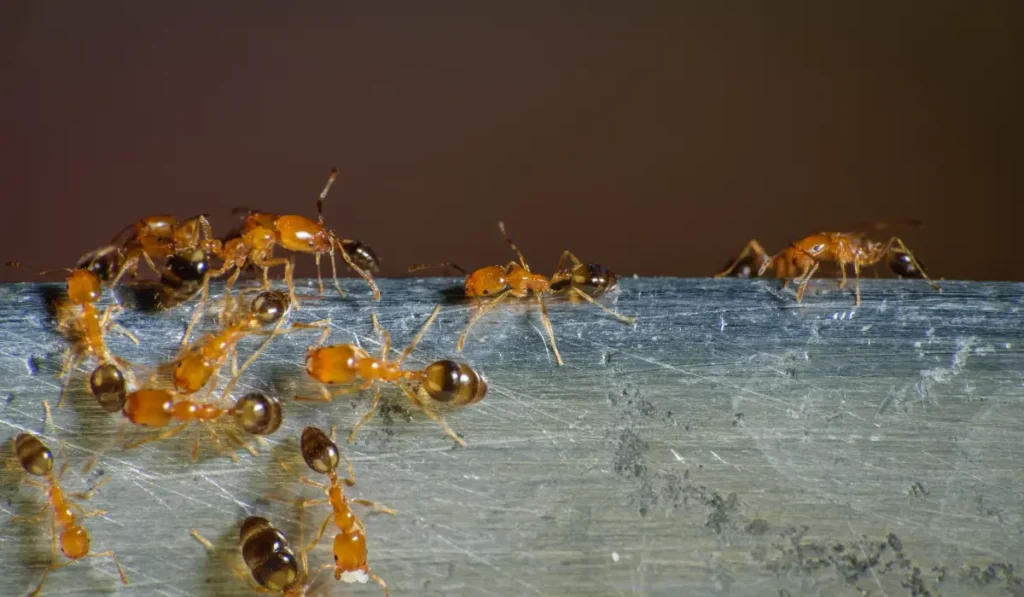
Pharaoh ants, Monomorium pharaonis, are very small yellowish to light brown ants associated with indoor environments. Their small size allows them to move through tiny cracks and protected spaces where a nest may be difficult to see.
Pharaoh ant colonies can spread through budding, a process in which part of an existing colony separates and forms another nesting group. If tiny pale ants appear in several parts of a building, the pattern may indicate connected colony activity rather than several unrelated ant problems.
Acrobat Ants
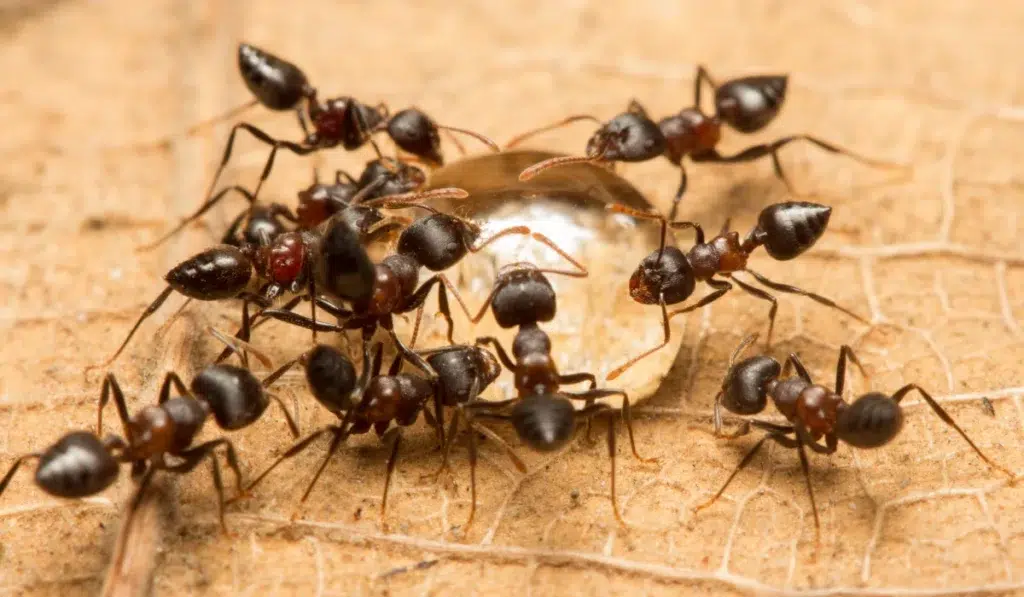
Acrobat ants belong to the genus Crematogaster. One recognizable behavior is their ability to raise the abdomen over the body when disturbed. Their body shape and posture can also help distinguish them from other small ants when viewed closely.
Some acrobat ants nest in decaying wood or other protected spaces associated with moisture. Repeated activity near damp trim, windows, roof edges, or deteriorated wood should prompt an inspection of the surrounding material. Correcting a leak or drying out the area can remove conditions that support nesting.
Little Black Ants
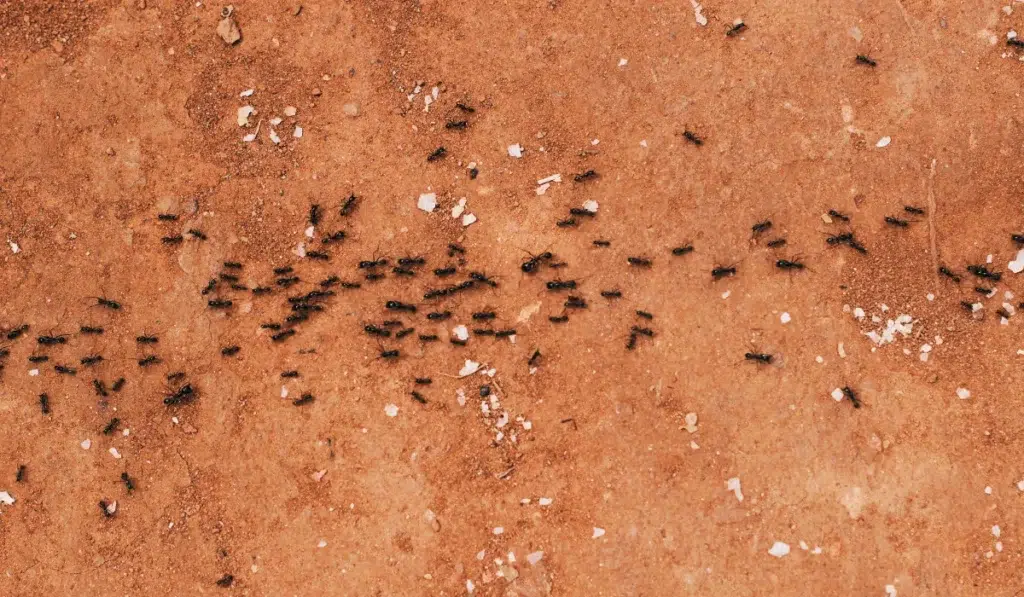
Little black ants, Monomorium minimum, are very small, dark ants that may be found outdoors or inside buildings. Their size and color explain why homeowners often describe them simply as “tiny black ants,” but that description alone is not enough for reliable identification.
Several small ant species can look dark without magnification. Note where the ants are coming from, whether they form a trail, where that trail ends, and whether activity is concentrated near food, water, soil, or structural gaps. Those observations can help narrow down the species.
How to Identify Ants Around Your Alabama Home
When you find ants, spend a few minutes watching where the workers travel before wiping away the trail. Their route can reveal an entry point, food source, moisture source, or the general direction of the nest.
Focus on a few practical details:
- Body size and color: These can narrow the possibilities, but neither feature should be used alone.
- Nesting location: Soil, damp wood, wall spaces, and protected indoor areas can point toward different ant groups.
- Trail behavior: Some ants form persistent, easy-to-follow trails between the nest and a resource.
- Moisture: Ant activity around sinks, plumbing, damp trim, or water-damaged wood can provide an important clue.
- Defensive behavior: Soil-nesting ants that aggressively defend a mound require more caution than ants simply foraging indoors.
- Time and location of activity: Note where ants appear repeatedly rather than relying on a single sighting.
Taking a clear photo and noting the trail location can also be useful if you later need professional identification.
How to Tell Winged Ants From Termites
Seeing winged insects inside or around a home does not automatically mean you have termites. Mature ant colonies can also produce winged reproductive forms.
One useful difference is the waist. Ants have a distinct constriction between the middle and rear sections of the body, giving them a pinched appearance. Termites have a broader connection between those sections. If the insects are too small to examine clearly or you continue seeing winged insects around the structure, professional identification can help determine which pest is present.
Why Ants Keep Showing Up Indoors
Ants enter buildings while searching for resources or suitable nesting areas. Indoors, their activity often centers on food, moisture, and accessible gaps.
Food Sources
Crumbs, sugary spills, grease residue, pet food, and food stored in unsealed containers can support repeated foraging. Pay attention to areas beneath appliances, along cabinet edges, and around pet feeding stations where small amounts of food can accumulate.
Moisture Sources
Leaks and persistent dampness can make parts of a home more attractive to certain ants. Check beneath sinks, around plumbing connections, near condensation, and around exterior wood that stays wet after rain.
Moisture can be especially relevant when larger ants or ants associated with wood keep appearing. Fixing the moisture problem may remove a condition that supports nesting.
Entry Points
Ants can use small gaps around doors, windows, utility lines, siding, and foundations to enter a building. If you can trace a trail to a specific opening, note the location before sealing anything.
Finding the route first gives you more information about where the colony may be located. Sealing one opening without understanding the broader activity may simply cause workers to use another route.
When Ant Activity Deserves Professional Attention
Seeing one or two ants does not always point to an established indoor infestation. Persistent patterns are more useful when deciding whether the problem needs closer attention.
Consider professional ant identification when you notice:
- Trails that return after repeated cleaning
- Ant activity in several rooms or areas of the property
- Fire ant mounds in spaces used by children, pets, or foot traffic
- Large ants repeatedly associated with damp or damaged wood
- Ants entering and leaving wall voids or structural gaps
- Multiple nesting sites that are difficult to locate or access
- Winged insects that cannot be confidently identified as ants or termites
The species matters because colony behavior differs. A visible group of workers may be only one part of the problem, particularly when ants are nesting in protected spaces or maintaining more than one nesting location.
How to Reduce Ant Activity Around Your Property
Ant prevention works best when you address both indoor resources and outdoor conditions. Rather than concentrating only on the ants you can see, look for what supports their activity.
Inside the Home
Keep food in sealed containers, wipe up spills promptly, clean crumbs from cabinet edges and beneath appliances, and avoid leaving pet food out longer than necessary. Repair leaking plumbing and dry areas that remain damp.
If ants are already traveling through a room, follow the trail before cleaning it. Knowing where they enter can make the next step more targeted.
Around the Exterior
Inspect door frames, window edges, utility penetrations, and foundation gaps for possible access points. Keep vegetation from resting against the structure, and check exterior wood for moisture or deterioration.
Leaf litter, mulch beds, tree bases, and landscaped areas can also support outdoor ant activity close to the home. Magic City Pest Control’s service protocol includes inspecting exterior conditions and treating ant hills as needed throughout the year.
Choosing the Right Ant Control for Your Alabama Home
The types of ants in Alabama differ in how they nest, forage, and establish colonies. A fire ant mound in the lawn, carpenter ants near damp wood, and tiny ants moving behind kitchen cabinets are different problems even though they all involve ants. Correct identification helps determine where to inspect and which conditions need attention.
If ant trails keep returning or you cannot locate the source, Magic City Pest Control provides general pest control for Alabama homeowners and businesses. For recurring ant activity or help identifying an unknown species, you can contact Magic City Pest Control to arrange professional service.


