

Finding a wasp nest around your Birmingham home can be alarming. Wasps build nests under eaves, inside trees, or even in the ground, and growing wasp activity near doors or patios can quickly become a concern.
In Alabama’s warm climate, a new nest can appear in early spring and grow fast into a larger colony by summer. This guide explains how to identify a wasp nest, reduce wasp activity, and handle wasp nest removal safely.
Key Takeaways
- Identifying the type of wasp and the nesting site helps determine the safest removal method.
- Ground nests made by yellow jackets can be aggressive and increase the risk of wasp stings.
- Natural repellents like peppermint, citronella, and lemongrass can deter new nests.
- A pest control company can safely handle large nests and reduce the chance of an infestation.
Identify the Wasp Nest Around Your Home
Before removing a wasp nest, identify the type of wasp and the nesting site. Different species of wasps build nests in different areas, which affects how risky removal can be.
In Birmingham, homeowners commonly deal with paper wasp nests, yellow jackets, and bald-faced hornets. If you are unsure, an entomologist or a trained pest control company can help confirm what you are seeing.
Paper Wasp Nests Under Eaves
Paper wasp nests are often found under eaves, porch ceilings, or deck railings. These nests look like small open structures and are easy to spot early in the season.
Paper wasps build nests that start small but grow over time. While they are less aggressive than other species of wasps, they will still defend the entire nest if disturbed.
Yellow Jacket Nests in the Ground
Yellow jackets often create ground nests in lawns or garden beds. A yellow jacket nest may appear as a small hole with steady wasp activity moving in and out.
These wasps are highly defensive. Disturbing a yellow jacket nest can quickly lead to multiple wasp stings, especially during yard work.
Bald-Faced Hornet Nests in Trees
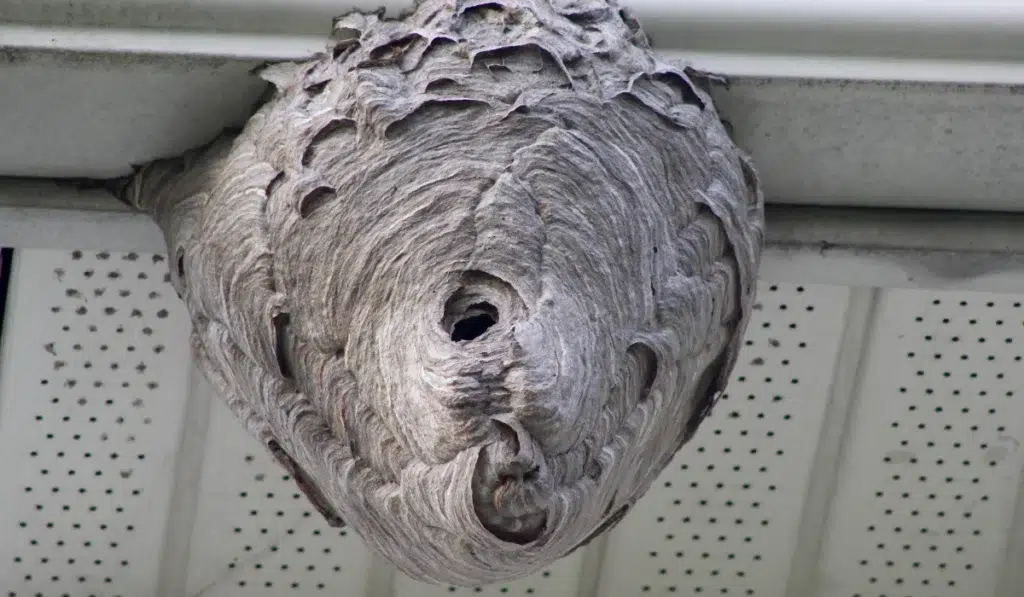
Bald-faced hornets build a large hornet nest in trees or along rooflines. These nests grow quickly and can become very active by late summer.
A hornet nest can contain many wasps, and they will protect the entire nest if approached.
Honeybee Beehive vs. Wasp Nest
Some nests are actually a beehive, not a wasp nest. Honeybees are pollinators that support gardens and local plants.
If you notice honeybees, contact local beekeepers instead of removing the hive. Beekeepers can safely relocate a beehive without harming these pollinators.
Safe Steps Before You Try Removing It
Before starting wasp nest removal, take a few steps to reduce risk. Acting too quickly can increase wasp activity and lead to stings.
Planning ahead helps homeowners avoid disturbing the entire nest.
Observe Wasp Activity
Watch the nesting site from a distance and note its activity. Heavy wasp activity may mean the colony is already large.
If you see signs of more than one nesting site, it may point to a larger infestation that needs professional help.
Choose Early Morning
Early morning is the best time to approach a wasp nest. Wasps are less active, and most remain inside the nest.
This timing helps reduce the chance of a sudden swarm.
Wear Protective Clothing
Wear long sleeves, gloves, and closed shoes to reduce exposure. Move slowly to avoid triggering defensive behavior from the wasps.
How to Get Rid of a Wasp Nest Safely
The right approach to wasp nest removal depends on the size of the nest and the species of wasps present.
Small nests may be handled with diy methods, while larger nests often require a pest control company or exterminator.
Use Wasp Spray for Elevated Nests
Wasp spray or a wasp killer can be used for nests attached to walls or eaves. Most products come with a long sprayer that allows you to treat the nest from a safe distance.
Apply the wasp spray during the early morning. After treatment, wait until wasp activity stops before removing the entire nest.
Treat Ground Nests Carefully
Ground nests created by yellow jackets are harder to manage. These nests react quickly when disturbed.
Some diy methods suggest using boiling water, but this can increase wasp activity and lead to stings. Because of this, many homeowners choose an exterminator for ground nests.
Try Natural Ways to Prevent Wasps
Natural ways can help prevent wasps from building a new nest. Essential oils like peppermint, citronella, and lemongrass can act as a wasp-repelling deterrent.
Mix these with water in a spray bottle and apply them around common nesting areas. Dish soap mixed with water is another option sometimes used on smaller nests.
Use Wasp Traps Around Your Yard
Wasp traps can help reduce wasp activity by capturing foraging wasps. These traps are useful after a nest has been removed.
While helpful, wasp traps alone will not eliminate a full infestation.
When to Call a Pro in Birmingham
Some wasp nests are too risky for diy removal. In these cases, working with a pest control company is the safer option.
Professionals can identify the type of wasp, treat the nesting site, and remove the nest completely.
The Nest Is Large or Highly Active
A large wasp nest can contain hundreds of wasps. These colonies defend their space aggressively and increase the risk of wasp stings.
The Nest Is Hard to Reach
Nests located high on eaves or in trees can be difficult to access. Using ladders while treating a nest adds extra risk.
Multiple Nests Are Appearing
If you continue to find new nest activity, your property may have an ongoing infestation. A pest control company can inspect the area and address hidden nesting sites.
Book Wasp Nest Removal for Your Birmingham Home
A wasp nest near your home can quickly turn into a safety issue, especially with aggressive species like yellow jackets and bald-faced hornets. Acting early helps reduce risk and keeps your outdoor spaces usable.
Magic City Pest Control provides professional wasp nest removal across Birmingham. If you are seeing ongoing wasp activity or suspect a nest near your home, contact us to schedule service and keep your property protected.
FAQs
How do I know if I have a wasp nest on my property?
Look for steady wasp activity in one area. Wasps flying in and out of a nesting site, ground hole, or under eaves often indicate a nearby nest.
Can I remove a wasp nest myself?
Small nests may be handled with DIY methods, but larger nests or aggressive wasp species usually require a pest control company or exterminator.
Do wasps reuse old nests?
Most species of wasps do not reuse old nests. However, they may return to the same nesting site and build a new nest if conditions remain favorable.