

Gnats in Alabama homes usually mean there is a breeding source close to where the adults are appearing. Damp potting mix can support fungus gnats, fermenting or decaying food material can draw fruit flies, and organic buildup in drains can support drain flies. Some tiny outdoor flies that people call gnats are biting midges. Identifying which small fly you have and where it is developing tells you what needs to be cleaned, dried, removed, or inspected.
Start With Where the Gnats Are Coming From
When small flying bugs keep showing up indoors, begin with the area where you see the most activity. Location often tells you more than trying to identify a tiny insect while it is flying across the room.
Activity around produce, trash, or recycling points toward a different source than flies hovering above a plant pot. Small, fuzzy flies staying close to a sink or shower should turn your attention toward the drain. If you see flies rise from potting soil when a plant is watered or moved, fungus gnats become a stronger possibility.
This approach follows the basic principles of integrated pest management from the EPA: identify the pest, monitor where activity occurs, correct conditions that support it, and use control measures that fit the problem. Removing adults can reduce what you see, but the infestation can continue if the breeding site remains.
Types of Gnats Alabama Homeowners May Find
“Gnat” is a general term that homeowners use for several small flies. They can look similar at a glance, but where they gather and develop provides useful identification clues.
| Common Name | Where You May Notice Them | Useful Clue |
|---|---|---|
| Fungus gnats | Houseplants, potting mix, nearby windows | Small, dark flies associated with moist growing media |
| Fruit flies | Kitchens, produce, trash, recycling | Often concentrated around fermenting or decaying food material |
| Drain flies | Sinks, showers, floor drains, nearby walls | Small, fuzzy flies with a moth-like appearance |
| Biting midges | Outdoor areas | Very small flies; females of some species bite |
Fungus Gnats Around Houseplants
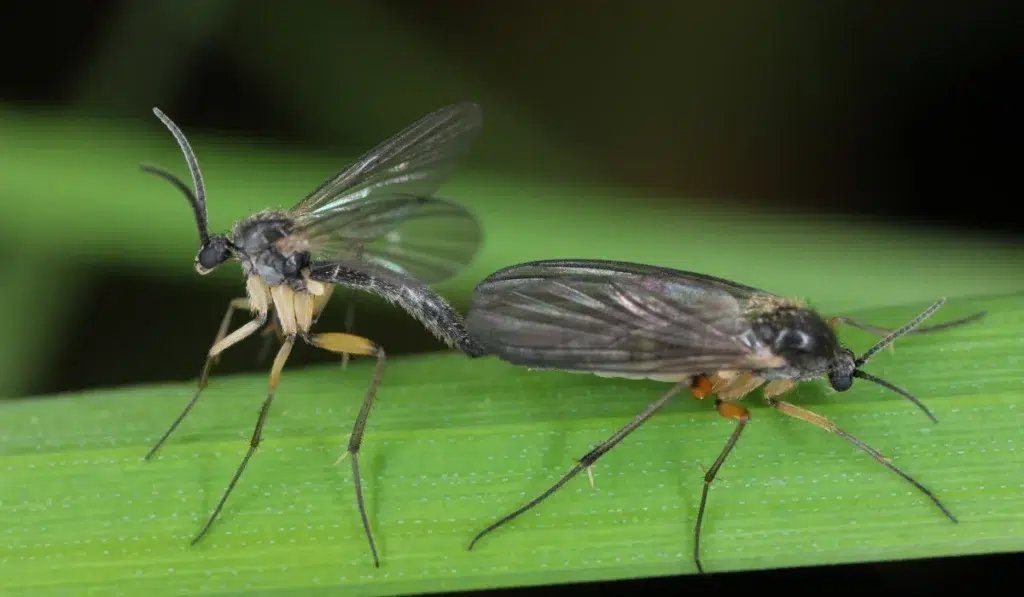
Fungus gnats are small, dark flies closely associated with moist growing media. Adults may hover over plant pots, move across the soil surface, or collect near windows close to infested plants.
The University of California Statewide Integrated Pest Management Program identifies moist growing media as an important part of fungus gnat development. If these flies are active around your plants, check how long the potting mix stays wet after watering. Where the plant’s care requirements allow it, reducing unnecessary moisture can make the growing media less suitable for continued development.
Yellow sticky cards can help monitor adult activity and identify which plants need the closest attention. They do not correct wet growing conditions on their own, so they work best as a way to track activity while the breeding source is addressed.
Fruit Flies in Kitchens
Fruit flies are often lumped together with household gnats because of their small size. They are associated with fermenting or decaying food material, which makes kitchens, trash areas, and recycling containers logical places to inspect.
Start with aging produce, then check for spills, residue inside trash cans, and containers waiting to be recycled. A kitchen can look clean at first glance while a small amount of suitable material remains in a less obvious spot.
Where the flies gather can help narrow the search. Activity centered on produce or food waste suggests a different source from small flies resting beside a drain or hovering over plant soil.
Drain Flies Near Sinks and Bathrooms
Drain flies are small flies with a fuzzy, moth-like appearance. They are often noticed resting near sinks, showers, floor drains, and other plumbing areas.
Organic buildup inside a drain can support their development, so wiping down the sink or removing the adults from the wall may leave the real source untouched. Persistent drain flies in bathrooms should put the plumbing area high on your inspection list.
If activity returns after routine surface cleaning, look more closely at the drain rather than continuing to focus on the adult flies. The useful question is whether material remains inside the plumbing area that can support development.
Biting Midges and Other Outdoor Gnats
Some tiny outdoor flies are commonly called biting gnats or no-see-ums. They are separate from the fungus gnats associated with houseplants and the small flies found around drains or food.
The University of Florida IFAS Extension provides information on biting midges and notes that females of some species bite people and animals. That makes the setting important when you are trying to identify the problem.
If bites are occurring outdoors, do not assume the insect is the same type of gnat you noticed around a plant or sink. Skin reactions also are not a reliable way to identify an insect by themselves. Seek medical care for a concerning reaction, and use pest identification to determine what is active around the property.
How to Get Rid of Gnats by Addressing the Breeding Site
Once you have narrowed down the type of small fly, match the cleanup or moisture correction to its likely breeding site. One treatment does not fit every insect homeowners call a gnat.
For Fungus Gnats
Check the potting mix first. Soil that stays wet for long periods can support fungus gnat development, so review how often you water and whether excess water remains in saucers or decorative containers.
When the plant can tolerate it, allowing the growing media to dry more between waterings can help reduce favorable conditions. Use monitoring cards to track adult activity while you correct the moisture issue.
For Fruit Flies
Remove aging or decaying food and clean residue from counters, trash containers, and recycling. If adults keep appearing, inspect less obvious locations where food material or spills may remain.
Do not assume that removing the visible fruit bowl solved the problem. The source may be somewhere nearby, especially when activity stays concentrated in one part of the kitchen.
For Drain Flies
Cleaning should reach the organic buildup associated with the affected drain. Cleaning only the sink basin, counter, or nearby wall does not address material farther inside the plumbing area.
If the flies continue after the drain has been cleaned appropriately, reconsider the identification and inspect nearby drains or other damp areas. Persistent activity often means the breeding site has not been fully located.
Why Gnats Keep Coming Back
Repeated adult activity usually means the conditions supporting development are still present. Catching adults near a plant will not correct persistently wet potting mix. Removing flies around a sink will not remove buildup inside the drain. The same applies to fruit flies when fermenting or decaying material remains available.
Misidentification causes another common problem. Small bugs in Alabama homes can be difficult to distinguish by size alone, so behavior and location should guide the inspection. Treating every tiny fly as a fruit fly can leave a plant or drain problem untouched.
If the flies disappear from one area and begin showing up somewhere else, inspect for another source. A home can have more than one damp or food-related location that supports small-fly activity.
Where to Check for Gnats Inside Your Home
A room-by-room inspection is most useful when it follows the adult activity. Start where you see the flies most often, then work outward.
In the Kitchen
Inspect produce, trash, recycling, spills, and areas where food residue can collect. If activity is strongest around the sink, compare what you are seeing with the fuzzy, moth-like appearance associated with drain flies.
Look beyond the countertop. Residue inside containers or material in less visible areas can be easy to miss during routine cleaning.
Around Houseplants
Check plants when adults hover near soil, plant shelves, or adjacent windows. Pay particular attention to pots that remain wet for long periods.
Inspect saucers and decorative containers for excess water as well. Water according to the needs of the plant rather than maintaining constantly wet growing media.
In Bathrooms and Utility Areas
Repeated activity around a sink, shower, floor drain, or utility drain should lead to an inspection of that plumbing area. Dampness alone does not prove that a drain is the source, but concentrated adult activity makes it worth checking.
If several drains are nearby, note where the flies rest most often. That can help narrow the area before cleaning or professional inspection.
Do Gnats in Alabama Bite?
Some insects called gnats bite, but the common indoor flies discussed here do not all behave the same way. Biting midges are the main group in this article associated with bites.
Fungus gnats around houseplants, fruit flies around food material, and drain flies near plumbing should not be treated as interchangeable with outdoor biting midges. Where you encounter the insects is an important part of identification.
If you are dealing with unexplained bites, avoid identifying the pest solely from the appearance of the skin. A pest professional can inspect for insect activity, while a medical professional can evaluate a reaction that is severe, unusual, or otherwise concerning.
How to Prevent Gnats From Returning
Prevention should match the source. In the kitchen, remove aging food, clean spills, and keep trash and recycling containers free of residue that can support small flies. Around plumbing, watch for recurring drain-fly activity instead of waiting until adult numbers become noticeable again.
For houseplants, avoid keeping the potting mix wetter than the plant requires. Check saucers for standing water and pay attention to adult flies when new plants are brought indoors or moved near existing plants.
These steps work because they remove conditions that small flies use to develop. Consistent sanitation, sensible moisture management, and accurate identification are more useful than repeatedly targeting adults without knowing where they came from.
When Persistent Gnats Need Professional Attention
If small flies keep returning after you have checked food sources, houseplants, drains, and obvious moisture problems, the breeding site may be harder to locate or the pest may have been misidentified. Activity in several rooms is another reason to look beyond a single obvious source.
A professional inspection can help connect the adult flies you see with the conditions supporting them. That is most useful when repeated cleanup has not changed the pattern or when you cannot confidently distinguish fungus gnats, fruit flies, drain flies, and other small flying pests.
If gnats in Alabama keep showing up in your home, Magic City Pest Control can help inspect the problem and identify the likely source. Contact Magic City Pest Control to request service when recurring small-fly activity is not improving after the obvious breeding conditions have been addressed.