

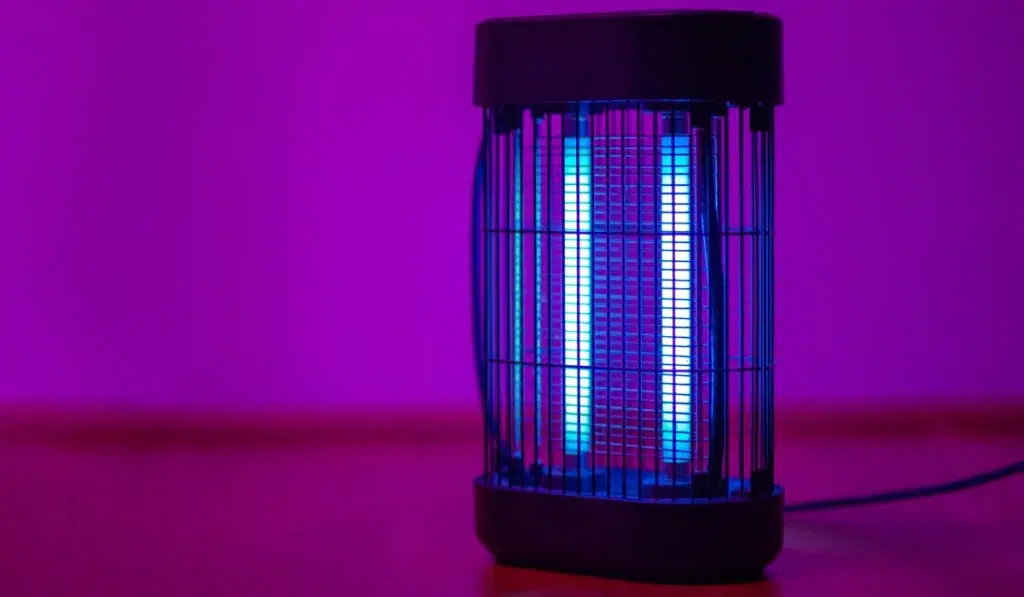
Mosquito zappers kill flying insects, but they do not reliably reduce the number of mosquito bites people get in a backyard. Standard models use ultraviolet light to draw insects toward an electrified grid. They may kill some mosquitoes, but most of what they collect is made up of other flying insects.
That explains why a zapper can snap and flash all evening while you still get bitten on a Birmingham patio or Huntsville deck. When homeowners ask, “Do mosquito zappers work?” the better question is whether the device removes enough host-seeking female mosquitoes to change what happens around people.
Research and mosquito-control guidance point toward a more effective approach. Reducing standing water, limiting resting areas, using personal protection, and addressing conditions across the property are more closely connected to fewer backyard bites than relying on a UV light alone.
Do Mosquito Zappers Work Against Backyard Mosquitoes?
Mosquito zappers can kill individual mosquitoes, but that does not mean they remove enough biting females to improve outdoor comfort. A mosquito searching for a blood meal responds to several cues coming from people, including exhaled carbon dioxide, body heat, and skin odors.
Ultraviolet light may attract some mosquitoes, but it does not reproduce the full set of signals they use to find a host. A person sitting a few feet away may be more attractive than the device, especially when mosquitoes are already resting in shrubs, shaded corners, or other sheltered spots nearby.
Placement also affects what the zapper collects. A unit mounted near a porch light may attract insects from the surrounding area without controlling the mosquitoes moving between vegetation and seating areas. The number of dead insects in the tray does not show how many female mosquitoes remain active across the property.
For backyard mosquito control, the useful measure is not total insects killed. It is whether people receive fewer bites.
How Mosquito Zappers Work
Mosquito zappers, often sold as bug zappers, use a light source surrounded by an electric grid. Flying insects move toward the light, touch the grid, and are killed. The sound and visible activity make the device appear productive, even when most of the insects have nothing to do with the bites happening nearby.
The design is simple, but the name can create unrealistic expectations. A product labeled for mosquitoes may attract many kinds of flying insects. Its ability to fill a collection tray does not prove that it is targeting the insects causing the backyard problem.
What the UV Light Attracts
Ultraviolet light attracts moths, beetles, flies, and other insects that are active after dark. Many of these insects are not trying to bite anyone sitting nearby.
This broad attraction makes it easy to misread the device’s performance. A homeowner may see steady activity around the grid and assume the mosquito population is falling. In reality, much of that activity may be unrelated to the bites occurring around ankles, arms, and other exposed skin.
A bug zapper for mosquitoes can therefore look effective while doing little to reduce mosquito bites. It may perform well at attracting light-responsive insects but poorly at controlling the mosquitoes that are actively searching for people.
How Mosquitoes Find People
The American Mosquito Control Association explains that mosquitoes use human cues such as carbon dioxide, body heat, and skin odors when searching for a host. These signals can pull a female mosquito toward someone sitting outside even when a UV light is operating nearby.
Female mosquitoes take blood meals to support egg production. Male mosquitoes do not bite people, though both males and females feed on plant sugars. That distinction is central to mosquito zapper effectiveness. The device must remove enough host-seeking females to reduce bites, not simply kill a mixed group of flying insects.
What Research Shows About Mosquito Zapper Effectiveness
A University of Delaware study by T. B. Frick and D. W. Tallamy examined insects killed by electric insect traps in suburban settings. Researchers counted 13,789 insects, but only 31 were biting flies. That represented about 0.22% of the total catch.
The study does not mean that every zapper in every yard will produce the same results. Product design, placement, season, local insect populations, and nearby lighting can all affect what enters a trap. The findings do show that a device can kill thousands of insects while capturing very few biting flies.
This matters because homeowners often judge a zapper by how active it looks. Every snap sounds like one less mosquito, but the device does not identify what it killed. A full collection tray may say more about light-attracted insects than about the number of mosquitoes still searching for a host.
Mosquito zapper effectiveness should be judged by bite reduction, not insect volume. If people continue getting bitten while the device stays busy, the zapper is not addressing the main problem.
Mosquito Zappers Versus Other Mosquito Devices
Not every outdoor mosquito device works the same way. A UV mosquito zapper uses light and an electric grid. Other traps may use carbon dioxide, scent-based lures, or similar attractants designed to imitate some of the cues mosquitoes associate with a host.
Carbon dioxide mosquito traps are more closely aligned with mosquito behavior, but their results can still vary. Placement, upkeep, mosquito species, and property conditions can all influence performance. They should not be treated as a stand-alone guarantee for an entire yard.
Spatial repellents use a different method. Instead of drawing mosquitoes into a device, they create a treated area intended to discourage mosquitoes from approaching. Their coverage is limited, and each product must be used according to its directions.
| Device Type | Main Attraction or Control Method | Main Limitation |
|---|---|---|
| UV bug zapper | Ultraviolet light and an electric grid | Attracts many non-target flying insects |
| Carbon dioxide mosquito trap | Carbon dioxide and attractant lures | Performance varies by placement and upkeep |
| Spatial repellent | Creates a limited treated zone | Protects only the area within its coverage |
The main point is that product labels can blur meaningful differences. A light-based zapper, a host-mimicking trap, and a spatial repellent do not target mosquitoes in the same way.
Why a Large Zapper Catch Does Not Mean Fewer Bites
Mosquito zappers provide immediate feedback. You hear the grid, see insects around the light, and find dead bugs in the tray the next morning. Those signs make it natural to assume the device is protecting the yard.
The problem is that visible activity is not the same as useful control. A homeowner does not need fewer moths circling a porch light. The goal is to reduce the number of female mosquitoes landing and feeding.
A busy zapper can also draw attention away from conditions supporting mosquitoes elsewhere on the property. Water in a clogged gutter, plant saucer, children’s toy, bucket, or folded tarp may continue producing mosquitoes while the device kills unrelated insects near the patio.
This is why “Do bug zappers kill mosquitoes?” and “Do bug zappers prevent bites?” are different questions. A zapper may kill some mosquitoes, but that does not mean it will reduce backyard biting.
Better Ways to Reduce Mosquito Bites in Your Backyard
Reducing mosquitoes in a backyard starts with the places where they develop. Mosquitoes need water during their immature stages, so outdoor containers that stay wet can support new activity close to the home.
The EPA’s mosquito control guidance recommends checking the property for standing water. Look at buckets, plant saucers, birdbaths, toys, tarps, gutters, and other items that can collect rain. These areas need regular attention because water can return after every storm.
Adult mosquitoes also rest in sheltered locations. Dense vegetation, leaf debris, shaded corners, and damp spots can give them places to remain protected during the day. Trimming overgrown plants and removing debris can reduce some of those resting areas, though yard cleanup alone may not solve a larger mosquito problem.
Personal protection adds another layer. The CDC’s mosquito bite prevention guidance recommends EPA-registered repellents, well-maintained window and door screens, and clothing that covers exposed skin when mosquito activity is high. These steps protect the person directly while property-level measures address the yard.
Professional mosquito control can help when bites continue despite regular cleanup. A trained technician can inspect for standing water, shaded resting areas, drainage concerns, and other conditions that support mosquito activity. The service plan can then reflect the property’s layout, landscaping, and outdoor use.
Choosing the Right Mosquito Control Approach in Alabama
Mosquito zappers may kill some mosquitoes, but they should not serve as the main plan for reducing backyard bites. Their UV light attracts a broad mix of insects, while host-seeking mosquitoes respond to carbon dioxide, heat, and skin odors.
Alabama properties can contain several mosquito-supporting areas at once. Rain can refill containers, clogged gutters can hold water, and thick vegetation can provide shaded resting spots. A single device near the porch does not address those conditions throughout the yard.
A stronger approach combines standing-water reduction, yard maintenance, personal bite prevention, and property-specific treatment when needed. That strategy focuses on where mosquitoes develop, where they rest, and how they reach people.
The team at Magic City Pest Control can inspect your Birmingham, Huntsville, or surrounding-area property for conditions contributing to mosquito activity. To schedule an assessment and discuss a backyard mosquito control plan, contact Magic City Pest Control.