

A brown recluse bite may look minor at first. You might notice a small red area, mild tenderness, itching, or no obvious change right away. Pain can increase over several hours, and some people develop swelling, a blister, or bruise-like discoloration during the first two days.
These signs do not confirm that a brown recluse caused the mark. Skin infections, allergic reactions, and bites from other insects can create similar symptoms. A healthcare professional should evaluate any wound that becomes more painful, spreads quickly, or causes symptoms beyond the skin.
Brown recluse spiders live in Alabama and often hide in quiet, sheltered spaces. You may encounter one while moving boxes in a Birmingham garage, cleaning a Huntsville crawl space, or reaching into clothing that has been stored for months. Understanding the first 48 hours can help you document changes, provide basic care, and recognize when you need medical attention.
Brown Recluse Bite Stages During the First 48 Hours
Brown recluse bite stages vary from one person to another. Some bites cause mild irritation that improves without serious skin damage. Others become more painful or discolored as the body reacts to the venom.
The timeline below describes changes that may occur, not a fixed pattern. The location of the bite, your individual response, and the amount of venom involved can affect how the area looks and feels.
| Time After the Bite | Changes That May Occur | What the Appearance Cannot Confirm |
|---|---|---|
| 0 to 6 hours | Mild stinging, redness, itching, or little visible change | The spider species |
| 6 to 24 hours | Increasing pain, warmth, swelling, or a small blister | Whether tissue damage will develop |
| 24 to 48 hours | Bruise-like color, a pale center, or more defined swelling | A confirmed brown recluse bite |
The First 0 to 6 Hours
An early brown recluse bite may be painless or feel like a small sting. According to the NCBI clinical review of brown recluse spider toxicity, discomfort may become more noticeable over roughly two to eight hours instead of beginning immediately. This delayed reaction can make it difficult to identify when the bite happened.
During the first few hours, you may see slight redness or mild swelling. The area may itch, burn, or feel tender when touched. Some people notice almost nothing during this stage.
Two visible puncture marks are not a reliable way to identify a brown recluse bite. They may be difficult to see, and many other bites or skin injuries can leave similar marks.
From 6 to 24 Hours
Between six and 24 hours, pain may become stronger near the suspected bite. Redness and swelling can spread around the original spot, and the skin may feel warm or sensitive. A small blister may also form.
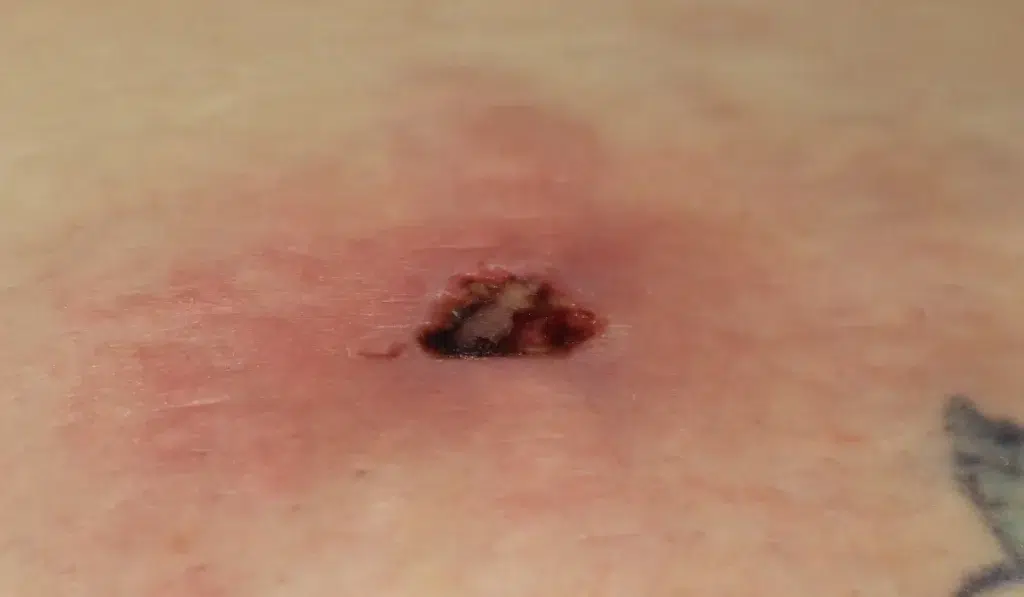
Some brown recluse bite symptoms include a pale center surrounded by red or purple skin, but this pattern does not appear in every case. A bite may remain evenly red, or it may begin to resemble a bruise. Color changes alone do not mean that severe skin damage has started.
This stage is also when other conditions can become easier to mistake for a spider bite. Cellulitis, irritated hair follicles, and allergic skin reactions may all cause warmth, swelling, and tenderness. Watching how the area changes is useful, but trying to diagnose it from appearance can delay the right care.
From 24 to 48 Hours
A brown recluse bite after 24 hours may remain mildly red and sore, or it may develop more noticeable swelling and discoloration. In some cases, the center becomes lighter while the surrounding skin appears red, blue, or purple. A blister may become more defined during this period.
A brown recluse bite after 48 hours should not automatically look black, deeply sunken, or ulcerated. The NCBI review explains that ulceration, when it occurs, usually develops later, often around seven to 14 days. An open sore that appears almost immediately may point to another condition and should be examined by a medical professional.
Many confirmed or suspected bites never progress to severe tissue damage. Do not assume that a mild-looking mark will become worse, but continue monitoring it for changes.
Brown Recluse Bite Symptoms That Need Medical Attention
Brown recluse bite symptoms often remain limited to the skin, but some reactions can affect the rest of the body. Contact a healthcare professional if pain or swelling keeps increasing, redness spreads quickly, or the wound begins to drain. Fever, chills, repeated vomiting, severe weakness, or feeling unusually ill also need prompt attention.
Dark or reddish urine, yellowing of the skin or eyes, and marked fatigue can signal damage to red blood cells. The Cleveland Clinic’s brown recluse bite guidance recommends medical care for severe symptoms or a wound that continues to worsen.
Trouble breathing, fainting, widespread hives, or swelling of the face or throat requires emergency care. Children, older adults, and people with serious health conditions may need closer evaluation because their symptoms can become harder to manage.
Do not wait for the bite to match an online photograph before asking for help. A clinician can assess the wound, your symptoms, and the circumstances surrounding the possible bite.
Why Appearance Alone Cannot Confirm a Brown Recluse Bite
What does a brown recluse bite look like? It can resemble several common skin problems. Redness, swelling, pain, blistering, and purple discoloration can also occur with bacterial infections, cellulitis, allergic reactions, irritated hair follicles, tick bites, and bites from other insects.
A clinician may ask where the exposure occurred, how quickly the symptoms developed, and whether the area feels painful or itchy. Fever, drainage, multiple lesions, and symptoms elsewhere in the body can also help guide the evaluation.
The diagnosis becomes more reliable when the spider was seen during the incident, safely contained, and identified by someone qualified to examine it. Without the spider, the diagnosis often depends on the symptoms, the setting, and the exclusion of other causes.
Brown Recluse Bite Versus Other Skin Problems
A comparison can help you understand why professional evaluation matters, but it cannot replace an examination.
| Feature | Possible Brown Recluse Bite | Possible Infection or Other Cause |
|---|---|---|
| Spider seen during the incident | Supports the possibility | Usually absent |
| Pain that increases over several hours | Can occur | Can also occur |
| Immediate open ulcer | Less consistent with typical progression | May suggest another cause |
| Pus or drainage | Not a defining early feature | May occur with infection |
| Several similar marks | Less typical for one spider bite | May suggest insects, irritation, or another skin condition |
The overlap between these conditions is significant. Treating every unexplained sore as a brown recluse bite can delay care for an infection or another medical issue.
What to Do During the First 48 Hours
Brown recluse bite treatment during the first 48 hours begins with basic wound care. Wash the area gently with soap and water, then apply a cold pack wrapped in cloth for short intervals. If the bite is on an arm or leg, elevate the limb when practical.
Take a clear photograph when you first notice the mark. Photograph it again if the color, size, or swelling changes, and note the date and time. This record can help a healthcare professional understand how the area has progressed.
Avoid scratching, squeezing, or cutting the wound. Do not apply heat or attempt to remove venom. Unproven home remedies can irritate the skin and make the wound harder to evaluate.
Ask a clinician or pharmacist before using medication, especially when the affected person is a child, an older adult, pregnant, or managing another health condition. Contact a medical professional if symptoms worsen instead of continuing home care.
If you can safely contain the spider without touching it, an expert may be able to identify it. Do not risk another bite while trying to capture one.
Brown Recluse Spiders in Alabama Homes
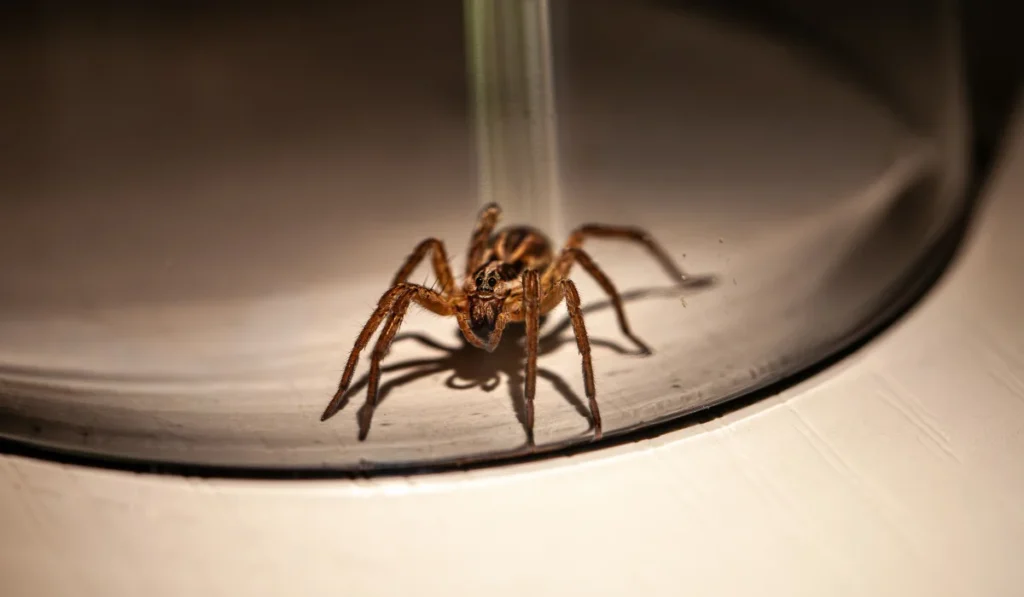
Brown recluse spiders in Alabama often remain hidden in quiet areas where they are unlikely to be disturbed. The University of Kentucky brown recluse identification guide lists boxes, stored clothing, furniture, wall voids, and other protected indoor spaces among their common hiding places.
Around Birmingham and Huntsville homes, you may find suitable shelter in garages, attics, crawl spaces, closets, sheds, and storage rooms. Spiders may also hide inside shoes, work gloves, folded towels, or clothing that has remained untouched.
Brown recluse spiders do not need to chase people to cause a bite. Contact often happens when a spider becomes trapped between clothing and skin or when someone reaches into a concealed space.
Wear gloves when moving boxes, lumber, or stored household items. Shake out shoes and clothing before putting them on, especially when they have been stored for a long time. Replacing worn cardboard boxes with sealed plastic containers can also reduce hiding places.
Regular cleaning helps disturb sheltered areas, but it does not confirm that all spider activity is gone. Sealing gaps around doors, foundations, vents, and utility lines can limit entry, while a professional inspection can help identify conditions supporting an indoor spider problem.
Responding Safely and Preventing Another Encounter
A brown recluse bite may show little change at first, then become more painful, swollen, or discolored during the next 48 hours. Those changes can help a healthcare professional evaluate the wound, but they cannot identify the spider with certainty. Use basic wound care, document the progression, and seek medical guidance when symptoms spread or affect the rest of your body.
After addressing the medical concern, check the areas where the encounter may have occurred. Crowded closets, cardboard storage, undisturbed garages, and gaps around the home can provide spiders with shelter.
The team at Magic City Pest Control can inspect your Alabama home for spider activity, locate likely hiding areas, and recommend a treatment plan based on what the technician finds. To schedule an inspection for your Birmingham, Huntsville, or surrounding-area property, contact Magic City Pest Control.