

Fleas in Alabama can become a household problem long after summer ends. You might find dark specks in your dog’s fur, notice your cat scratching more often, or develop itchy bumps around your ankles. Adult fleas are small enough to miss, and their eggs, larvae, and pupae can develop unnoticed in carpets, pet bedding, and sheltered outdoor areas. Understanding what fleas look like, how they reproduce, and where to check can help you find the source and address an infestation.
What Are Fleas, and What Do Fleas in Alabama Look Like?
Fleas are tiny, wingless insects that survive by feeding on the blood of animals. Dogs and cats are common hosts, but fleas also feed on wildlife and can bite people. Their narrow bodies help them move through fur, and their enlarged hind legs allow them to jump.
The cat flea (Ctenocephalides felis) is the most common flea species associated with dogs and cats in the United States, according to the University of California Integrated Pest Management Program. Despite its name, this species commonly affects dogs as well as cats.
What Does an Adult Flea Look Like?
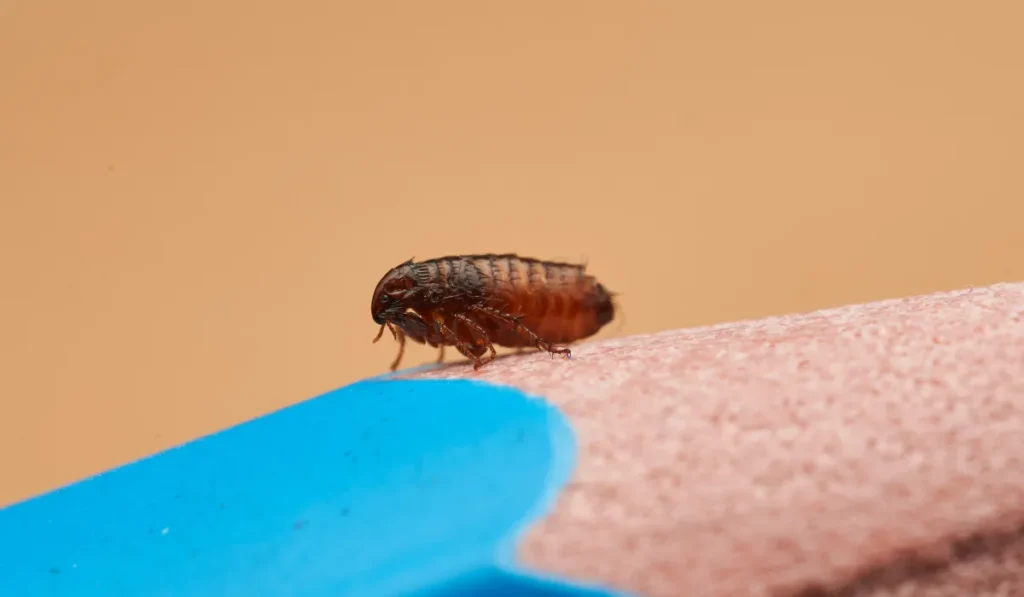
An adult flea measures roughly 1/8 inch long and usually appears dark brown or reddish-brown. Its body is flattened from side to side, unlike the broader, oval shape of a bed bug. Fleas have six legs and no wings.
Movement is another useful clue. Fleas jump when disturbed, while ticks crawl and attach to their hosts. These differences can help when identifying fleas versus ticks, especially after your pet has spent time outdoors.
To examine your pet, use a fine-toothed flea comb and part the fur around the neck, belly, and base of the tail. Check the comb after each pass for moving insects or dark specks.
How Do Fleas Get Inside?
Pets can pick up fleas in yards, parks, and places frequented by other animals. Wildlife or roaming cats may also bring fleas onto a property, particularly around shaded resting areas.
Once a flea reaches a suitable animal host, it can feed and reproduce. Its eggs then fall into the places the animal uses most often, including rugs, furniture, and bedding.
Even a clean, well-maintained home can develop a flea problem. The presence of fleas tells you that suitable hosts and conditions are available, not that you’ve neglected housekeeping.
The Flea Life Cycle and Why Fleas Keep Coming Back
The flea life cycle has four stages: egg, larva, pupa, and adult. Knowing what happens at each stage explains why fleas may reappear after you’ve treated your pet or thoroughly cleaned the house.
Adult fleas generally feed on animal hosts, but their developing stages occupy the surrounding environment. A dog may have only a few visible fleas while eggs and larvae are accumulating where it sleeps.
Stage 1: Eggs Fall Into the Surroundings
Female fleas lay eggs after feeding. Unlike lice eggs, flea eggs aren’t firmly attached to hair, so they can fall from the animal into carpeting, furniture, or bedding.
These eggs are small and pale. Unless you’re inspecting closely, you won’t notice them among carpet fibers or on a pet’s blanket.
The same places that collect shed hair and flea dirt can also collect flea eggs, making your pet’s regular resting areas useful places to inspect.
Stage 2: Larvae Develop in Protected Spaces
After hatching, flea larvae move away from direct light and seek sheltered locations. They feed on organic debris, including the droppings of adult fleas, which contain digested blood.
Carpet fibers, floor cracks, and spaces beneath furniture offer protection. Warmth and suitable humidity support development, while excessively dry conditions can make survival more difficult.
Unlike adults, flea larvae don’t jump onto people or animals for blood meals. They remain hidden while growing toward the pupal stage.
Stage 3: Pupae Remain Inside Cocoons
Once flea larvae finish developing, they form cocoons and enter the pupal stage. The cocoon provides protection against environmental disturbances and makes this stage harder to control.
An adult flea can remain inside its cocoon until conditions favor emergence. Activity, warmth, and other environmental cues can influence when it comes out.
You might vacuum, treat your pet, and notice fewer fleas, only to see another adult several days later. That flea may have developed from a pupa already present before treatment began.
Stage 4: Adults Find Hosts and Reproduce
Newly emerged adult fleas seek suitable hosts for blood meals. Once they begin feeding and reproducing, another generation of eggs can enter the environment.
Breaking this cycle requires attention to more than the adult fleas on your pet. You also need to address the places where immature fleas are developing and continue monitoring while adults emerge.
Signs of Fleas in Your House and on Your Pets
A flea infestation often becomes noticeable through your pet’s behavior before you spot an actual insect. Scratching, flea dirt, and jumping fleas are useful clues, especially when several appear together.
Start by examining your pets and the places where they spend the most time. The dog’s bed, the living room rug, or your cat’s favorite chair may provide useful evidence.
Your Pet Is Scratching More Than Usual
Repeated scratching, biting, or licking may indicate flea irritation. The base of the tail, hindquarters, belly, and neck are useful places to check for fleas and irritated skin.
Some animals develop redness or hair loss from persistent scratching. Pets with flea allergy dermatitis can react strongly to flea bites, even when relatively few fleas are present.
Scratching has other causes, including allergies and skin infections. If your pet’s discomfort continues, ask your veterinarian to examine it rather than assuming fleas are the only explanation.
You Find Flea Dirt in the Fur
Flea dirt looks like dark, pepper-like grains caught between the hairs. It’s made up of flea droppings containing digested blood.
You can check suspicious specks with a damp white paper towel. If the material leaves a reddish-brown stain, that supports the possibility that it’s flea dirt.
A flea comb makes this inspection easier. Comb through the fur slowly, especially around the base of the tail, and examine whatever collects between the teeth.
You Notice Fleas Jumping Near the Floor
Adult fleas sometimes become visible when you walk through a carpeted room or disturb an area where an affected pet sleeps.
For a simple check, put on white socks and walk slowly through the suspected area. Dark fleas may jump onto the fabric, where they’re easier to notice.
This method only helps reveal active adult fleas. If you don’t see any, eggs, larvae, and pupae could still be present in protected spaces.
What Do Flea Bites Look Like on People?
Flea bites often appear as small, itchy bumps on exposed skin. Ankles and lower legs are common locations because they’re close to the floor, where people may encounter jumping fleas.
The Centers for Disease Control and Prevention confirms that fleas feed on blood and can affect both animals and humans. Reactions differ, so one person may develop noticeable swelling while another experiences only mild irritation.
Bite patterns aren’t reliable enough to identify the insect responsible. Other pests and skin conditions can produce similar marks, so look for adult fleas or flea dirt before deciding what caused them.
Repeated flea bites around your ankles warrant a closer inspection of carpeting, pet bedding, and nearby furniture. The location of the bites may help narrow your search, but it doesn’t confirm exactly where fleas are developing.
When Should You See a Doctor?
Try not to scratch flea bites, since broken skin can become infected. Mild irritation often improves without medical treatment, but worsening redness, warmth, pain, or swelling deserves medical attention.
Seek emergency care for severe allergic symptoms, including difficulty breathing. For persistent unexplained bites, a medical professional can help assess the skin reaction while you investigate possible insects in the home.
Where Do Fleas Hide in Alabama Homes and Yards?
Fleas concentrate around places used by suitable animal hosts. That makes pet resting areas a better starting point than searching random corners of the house.
For an effective inspection, think about where your pets sleep, play, and spend time outdoors. Those habits provide clues about where eggs may have fallen and where developing fleas could remain.
Indoor Hiding Places
Pet bedding and carpeting are common places to find flea activity. Eggs can fall into these surfaces, while larvae seek protection in fibers, cracks, and sheltered spaces.
Pay particular attention to:
- Rugs and carpets where pets regularly rest
- Pet beds, blankets, and upholstered furniture
- Areas beneath beds, couches, and other furniture
- Cracks along floors and baseboards
- Cat trees and other frequently used pet furniture
Hard floors can also have protected cracks or edges where immature fleas develop. A home without carpeting isn’t automatically free from flea activity.
Begin with your pet’s favorite spots and work outward. This approach is more useful than assuming fleas are distributed equally throughout the house.
Outdoor Flea Habitats
Outside, fleas are more likely to develop where animal activity overlaps with shade and suitable moisture. Protected spaces beneath porches, decks, and shrubs deserve attention.
Consider a dog that spends much of the afternoon resting beneath a covered porch. If fleas are present in that sheltered location, treating the dog without addressing its resting area may leave a source of repeated exposure.
By contrast, exposed lawn areas that receive strong sunlight and dry quickly are generally less favorable for flea development.
Wildlife and roaming animals can contribute to outdoor flea activity. Look for signs that animals regularly rest beneath structures or move through sheltered parts of the yard.
What Helps Control Fleas and Prevent Them From Returning?
Once you’ve identified flea activity, work on the pet and its surroundings together. That means following veterinary advice, cleaning places where eggs and larvae may be present, and checking outdoor areas when the evidence points there.
The U.S. Environmental Protection Agency’s household flea-control guidance supports combining pet care with household cleaning and environmental management.
Protect Every Pet With Veterinary Guidance
Ask your veterinarian which flea prevention is appropriate for your pet’s species, age, weight, and health. Follow the instructions for the recommended product and keep up with the prescribed schedule.
If you have multiple pets, discuss protection for each of them. Fleas can continue feeding and reproducing on an untreated animal while other pets are protected.
Never apply a product intended for dogs to cats without veterinary approval. Some products that are appropriate for one species can be dangerous to another.
Vacuum the Places Fleas Develop
Vacuum carpets, upholstered furniture, floor edges, and the spaces beneath furniture. Give extra attention to pet sleeping areas rather than spending equal time on every part of the house.
Vacuuming helps remove accessible eggs, larvae, and organic material. Dispose of collected debris in a sealed bag outside so it doesn’t remain in the house.
Continue vacuuming during the control process, including after professional treatment when instructed. Developing stages may still be present after the initial reduction in adult fleas.
Wash Bedding and Pet Fabrics
Wash pet blankets, removable bedding covers, and other suitable fabrics according to their care labels. Use hot washing and drying settings when the material permits.
If your pet sleeps on your bed or regularly uses a particular throw blanket, include those items in your cleaning routine.
Items that cannot be machine-washed may need another appropriate cleaning method. Follow the manufacturer’s care instructions rather than exposing delicate materials to damaging heat.
Check the Yard Before Treating It
Start with shaded pet resting areas and locations frequented by wildlife or roaming animals. Keep vegetation maintained, clear unnecessary debris, and address persistent moisture where practical.
An outdoor flea problem doesn’t mean the entire lawn needs treatment. The relevant areas depend on where fleas and suitable hosts are active.
For recurring infestations, an inspection can help determine whether indoor treatment, outdoor treatment, or both are appropriate.
Expect Some Activity After Initial Treatment
Flea pupae may remain protected inside cocoons while adult fleas are being controlled. As new adults emerge, you may notice activity after the first treatment.
A small number of newly emerged fleas doesn’t automatically mean the treatment failed. However, persistent or increasing activity should be discussed with your pest control provider.
Keep following the recommended cleaning and pet-care plan while monitoring the affected areas.
Why Fleas Can Remain Active During Alabama Winters
Alabama’s warm, humid weather supports flea development, but the calendar doesn’t determine whether an infestation survives. Indoor conditions can remain suitable even when temperatures fall outside.
Heated homes protect fleas from the colder temperatures that can slow development outdoors. Sheltered locations around a property may also remain suitable during milder winter periods.
A shaded porch, outdoor pet shelter, and exposed lawn won’t necessarily provide the same conditions. The amount of sun, moisture, and animal activity matters more than assuming fleas disappear everywhere once winter arrives.
This is particularly relevant when pets spend time both indoors and outside. Veterinary-recommended prevention and attention to established indoor infestations shouldn’t depend solely on the season.
When Should You Call a Flea Control Professional?
If you continue finding adult fleas after following your veterinarian’s advice and cleaning affected areas, consider a professional inspection. Repeated bites, fleas in several rooms, or recurring activity around pet resting spots suggest the problem needs a closer look.
An inspection can help locate concentrated flea activity and determine which parts of the property need attention. Treating an entire yard without evidence of outdoor activity, for example, may not be the most useful approach.
Magic City Pest Control offers indoor and outdoor flea-control services. Its process begins by asking whether fleas are present inside, outside, or both, followed by an inspection of relevant areas.
The company also provides a preparation sheet. Its instructions include clearing floors, vacuuming carpets and other affected areas, and cleaning pet bedding. Pet treatment must be coordinated separately with a veterinarian.
After environmental treatment, continued cleaning and monitoring help address fleas emerging from protected stages of development.
Understanding Fleas Is the First Step Toward Controlling Them
You don’t have to see dozens of fleas to have a developing infestation. Flea dirt, repeated scratching, and jumping insects near pet resting areas are reasons to inspect more closely.
Start with your pets and the spaces they use most. Follow your veterinarian’s recommendations, clean affected indoor areas, and check outdoor resting spots where flea activity could continue.
If fleas keep returning, Magic City Pest Control can help assess the problem and recommend an indoor or outdoor treatment plan based on conditions at your property. Homeowners who need help with recurring fleas can contact Magic City Pest Control to discuss the next steps.
Frequently Asked Questions About Fleas in Alabama
Can Fleas Live on Humans?
Fleas can bite people and take blood meals, but the cat flea generally doesn’t live permanently on human bodies. Cats, dogs, and other suitable animals are more typical hosts.
If you’re experiencing repeated bites, concentrate on finding fleas in the environment. Check animals, carpets, furniture, and nearby resting spots instead of assuming the insects are living on your skin.
How Long Do Fleas Live?
A flea’s lifespan depends on its species, stage of development, environmental conditions, and access to a host. Adult fleas don’t necessarily survive for the same length of time as an infestation remains active.
Eggs, larvae, and pupae may continue developing after the original adults have been removed. That’s why the absence of visible fleas for a short period doesn’t always mean every developing stage is gone.
Can Fleas Survive Winter in Alabama?
Yes. Fleas can remain active during winter when temperatures and other conditions are suitable, particularly inside heated homes.
Cold or dry conditions can limit outdoor development, but they don’t guarantee that existing indoor infestations will disappear. Continuing veterinarian-recommended flea prevention helps protect pets during cooler months.
Can You Have Fleas in Your House Without Pets?
Yes. Fleas may be introduced by wildlife, rodents, visiting animals, or previous animal occupants. Immature fleas can also remain in protected places after a host is no longer present.
A house without pets can therefore have an infestation linked to earlier animal activity. When fleas appear in a home without pets, investigate possible animal access and areas where animals previously rested.